One of the most important concepts in astrology is understanding that no person is defined by a single zodiac sign.
While many people know their Sun sign, every birth chart contains multiple planets placed throughout the zodiac.
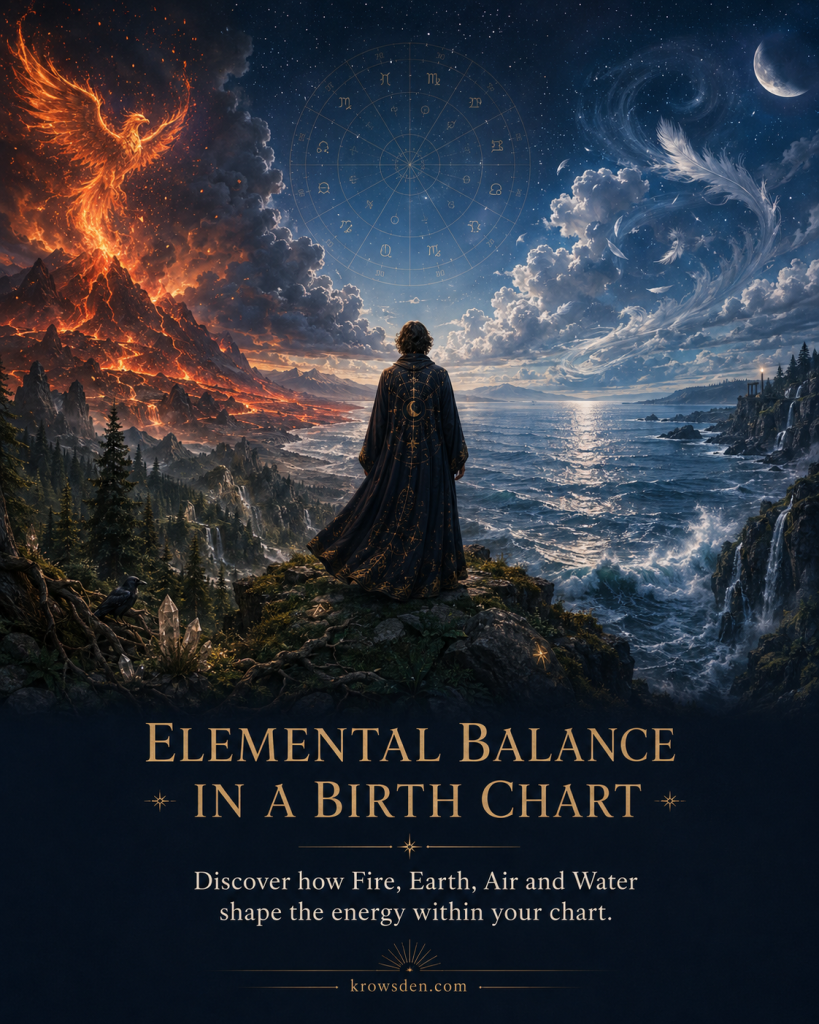
These placements create a unique combination of Fire, Earth, Air, and Water energies that shape personality, communication style, relationships, strengths, and challenges.
This mixture is known as Elemental Balance.
By examining how the four elements are distributed throughout a birth chart, astrologers can gain insight into a person’s natural tendencies and identify areas that may benefit from greater development and balance.
What Is Elemental Balance?
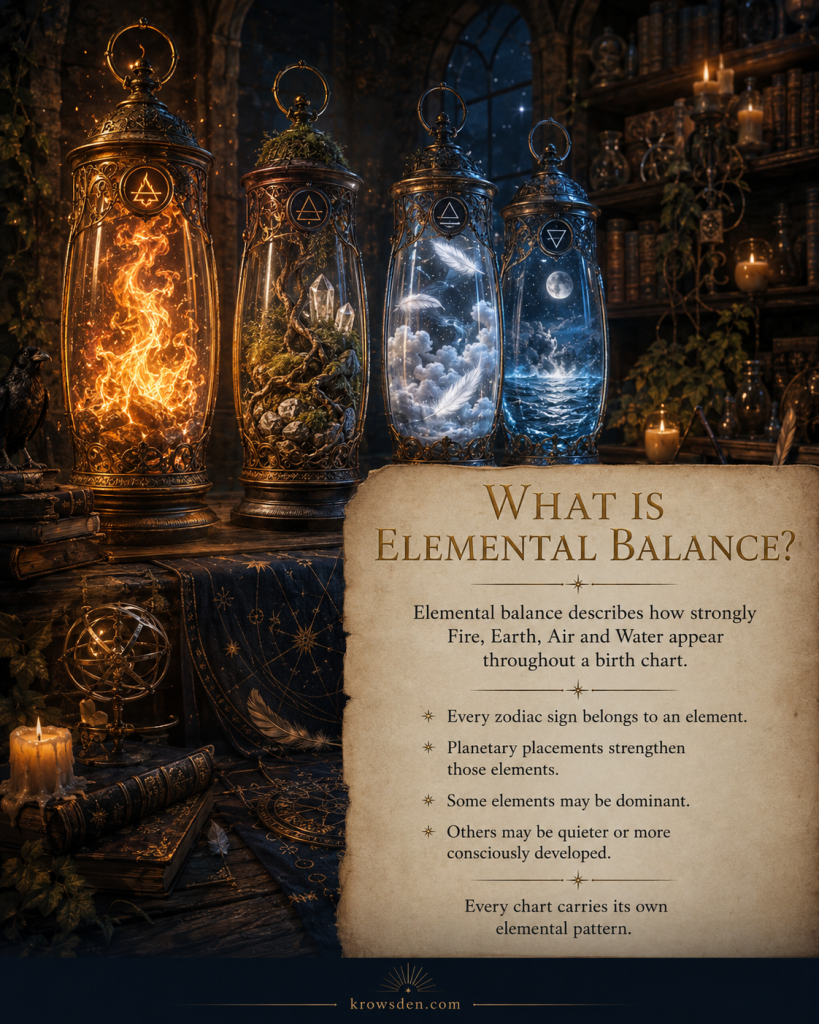
Elemental balance refers to the distribution of the four astrological elements within a birth chart:
- Fire 🔥
- Earth 🌿
- Air 🌬️
- Water 🌊
Each planet occupies a zodiac sign, and every zodiac sign belongs to one of these four elemental groups.
An astrologer may examine:
- Which elements are dominant
- Which elements are underrepresented
- How the elements interact
- Whether the chart appears balanced or uneven
This analysis provides another layer of understanding beyond individual signs and planets.
Why Elemental Balance Matters
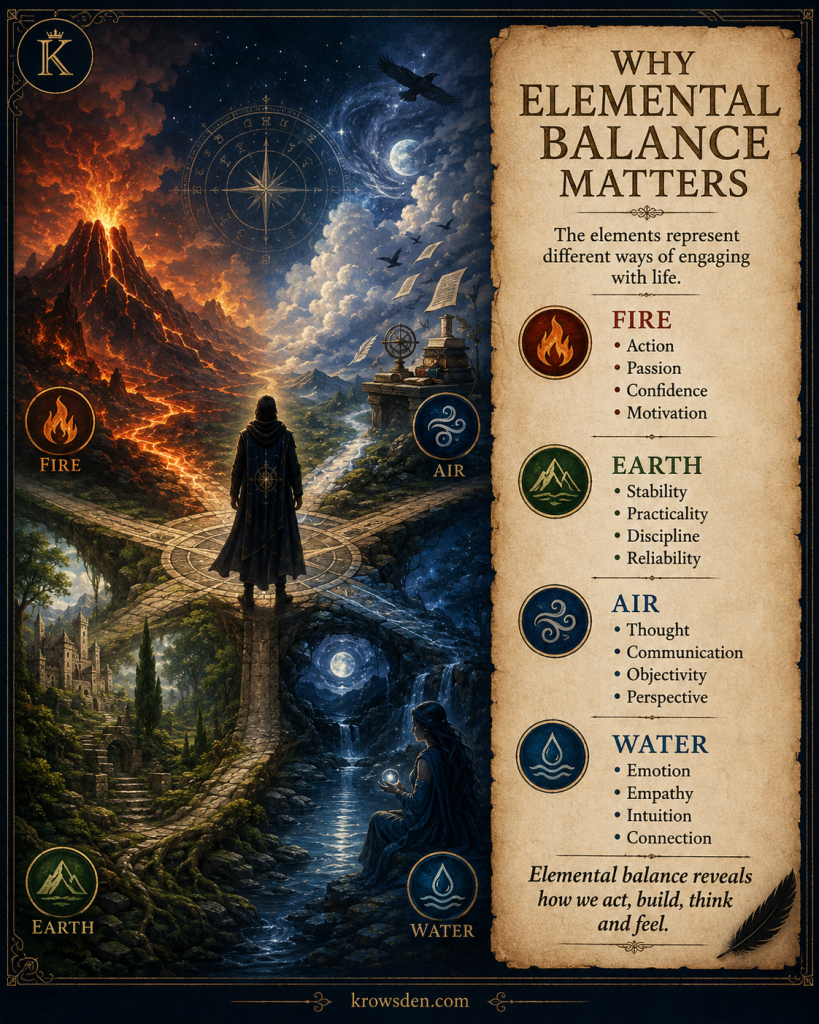
The elements represent different ways of engaging with life.
Fire
Represents:
- Action
- Passion
- Confidence
- Motivation
Earth
Represents:
- Stability
- Practicality
- Discipline
- Reliability
Air
Represents:
- Communication
- Learning
- Curiosity
- Perspective
Water
Represents:
- Emotion
- Intuition
- Empathy
- Imagination
Most people possess all four elements to some degree, but few charts contain them in equal proportions.
This imbalance often contributes to the unique character of an individual.
Dominant Elements
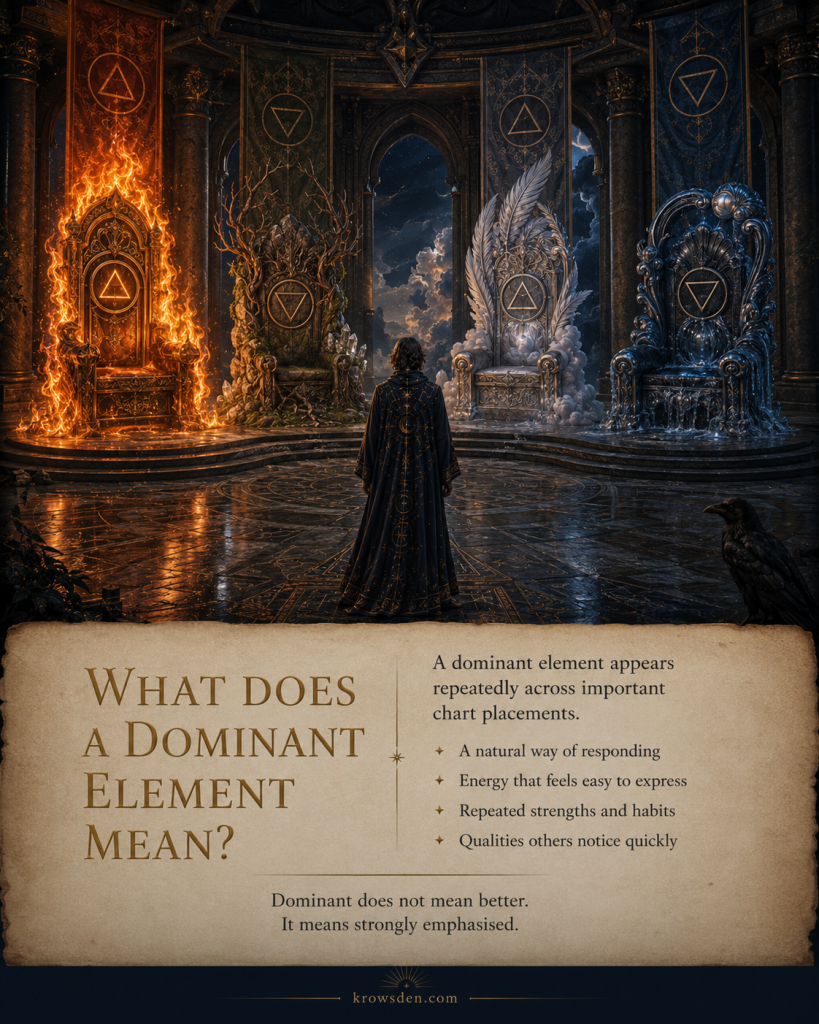
When one element appears repeatedly throughout a chart, it often becomes a major influence on personality.
Fire-Dominant Charts

People with strong Fire energy may appear:
- Enthusiastic
- Independent
- Energetic
- Adventurous
They often enjoy taking initiative and pursuing new experiences.
Continue Reading: Fire Signs
Earth-Dominant Charts
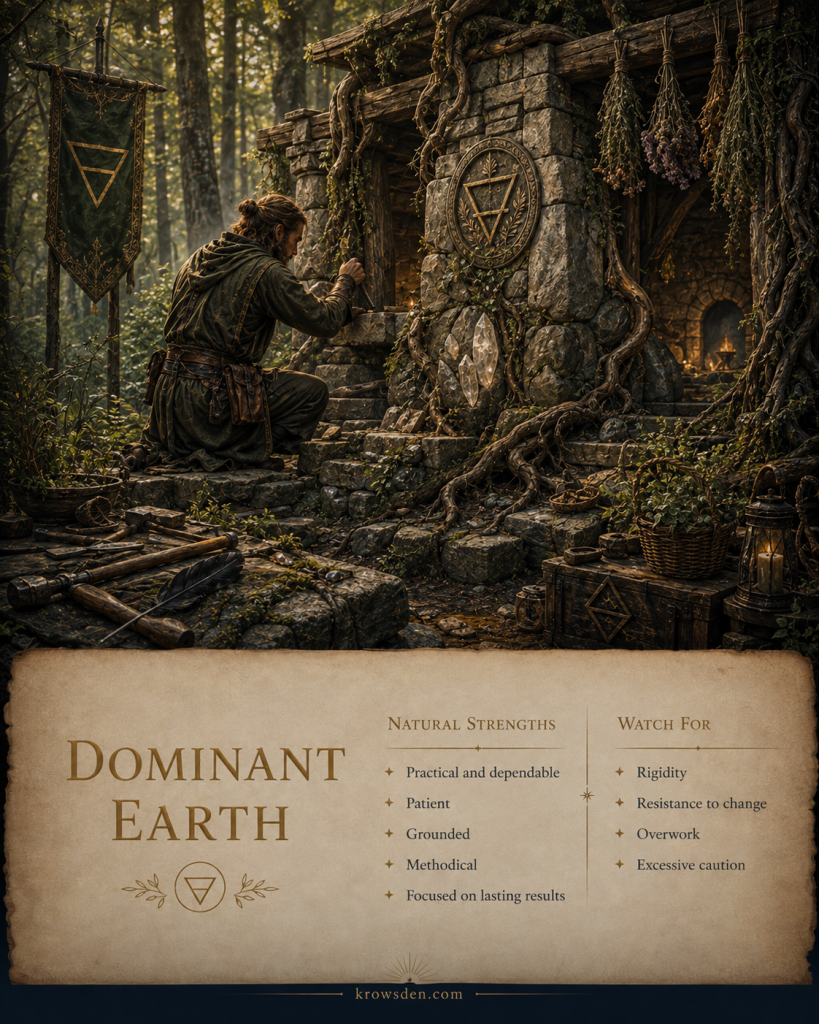
People with strong Earth energy may appear:
- Practical
- Reliable
- Organized
- Goal-oriented
They often focus on creating stability and achieving tangible results.
Continue Reading: Earth Signs
Air-Dominant Charts

People with strong Air energy may appear:
- Curious
- Communicative
- Intellectual
- Adaptable
They often enjoy learning, sharing ideas, and exploring new perspectives.

Continue Reading: Air Signs
Water-Dominant Charts

People with strong Water energy may appear:
- Intuitive
- Compassionate
- Creative
- Emotionally aware
They often experience life through feeling and connection.
Continue Reading: Water Signs
Missing or Underrepresented Elements
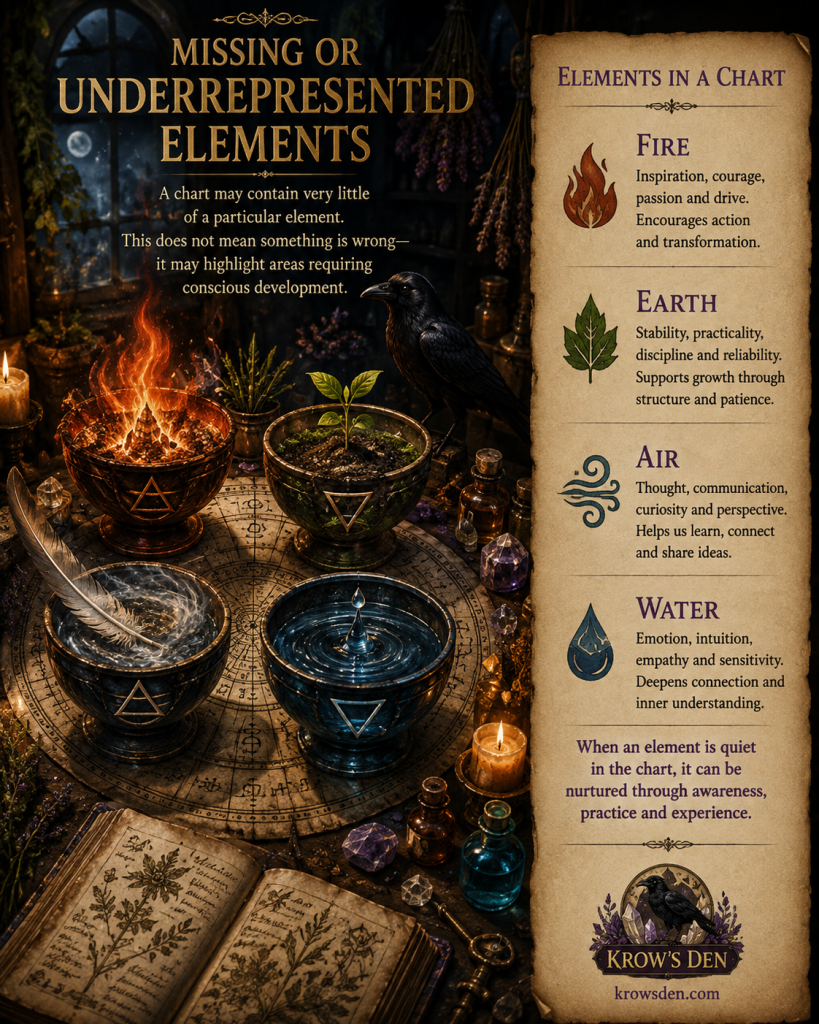
A chart may also contain very little of a particular element.
This does not mean something is wrong.
Instead, it may highlight areas that require conscious development.
Low Fire
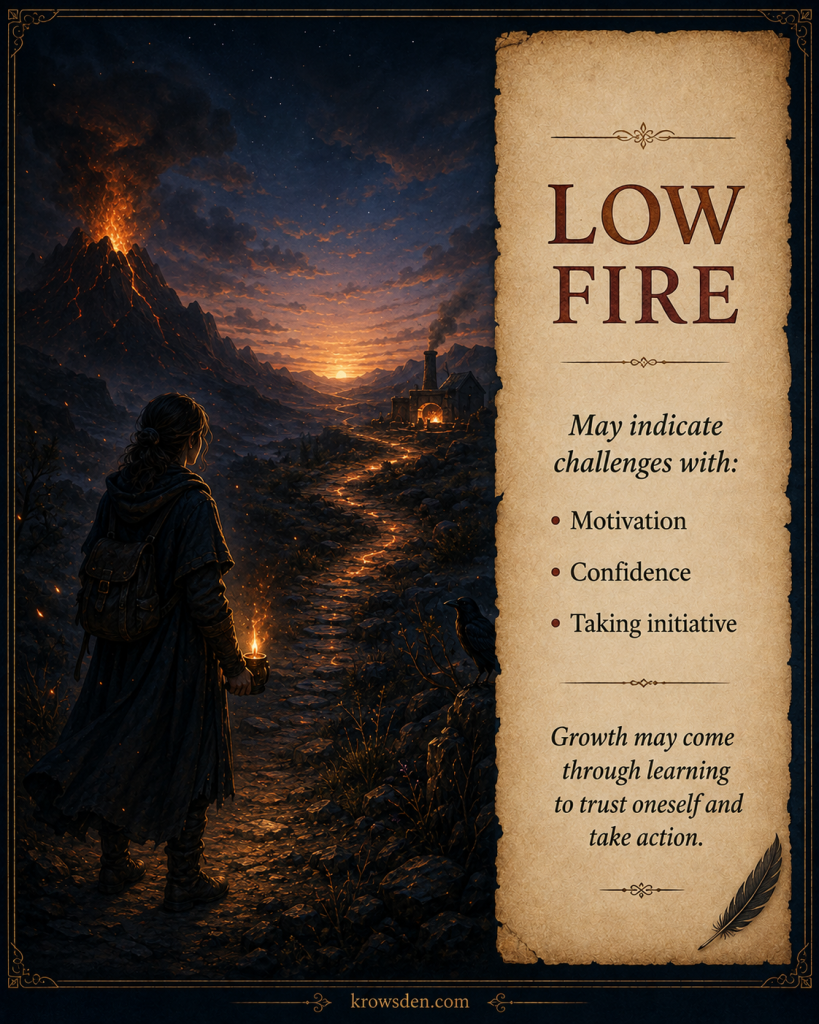
May indicate challenges with:
- Motivation
- Confidence8
- Taking initiative
Growth may come through learning to trust oneself and take action.
Low Earth
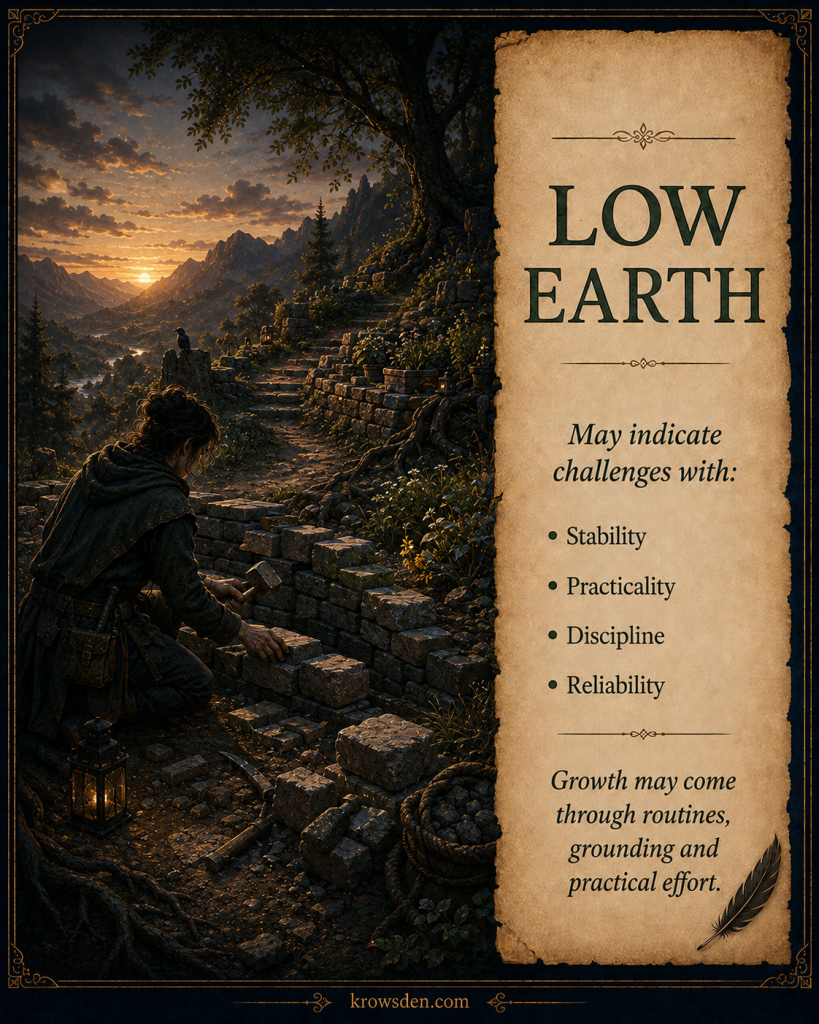
May indicate challenges with:
- Organization
- Stability
- Practical planning
Growth may come through developing routines and long-term goals.
Low Air

May indicate challenges with:
- Communication
- Objectivity
- Perspective
Growth may come through education, discussion, and intellectual exploration.
Low Water

May indicate challenges with:
- Emotional expression
- Empathy
- Intuition
Growth may come through self-reflection and emotional awareness.
Elemental Balance and Relationships
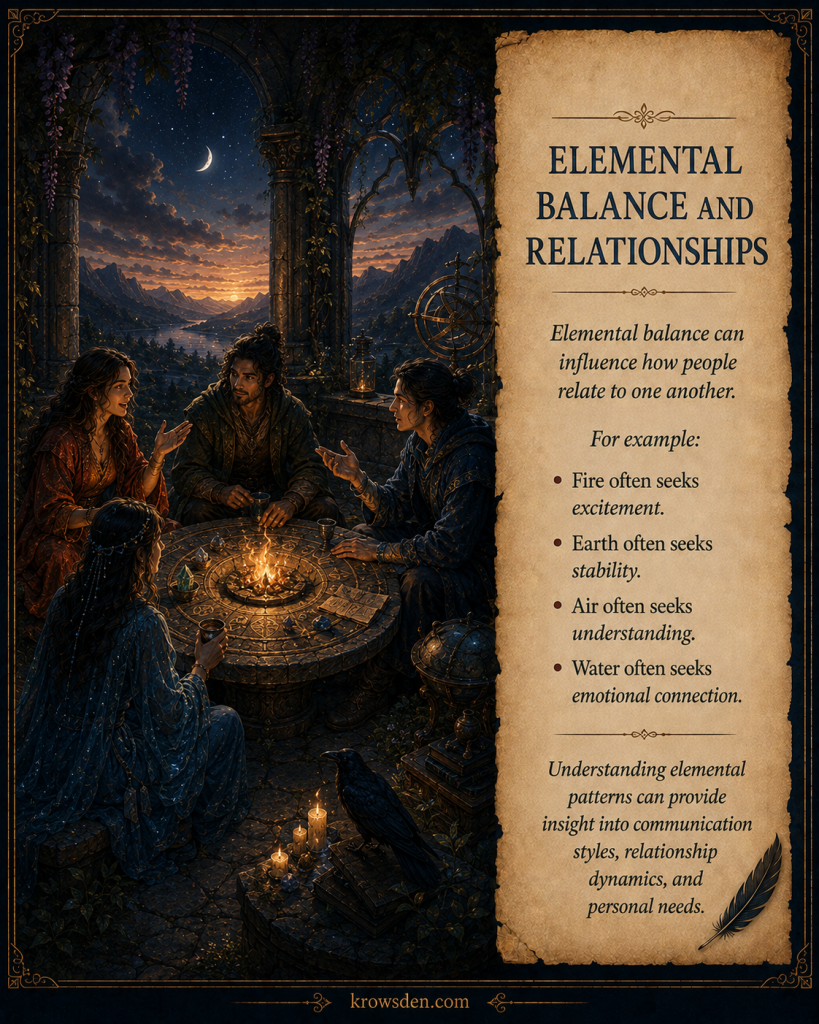
Although astrologers often discuss the elements separately, no element exists in isolation.
Elemental balance can influence how people relate to one another.
For example:
- Fire often seeks excitement.
- Earth often seeks stability.
- Air often seeks understanding.
- Water often seeks emotional connection.
Understanding elemental patterns can provide insight into communication styles, relationship dynamics, and personal needs.
Elemental Balance and Personal Growth
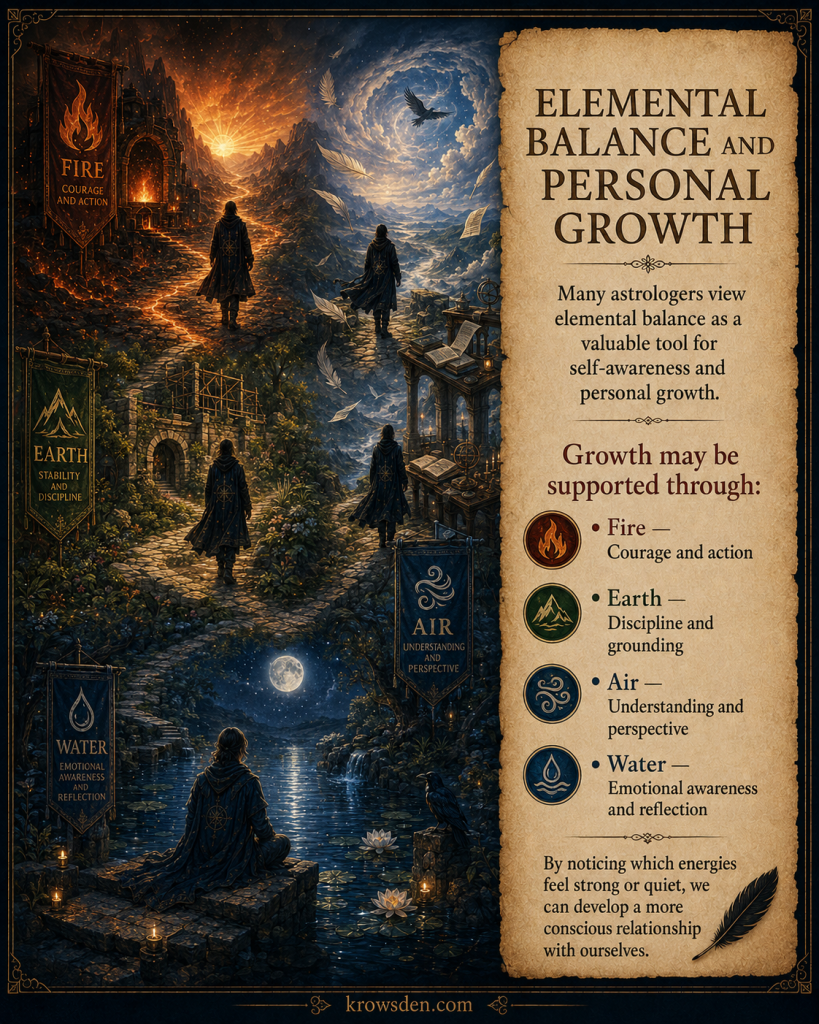
Many astrologers view elemental balance as a valuable tool for self-awareness.
By recognizing dominant and underrepresented elements, individuals may identify:
- Natural strengths
- Blind spots
- Habits
- Opportunities for growth
Rather than labeling traits as good or bad, astrology encourages understanding how different energies can be balanced and integrated.
The Elements Work Together
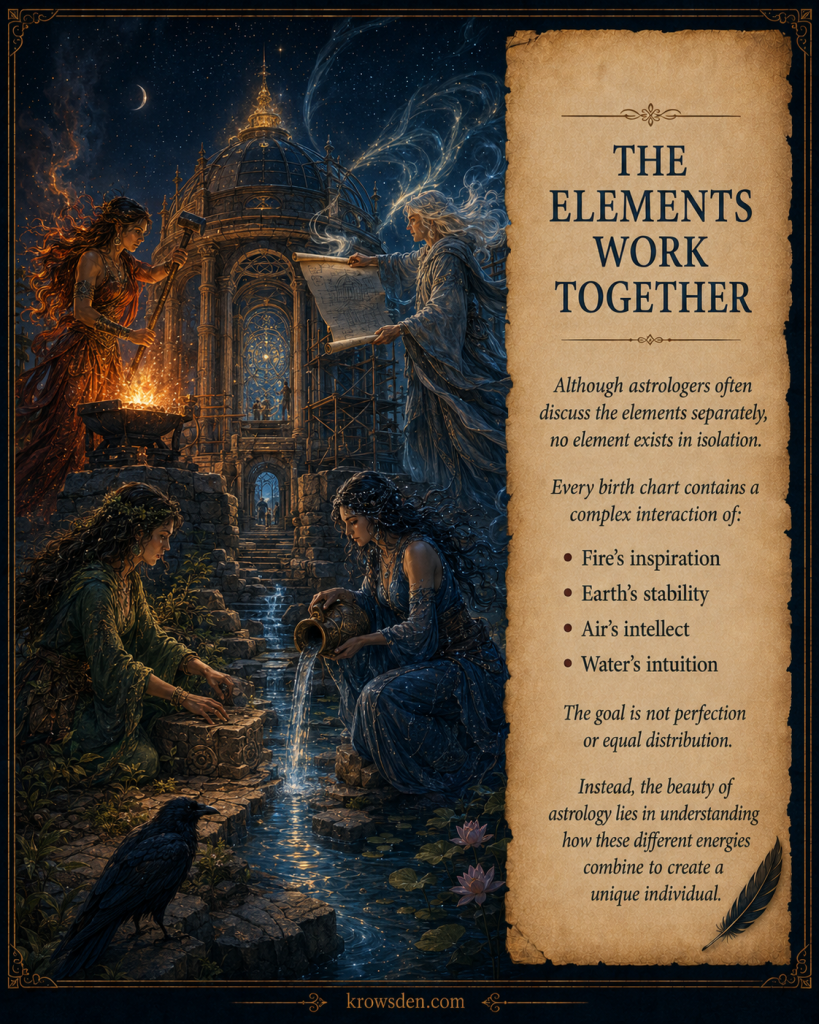
Every birth chart contains a complex interaction of:
- Fire’s inspiration
- Earth’s stability
- Air’s intellect
- Water’s intuition
The goal is not perfection or equal distribution.
Instead, the beauty of astrology lies in understanding how these different energies combine to create a unique individual.
Common Misconceptions About Elemental Balance

Myth: More Elements Means Better Balance
Quality and interaction often matter more than simple numbers.
Myth: Missing an Element Is Bad
Many people with little of one element develop those qualities through life experience.
Myth: One Dominant Element Explains Everything
A complete chart contains many layers beyond elemental balance.
Myth: Elemental Balance Determines Destiny
Astrology explores tendencies and potentials rather than fixed outcomes.
Why Elemental Balance Matters

Understanding elemental balance helps reveal the broader patterns within a birth chart.
It provides a simple yet powerful framework for understanding:
- Personality
- Communication
- Relationships
- Strengths
- Growth opportunities
For many students of astrology, learning the elements is one of the first steps toward understanding the deeper complexity of birth chart interpretation.
Where to Go Next
Continue exploring the Astrology Learning Center:
- The Four Elements in Astrology
- Fire Signs
- Earth Signs
- Air Signs
- Water Signs
- Birth Charts
- Zodiac Signs
- The Planets
- The Houses
- Planetary Aspects
- Sun Signs
- Moon Signs
- Rising Signs
Recommended Resources
🌌 NASA Solar System Exploration
Learn about the celestial bodies that inspire astrological traditions.
Visit: https://solarsystem.nasa.gov
📚 Encyclopaedia Britannica – Astrology
Explore the history and development of astrology.
Visit: https://www.britannica.com/topic/astrology
🌍 World History Encyclopedia
Learn about the ancient cultures that contributed to astrological traditions.
Visit: https://www.worldhistory.org