Throughout history, practitioners of magick, mysticism, religion, alchemy, astrology, and folk traditions have searched for patterns within the natural world.
Ancient peoples observed that certain plants seemed connected to particular seasons. Certain animals appeared during important times of year. Certain stars rose alongside agricultural cycles. Particular colors evoked emotional responses, while metals, stones, and symbols became associated with specific gods, forces, and ideas.
Over centuries, these observations developed into what many traditions call correspondences.
A correspondence is a symbolic relationship between one thing and another. In magickal traditions, correspondences are used to connect different forces, symbols, and energies that are believed to share similar qualities or influences.
For example:
- The Sun is often associated with vitality, leadership, success, and gold.
- The Moon is often associated with intuition, dreams, emotions, and silver.
- Roses became linked with love and affection.
- Oak trees became symbols of strength and endurance.
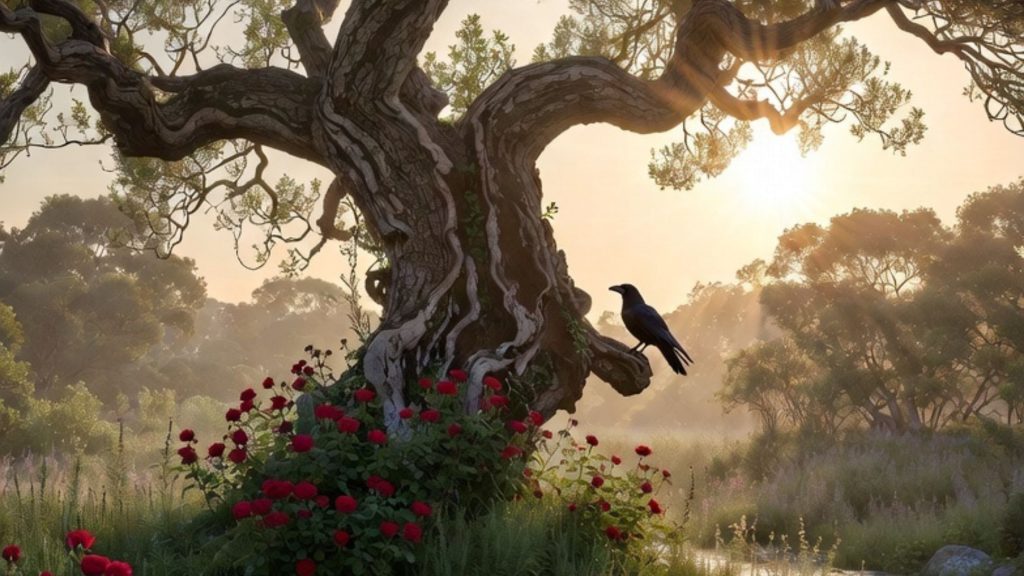
- Ravens became associated with wisdom, mystery, and messages from beyond the ordinary world.
These connections create a symbolic framework through which practitioners interpret the world and construct magickal workings.
Rather than viewing nature as a collection of separate objects, correspondence systems view existence as an interconnected web in which every part reflects and influences the whole.
This idea appears repeatedly throughout history.
Ancient Egyptian priests linked celestial bodies to deities and earthly events.
Babylonian astrologers connected planetary movements with human affairs.
Greek philosophers explored the relationships between elements, stars, and living things.
Medieval alchemists sought hidden connections between metals, planets, and spiritual transformation.
Folk practitioners developed extensive traditions connecting herbs, animals, seasons, and natural phenomena to everyday life and ritual practice.
Although the specific systems differ from culture to culture, the underlying principle remains remarkably consistent:
Everything exists in relationship to something else.
To understand one thing is often to better understand another.
For many practitioners, correspondences serve as a symbolic language that allows them to work more intentionally with ritual, meditation, divination, spellcraft, seasonal celebrations, and personal spiritual development.
For historians, correspondences provide a fascinating glimpse into how different cultures understood the structure of reality.
For beginners, they offer a practical framework for understanding why certain herbs, crystals, colors, symbols, animals, and celestial bodies repeatedly appear throughout magickal traditions.
And for experienced practitioners, correspondences often become a lifelong study, revealing increasingly complex relationships between the visible and invisible worlds.
This guide explores many of the most important correspondence systems found throughout magickal and occult traditions, including:
- The Elements
- Planetary Correspondences
- Lunar Correspondences
- Zodiac Correspondences
- Colors
- Numbers
- Herbs
- Crystals
- Trees
- Flowers
- Animals
- Metals
- Tarot
- Runes
- Deities
- Sacred Timing Systems
Together, these systems form one of the most extensive symbolic frameworks ever developed by human beings.
Understanding them is one of the most important steps in moving beyond basic magickal practice and into a deeper understanding of traditional occult thought.
The History of Magickal Correspondences
How Ancient Civilizations Built the Hidden Language of Magic
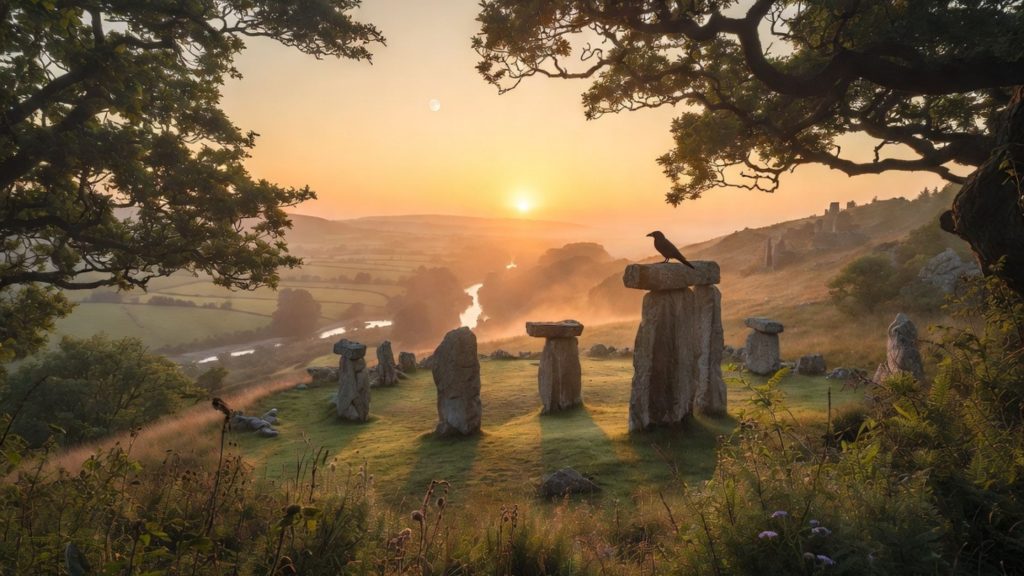
When most people first encounter magickal correspondences, they often assume someone simply sat down one day and decided that roses would represent love, gold would represent the Sun, or ravens would symbolize mystery and wisdom.
The truth is far more interesting.
Correspondence systems were not created overnight. They evolved gradually over thousands of years as human beings observed the natural world and searched for meaning within it.
Long before books of magick existed, long before ceremonial orders, grimoires, and modern witchcraft traditions, our ancestors were already paying close attention to patterns.
- They watched the heavens.
- They tracked the seasons.
- They studied animals.
- They learned which plants appeared at certain times of year and which herbs seemed useful for particular purposes.
Most importantly, they began asking questions that humanity still asks today:
- Why do certain things seem connected?
- Why do patterns repeat?
- Why do some symbols appear again and again across cultures separated by vast distances and thousands of years?
These questions eventually laid the foundation for what we now call magickal correspondences.
Before Magick Had a Name
The earliest correspondence systems were not necessarily considered magikcal.
They were simply observations about how the world worked.
Ancient peoples lived much closer to nature than most of us do today.
Their survival depended on understanding:
- Weather patterns
- Seasonal cycles
- Animal behavior
- Celestial movements
- Agricultural timing
A tribe that understood the migration of animals survived.
A farmer who understood seasonal changes harvested more food.
A navigator who understood the stars found their way home.
Over time, practical observation often became intertwined with symbolism.
The appearance of a particular bird might signal a coming change.
A specific tree might become associated with protection because it survived storms that destroyed everything around it.
A bright star might become linked with a deity because it appeared at an important moment each year.
What began as observation gradually became meaning.
And meaning became tradition.
Ancient Mesopotamia: The First Great System Builders
Many scholars trace some of the earliest formal correspondence systems to the civilizations of Mesopotamia.
The Sumerians, Babylonians, and Assyrians spent centuries observing the heavens with extraordinary precision.
They noticed that certain celestial bodies moved differently from the fixed stars.
These wandering lights became known as planets.
To the peoples of Mesopotamia, the movements of these celestial bodies were not random.
They were believed to reflect the actions and influences of divine powers.
The planet we now call Venus became associated with the goddess Inanna, later known as Ishtar.
Mars became associated with warlike qualities.
Jupiter became associated with kingship and authority.
This was one of the first major steps toward a correspondence system:
- A heavenly body became linked to a deity.
- The deity became linked to certain qualities.
- Those qualities became linked to human experiences.
A symbolic network had begun to form.
Much of Western astrology, planetary magic, and occult symbolism can trace its roots back to these ancient observations.
Ancient Egypt: The Universe as a Living Symbol
The Egyptians viewed the cosmos as an interconnected living system.
For them, the movements of stars, the flooding of the Nile, the actions of the gods, and the lives of human beings were all part of the same divine order.
Nothing existed in isolation.
Everything reflected something else.
The star Sirius, for example, became deeply significant because its annual appearance coincided with the flooding of the Nile.
This event was so important to Egyptian life that celestial observation became inseparable from agriculture, religion, and spirituality.
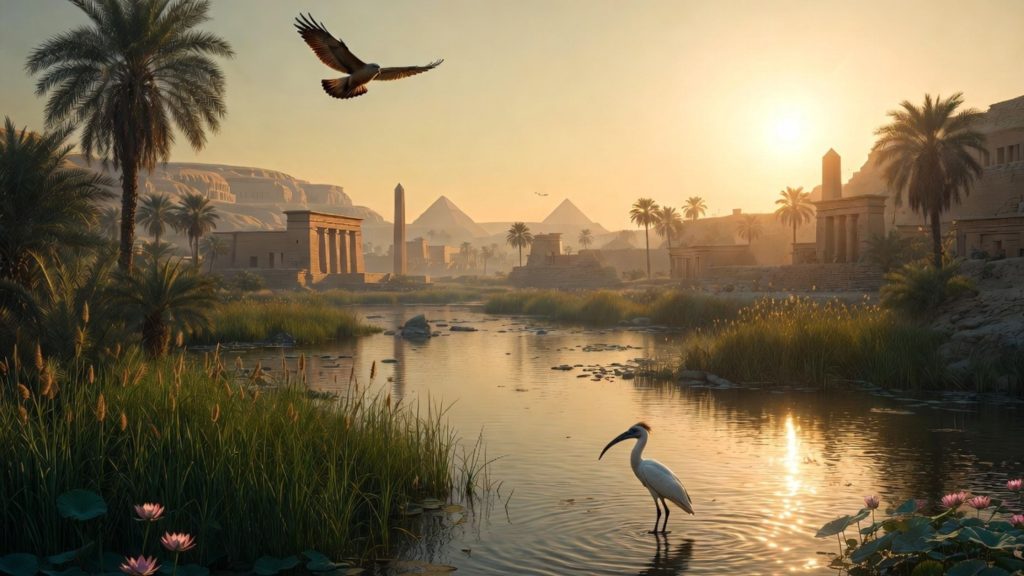
Animals also played a major role in Egyptian symbolic thought.
The falcon became associated with Horus.
The ibis became associated with Thoth.
The scarab became associated with rebirth and transformation.
These were not arbitrary choices.
They emerged from generations of observation and cultural meaning.
This pattern appears repeatedly throughout the history of correspondences:
- People observe nature.
- Nature becomes symbolic.
- The symbol gains spiritual meaning.
- The spiritual meaning becomes tradition.
Ancient Greece and the Four Elements
If Mesopotamia helped establish planetary symbolism and Egypt demonstrated the interconnected nature of the cosmos, Greece provided one of the most influential correspondence systems ever created.
The classical elements.
Ancient Greek philosophers proposed that all matter consisted of four fundamental principles:
- Fire
- Water
- Air
- Earth
While modern science no longer views the elements literally, their symbolic importance remains enormous.
These elemental principles became a framework for understanding:
- Personality
- Nature
- Medicine
- Astrology
- Spirituality
- Magic
Even today, countless magical systems continue to use elemental correspondences developed from these ancient ideas.
When modern practitioners associate Water with emotion, Air with thought, Fire with action, or Earth with stability, they are participating in a tradition that stretches back more than two thousand years.
The Birth of a Universal Pattern
What makes the study of correspondences so fascinating is that similar ideas emerged independently across many cultures.
Ancient peoples repeatedly discovered that the world seemed to operate through relationships.
- Stars related to seasons.
- Animals related to lessons.
- Plants related to healing.
- Colors related to emotion.
- Numbers related to patterns.
Whether one interprets these relationships as spiritual truths, symbolic tools, psychological archetypes, cultural traditions, or some combination of all four, they became the foundation upon which nearly every magical system would later be built.
The great grimoires, the alchemists, the astrologers, the cunning folk, the ceremonial magicians, and eventually modern practitioners all inherited these symbolic maps from those who came before.
And as we’ll discover next, no idea influenced the development of magical correspondences more profoundly than the principle known as:
“As above, so below.”
What Is Sympathetic Magick?
Understanding the Principle of “Like Attracts Like”
If magical correspondences are the language of magick, then sympathetic magic is the grammar that makes that language work.
Across thousands of years of magical practice, countless cultures arrived at a remarkably similar idea:
Things that share a symbolic relationship can influence one another.
This concept appears so frequently throughout human history that many scholars consider it one of the oldest foundations of magickal thought.
Whether found among ancient priests, village healers, folk practitioners, shamans, astrologers, alchemists, or ceremonial magicians, the underlying principle remains remarkably consistent.
The world is not merely a collection of separate objects.
Everything exists within a vast network of relationships.
A symbol can influence what it represents.
A part can influence the whole.
One thing can reflect another.
This belief eventually became known as sympathetic magick.
The term itself is relatively modern, but the concept is ancient.
It appears in traditions on nearly every continent and throughout nearly every period of recorded history.
Understanding sympathetic magick is essential because it explains why correspondences became so important in magical practice.
Without sympathetic magick, correspondences are simply interesting symbols.
With sympathetic magic, those symbols become practical tools.
The Principle of “Like Attracts Like”
One of the most widespread forms of sympathetic magick is often called:
The Law of Similarity
The basic idea is simple:
Things that resemble one another are believed to share a connection.
Because they share a connection, influencing one may influence the other.
Ancient practitioners often looked for visual, symbolic, or behavioral similarities within nature.
For example:
A sunflower follows the movement of the Sun across the sky.
Because of this relationship, many traditions associated sunflowers with:
- Solar energy
- Vitality
- Confidence
- Success
- Personal power
Gold resembles sunlight.
Therefore many cultures connected gold with:
- The Sun
- Kingship
- Divinity
- Wealth
- Authority
The lion’s appearance and behavior suggested courage and dominance.
As a result, lions became symbols of:
- Strength
- Leadership
- Royalty
- Protection
These associations were not usually viewed as random inventions.
Rather, practitioners believed nature itself revealed hidden relationships through patterns and symbolism.
The physical world became a book waiting to be read.
Nature as a Living Symbol
For many ancient cultures, symbolism was not merely metaphorical.
The world itself was understood as a living expression of deeper truths.
A river was not simply water.
It represented:
- Flow
- Change
- Life
- Emotion
- Renewal
A mountain was not merely stone.
It represented:
- Permanence
- Stability
- Strength
- Connection between Earth and Heaven
A raven was not simply a bird.
It could represent:
- Wisdom
- Prophecy
- Transformation
- Mystery
- Communication between worlds
These symbolic meanings emerged through centuries of observation, mythology, storytelling, and cultural experience.
Over time, these associations became correspondences.
Correspondences became traditions.
Traditions became magickal systems.
The Law of Contagion
Another major principle of sympathetic magick is often called:
The Law of Contagion
While the Law of Similarity states that things sharing qualities remain connected, the Law of Contagion states:
Things that were once connected continue to influence one another even after separation.
This idea appears throughout folklore and magickal traditions worldwide.
Historically, practitioners sometimes worked with:
- Hair
- Clothing
- Personal belongings
- Handwritten letters
- Soil from important places
- Objects touched by a person
Because these items had once been connected to an individual, they were believed to maintain a symbolic link.
Many folk traditions around the world contain examples of contagious magic.
Some were used for healing.
Some for blessing.
Some for protection.
Others were intended to influence events from a distance.
Whether one views these practices as spiritual realities, symbolic rituals, or cultural traditions, they illustrate how deeply the concept of connection shaped magical thinking throughout history.
“As Above, So Below”
Perhaps no phrase is more closely associated with magickal correspondences than:
As above, so below.
As below, so above.
These words are traditionally linked to Hermetic philosophy and the legendary figure known as Hermes Trismegistus.
The phrase suggests that patterns found in one level of reality are reflected in others.
The heavens reflect the Earth.
The Earth reflects the heavens.
The individual reflects the cosmos.
The cosmos reflects the individual.
This idea became one of the most influential concepts in Western esotericism.
It inspired:
- Astrology
- Alchemy
- Ceremonial magic
- Renaissance occultism
- Hermetic philosophy
- Modern magical traditions
Under this worldview, studying the stars could reveal truths about human nature.
Understanding natural cycles could reveal spiritual lessons.
Observing the world could reveal hidden structures underlying reality itself.
This belief transformed correspondences from isolated symbols into an interconnected cosmic system.
The Great Web of Relationships
As correspondence systems evolved, practitioners began linking multiple symbolic systems together.
A single force might become associated with:
- A planet
- A color
- A metal
- A plant
- An animal
- A season
- A deity
- A number
For example, solar symbolism often became associated with:
☀️ The Sun
🟡 Gold
🦁 The Lion
🌻 Sunflower
🔥 Fire
👑 Kingship
🟨 Yellow
📅 Sunday
Each symbol reinforced the others.
Together they created a powerful symbolic network.
This is the foundation of nearly every traditional correspondence system.
The goal was not simply to collect symbols.
The goal was to understand how those symbols interacted within a larger pattern.
Why Sympathetic Magick Still Matters
Even today, sympathetic magick remains one of the most influential ideas within magickal and occult traditions.
Whether someone practices astrology, witchcraft, ceremonial magick, folk magic, rune work, tarot, herbalism, or modern pagan spirituality, they are likely using concepts rooted in sympathetic thinking.
Every time a practitioner chooses:
- A particular herb
- A specific crystal
- A planetary day
- A candle color
- A moon phase
they are engaging with principles that have existed for thousands of years.
The symbols themselves may vary between traditions.
The names may change.
The interpretations may evolve.
Yet the central idea remains remarkably consistent:
Everything is connected.
Understanding those connections is the foundation upon which correspondence systems are built.
And nowhere is that interconnected worldview more visible than in one of the oldest and most influential correspondence systems ever created:
The Four Classical Elements.
The Four Elements
The Foundation of Magickal Correspondences
If there is one correspondence system that sits at the heart of Western magical traditions, it is the system of the Four Classical Elements.
Long before modern astrology, ceremonial magic, tarot, or contemporary witchcraft existed, philosophers, mystics, healers, and spiritual practitioners sought to understand the forces that seemed to shape the natural world.
Their answer was surprisingly elegant.
Everything in existence could be understood through four fundamental principles:
🔥 Fire
🌊 Water
🌬️ Air
🌍 Earth
Today, we know that physical matter is far more complex than ancient thinkers imagined. Yet the elemental system was never merely about physical substances.
It was a symbolic framework for understanding reality itself.
The elements became a way of describing:
- Human personality
- Natural forces
- Spiritual energies
- Emotional states
- Seasons
- Directions
- Astrology
- Ritual practice
- The cycles of life
Over time, nearly every major magical tradition incorporated elemental symbolism in some form.
Even today, countless systems of magic continue to use the elements as a foundational map for understanding both the world around us and the world within us.
The Origins of the Elemental System
The roots of elemental theory stretch deep into antiquity.
Various cultures developed their own elemental systems, including those of China, India, Greece, and Egypt.
The system most familiar to modern Western practitioners originates largely from ancient Greece.
Philosophers such as Empedocles proposed that all things were composed of four fundamental elements:
- Fire
- Water
- Air
- Earth
Later thinkers expanded upon these ideas, linking the elements to medicine, temperament, cosmology, spirituality, and eventually magickal practice.
Over centuries, these associations became woven into astrology, alchemy, Hermetic philosophy, and occult traditions.
The result was one of the most influential symbolic systems in human history.
🔥 Fire: The Element of Action and Transformation
Fire is perhaps the most dramatic of the elements.
It illuminates darkness.
It transforms whatever it touches.
It destroys.
It creates.
It inspires.
Throughout history, fire has symbolized the spark of life itself.
Many traditions associate Fire with:
- Passion
- Courage
- Action
- Creativity
- Ambition
- Willpower
- Transformation
- Personal power
Fire represents movement.
It is the force that pushes us forward.
The energy that inspires us to act rather than remain still.
When people speak of having “fire in their soul,” they are describing a symbolism that has existed for thousands of years.
Common Fire Correspondences
Direction:
South
Season:
Summer
Time of Day:
Noon
Colors:
Red, Orange, Gold
Astrological Signs:
Aries, Leo, Sagittarius
Common Themes:
Leadership, determination, vitality, confidence
🌊 Water: The Element of Emotion and Intuition
Where Fire acts, Water feels.
Water adapts.
It flows around obstacles.
It nourishes life.
It reflects.
It heals.
Throughout magical traditions, Water is commonly associated with:
- Emotion
- Intuition
- Dreams
- Healing
- Compassion
- Psychic awareness
- Spiritual depth
- Imagination
Many practitioners view Water as the element most closely connected to the subconscious mind.
It governs the unseen currents that move beneath everyday awareness.
Water reminds us that strength is not always force.
Sometimes strength is flexibility.
Sometimes strength is the ability to flow.
Common Water Correspondences
Direction:
West
Season:
Autumn (in many traditions)
Colors:
Blue, Silver, Sea Green
Celestial Body:
Moon
Astrological Signs:
Cancer, Scorpio, Pisces
Common Themes:
Healing, intuition, dreams, empathy, spirituality
🌬️ Air: The Element of Thought and Inspiration
Air is invisible, yet essential.
It carries words.
Ideas.
Songs.
Stories.
Knowledge.
Without Air there is no communication.
No learning.
No inspiration.
Many traditions associate Air with:
- Intellect
- Knowledge
- Communication
- Study
- Curiosity
- Logic
- Language
- Creativity
Air governs the world of ideas.
It represents movement within the mind rather than movement within the physical world.
Writers, teachers, scholars, storytellers, and philosophers have long embodied many of Air’s symbolic qualities.
For us at Krow’s Den, Air reminds us that learning itself can be a magical act.
Every new idea has the power to transform the way we see reality.
Common Air Correspondences
Direction:
East
Season:
Spring
Colors:
Yellow, White
Planetary Links:
Mercury
Astrological Signs:
Gemini, Libra, Aquarius
Common Themes:
Learning, communication, inspiration, understanding
🌍 Earth: The Element of Stability and Manifestation
Earth is the foundation upon which everything else rests.
It is the element of form.
Structure.
Patience.
Growth.
Endurance.
Where Fire inspires action, Earth helps that action take shape.
Where Air creates ideas, Earth helps bring them into reality.
Where Water nourishes dreams, Earth helps those dreams become tangible.
Earth is associated with:
- Stability
- Prosperity
- Growth
- Fertility
- Security
- Discipline
- Endurance
- Practicality
It reminds us that lasting achievements are often built slowly.
The oak tree does not appear overnight.
The harvest does not arrive immediately after planting.
Many magical traditions view Earth as the element most closely tied to manifestation—the process of turning intention into reality.
Common Earth Correspondences
Direction:
North
Season:
Winter
Colors:
Green, Brown, Black
Astrological Signs:
Taurus, Virgo, Capricorn
Common Themes:
Grounding, abundance, patience, resilience
The Fifth Element
As elemental systems evolved, many traditions introduced a fifth principle.
Different cultures gave it different names:
- Spirit
- Aether
- Quintessence
- Akasha
Unlike the other four elements, Spirit was often viewed as the force that united all things.
If Fire, Water, Air, and Earth represent aspects of creation, Spirit represents the underlying unity connecting them.
Many magical traditions place Spirit at the center of the elemental wheel.
Not above the elements.
Not below them.
But within and around all of them.
This idea reflects one of the core themes found throughout correspondence systems:
Diversity exists, but beneath that diversity lies connection.
The elements may appear separate.
Yet together they create the world we experience.
Why the Elements Matter
The Four Elements became the foundation for countless magical systems.
They influence:
- Astrology
- Tarot
- Alchemy
- Herbal Correspondences
- Crystal Correspondences
- Ritual Magic
- Ceremonial Traditions
- Folk Magic
- Modern Witchcraft
Again and again, practitioners return to the elements because they provide a simple but powerful way to understand relationships within nature.
Many correspondence systems that appear complex at first become easier to understand once their elemental foundations are recognized.
A fiery herb often shares qualities with fiery planets.
A watery crystal often shares qualities with watery zodiac signs.
An airy tarot suit often shares themes with airy symbols elsewhere.
The elements act as the roots of the correspondence tree.
Everything else grows from them.
Supporting Page
How the Four Elements Connect the Entire Magickal World
By this point, you may have noticed something interesting.
The elements are rarely isolated.
They do not exist as separate categories sitting on a shelf.
Instead, they function more like roots beneath the soil.
Most magical correspondence systems eventually lead back to one or more elemental forces.
This is why the elements became so important to astrologers, alchemists, magicians, herbalists, diviners, and mystics throughout history.
They provide a framework for understanding why different symbols seem connected.
Once you understand the elemental qualities of something, you can often predict many of its other correspondences.
A fiery herb may share qualities with a fiery planet.
A watery crystal may share symbolism with a watery zodiac sign.
An airy bird may embody many of the same themes found in airy tarot cards.
Suddenly what appeared to be dozens of unrelated symbols begins to reveal an underlying pattern.
The deeper many practitioners study correspondences, the more they discover that countless systems are interconnected through elemental principles.
This is where correspondences stop feeling like lists to memorize and begin feeling like a living symbolic language.
🔥 Fire Correspondences
Fire governs action, passion, courage, vitality, ambition, and transformation.
Anything associated with movement, intensity, leadership, inspiration, or change often falls under Fire symbolism.
Common Fire Colors
- Red
- Orange
- Gold
Common Fire Planets
- Sun
- Mars
Common Fire Zodiac Signs
- Aries
- Leo
- Sagittarius
Common Fire Animals
- Lion
- Falcon
- Phoenix
- Dragon
- Tiger
Common Fire Herbs
- Cinnamon
- Ginger
- Chili
- Bay Laurel
- Rosemary
Common Fire Crystals
- Carnelian
- Sunstone
- Garnet
- Tiger’s Eye
Common Fire Themes
- Success
- Leadership
- Confidence
- Protection
- Courage
- Motivation
When a practitioner combines multiple Fire correspondences together, they create a symbolic harmony that reinforces a particular intention.
🌊 Water Correspondences
Water governs emotion, intuition, dreams, healing, spirituality, imagination, and psychic awareness.
Anything associated with reflection, feeling, depth, or fluidity often falls within Water symbolism.
Common Water Colors
- Blue
- Silver
- Sea Green
Common Water Planets
- Moon
- Neptune
Common Water Zodiac Signs
- Cancer
- Scorpio
- Pisces
Common Water Animals
- Dolphin
- Whale
- Swan
- Fish
- Frog
Common Water Herbs
- Mugwort
- Jasmine
- Lotus
- Willow
- Lemon Balm
Common Water Crystals
- Moonstone
- Aquamarine
- Pearl
- Labradorite
Common Water Themes
- Dreams
- Healing
- Intuition
- Compassion
- Psychic Development
- Emotional Balance
Water correspondences are frequently used in dream work, divination, meditation, and spiritual reflection.
🌬️ Air Correspondences
Air governs thought, communication, learning, movement, inspiration, and knowledge.
It is the realm of ideas and understanding.
Common Air Colors
- Yellow
- White
- Pale Blue
Common Air Planets
- Mercury
- Uranus
Common Air Zodiac Signs
- Gemini
- Libra
- Aquarius
Common Air Animals
- Raven
- Crow
- Owl
- Butterfly
- Hawk
Common Air Herbs
- Lavender
- Peppermint
- Sage
- Lemongrass
Common Air Crystals
- Clear Quartz
- Fluorite
- Celestite
Common Air Themes
- Learning
- Wisdom
- Communication
- Travel
- Curiosity
- Mental Clarity
Air correspondences are commonly used when seeking understanding, inspiration, insight, or intellectual growth.
🌍 Earth Correspondences
Earth governs stability, prosperity, endurance, fertility, growth, manifestation, and physical reality.
It is the element most closely associated with foundations.
Common Earth Colors
- Green
- Brown
- Black
Common Earth Planets
- Saturn
- Venus (in many traditions)
Common Earth Zodiac Signs
- Taurus
- Virgo
- Capricorn
Common Earth Animals
- Bear
- Deer
- Bull
- Horse
- Tortoise
Common Earth Herbs
- Patchouli
- Vetiver
- Oak
- Thyme
- Chamomile
Common Earth Crystals
- Green Aventurine
- Moss Agate
- Jasper
- Black Tourmaline
Common Earth Themes
- Abundance
- Stability
- Protection
- Grounding
- Patience
- Manifestation
Earth correspondences often appear in prosperity work, protection practices, home blessings, and grounding rituals.
Why Correspondence Systems Work Together
One of the most fascinating aspects of magical symbolism is how different systems naturally overlap.
Consider the following example:
Fire Correspondence Chain
- Element: Fire
- Planet: Sun
- Zodiac Sign: Leo
- Color: Gold
- Animal: Lion
- Crystal: Sunstone
- Herb: Bay Laurel
- Day: Sunday
Although each of these symbols comes from a different tradition, they share remarkably similar themes:
- Leadership
- Vitality
- Success
- Confidence
- Authority
This is why practitioners often combine them.
The goal is not simply to gather symbols.
The goal is to create symbolic coherence.
Each correspondence reinforces the others.
The result becomes greater than any individual component.
Learning to Think Like the Ancients
One of the most valuable skills a student of correspondences can develop is learning to identify patterns rather than memorizing lists.
Ancient practitioners rarely had books containing endless tables of correspondences.
Instead, they observed nature and looked for recurring themes.
When they saw a hawk soaring high above the landscape, they noticed qualities such as:
- Vision
- Perspective
- Awareness
- Swiftness
Those qualities naturally connected with Air.
When they observed an oak tree surviving storms for centuries, they recognized:
- Strength
- Stability
- Endurance
Those qualities naturally connected with Earth.
Over time, correspondence systems became increasingly detailed, but their foundation remained surprisingly simple:
Observe nature.
Recognize patterns.
Understand relationships.
Follow the connections.
The rest grows from there.
Planetary Correspondences
The Seven Celestial Powers of Traditional Magick
If the elements form the foundation of magical correspondences, the planets provide the movement.
The elements describe broad forces.
The planets describe how those forces express themselves.
For thousands of years, astrologers, magicians, priests, alchemists, and mystics looked toward the heavens and saw more than distant objects moving through the night sky.
They saw living symbols.
Teachers.
Messengers.
Forces that reflected both the natural world and the human experience.
Long before telescopes revealed the true nature of the solar system, ancient observers noticed that certain heavenly bodies behaved differently from the stars.
While the stars appeared fixed, a handful of bright lights wandered across the sky.
The Greeks called them planētēs — “wanderers.”
These wandering lights became the foundation of planetary magic.
Each planet developed its own personality, symbolism, myths, correspondences, and magical associations.
Over centuries these associations became woven into:
- Astrology
- Alchemy
- Ceremonial Magic
- Folk Magic
- Herbalism
- Crystal Lore
- Numerology
- Tarot
- Religious Traditions
The seven classical planets became one of the most influential symbolic systems in Western esotericism.
These planets were:
☀️ Sun
🌙 Moon
☿ Mercury
♀ Venus
♂ Mars
♃ Jupiter
♄ Saturn
Together they were believed to govern every aspect of life and experience.
☀️ The Sun: Life, Vitality, and the Sovereign Self
The Sun is the center around which all life revolves.
Ancient cultures almost universally viewed the Sun as a source of divine power.
Without sunlight, crops fail.
Without sunlight, life struggles.
Without sunlight, the world falls into darkness.
Because of this, solar symbolism became associated with:
- Vitality
- Leadership
- Success
- Confidence
- Authority
- Nobility
- Purpose
- Illumination
The Sun often represents the conscious self.
The part of us that seeks expression and fulfillment.
Many traditions view it as the source of identity and personal power.
Common Solar Correspondences
Day
Sunday
Metal
Gold
Element
Fire
Colors
Gold, Yellow, Orange
Animals
Lion, Eagle, Rooster
Plants
Sunflower, Bay Laurel, Rosemary
Crystals
Sunstone, Citrine, Tiger’s Eye
Magical Themes
Success, leadership, confidence, prosperity, vitality
🌙 The Moon: Intuition, Mystery, and the Inner World
Where the Sun illuminates, the Moon reflects.
The Moon governs cycles.
Tides.
Dreams.
Instincts.
The hidden aspects of life.
Throughout history, the Moon has been associated with mystery, prophecy, magic, and the unseen forces moving beneath the surface of everyday reality.
Many traditions view the Moon as a bridge between the conscious and subconscious mind.
Its constantly changing phases made it one of humanity’s earliest timekeepers.
Common Lunar Correspondences
Day
Monday
Metal
Silver
Element
Water
Colors
Silver, White, Pale Blue
Animals
Owl, Hare, Swan
Plants
Mugwort, Jasmine, Willow
Crystals
Moonstone, Pearl, Selenite
Magical Themes
Dreams, intuition, divination, healing, psychic development
☿ Mercury: Knowledge, Communication, and Movement
Mercury is the messenger.
The traveler.
The scholar.
The trickster.
The bridge between worlds.
Named after the swift Roman messenger god, Mercury governs movement in all forms.
Movement of thoughts.
Movement of information.
Movement of people.
Movement of ideas.
Throughout magical traditions Mercury became associated with learning, communication, commerce, writing, and intellectual pursuits.
Common Mercurial Correspondences
Day
Wednesday
Metal
Mercury (Quicksilver)
Element
Air
Colors
Yellow, Grey
Animals
Crow, Raven, Fox
Plants
Lavender, Dill, Fennel
Crystals
Fluorite, Clear Quartz, Agate
Magical Themes
Learning, communication, wisdom, travel, study
♀ Venus: Love, Beauty, Harmony, and Attraction
Venus governs connection.
Where Mars pushes outward, Venus draws things together.
For thousands of years Venus has been associated with:
- Love
- Beauty
- Art
- Pleasure
- Fertility
- Harmony
- Relationships
The brilliant appearance of Venus in the sky helped inspire many of the world’s love and fertility goddesses.
Its symbolism extends beyond romance.
Venus also governs creativity, aesthetics, friendship, and appreciation of beauty in all forms.
Common Venusian Correspondences
Day
Friday
Metal
Copper
Element
Earth (often) or Water in some traditions
Colors
Green, Pink
Animals
Dove, Swan, Deer
Plants
Rose, Apple Blossom, Lavender
Crystals
Rose Quartz, Emerald, Green Aventurine
Magical Themes
Love, attraction, creativity, harmony, friendship
♂ Mars: Courage, Conflict, and Action
Mars is raw energy.
Determination.
Momentum.
The willingness to confront obstacles directly.
Ancient cultures often associated Mars with warriors, defenders, and those willing to fight for what mattered.
Although frequently linked with conflict, Mars also governs courage, resilience, and personal strength.
Without Mars, little action would ever be taken.
Common Martial Correspondences
Day
Tuesday
Metal
Iron
Element
Fire
Colors
Red, Scarlet
Animals
Wolf, Hawk, Boar
Plants
Nettle, Thistle, Garlic
Crystals
Carnelian, Bloodstone, Red Jasper
Magical Themes
Protection, courage, strength, action, determination
♃ Jupiter: Expansion, Wisdom, and Fortune
If Mars represents action, Jupiter represents growth.
Ancient astrologers viewed Jupiter as the great benefactor.
The force of expansion and opportunity.
Jupiter became associated with:
- Wisdom
- Prosperity
- Leadership
- Learning
- Abundance
- Justice
- Spiritual growth
Many traditions considered Jupiter the most fortunate of the planets.
Common Jovian Correspondences
Day
Thursday
Metal
Tin
Element
Fire (traditionally)
Colors
Royal Blue, Purple
Animals
Eagle, Horse, Stag
Plants
Oak, Sage, Nutmeg
Crystals
Amethyst, Lapis Lazuli, Sodalite
Magical Themes
Luck, abundance, growth, success, higher knowledge
♄ Saturn: Time, Structure, and Mastery
Of all the classical planets, Saturn is perhaps the most misunderstood.
Many modern sources portray Saturn as negative or restrictive.
Traditional occultists often viewed Saturn differently.
Saturn represents reality.
Discipline.
Boundaries.
Responsibility.
Time itself.
The lessons Saturn teaches are rarely easy.
But they are often necessary.
The ancient image of Saturn as Father Time reflects this symbolism perfectly.
Common Saturnine Correspondences
Day
Saturday
Metal
Lead
Element
Earth
Colors
Black, Dark Grey
Animals
Raven, Crow, Goat
Plants
Cypress, Comfrey, Patchouli
Crystals
Obsidian, Black Tourmaline, Onyx
Magical Themes
Protection, endurance, wisdom, boundaries, mastery
Why the Seven Classical Planets Matter
Nearly every major magical correspondence system eventually intersects with planetary symbolism.
The planets influence:
- Days of the Week
- Zodiac Signs
- Herbs
- Crystals
- Metals
- Tarot Cards
- Colors
- Numbers
- Deities
- Ritual Timing
Understanding the planets allows practitioners to see how seemingly unrelated symbols connect into larger patterns.
A rose, copper, Friday, green, Venus, and love may initially seem unrelated.
Yet through planetary correspondences they become part of the same symbolic family.
This ability to recognize patterns is one of the keys to understanding magical correspondences as a whole.
The planets are not simply celestial bodies.
Within traditional magical systems, they are archetypal forces that help organize and explain the symbolic structure of reality itself.
The Modern Planets
Uranus, Neptune, and Pluto in Modern Occultism
For thousands of years, astrologers and occult practitioners worked exclusively with the seven classical planets.
The reason was simple.:
They were visible.
Anyone could look into the night sky and see:
- The Sun
- The Moon
- Mercury
- Venus
- Mars
- Jupiter
- Saturn
Everything changed with the invention of the telescope.
Suddenly, humanity could see farther than ever before.
As new planets were discovered, astrologers faced an important question:
If the traditional planets reflected forces operating within human life, what did these newly discovered worlds represent?
Over time, Uranus, Neptune, and Pluto were incorporated into modern astrology and occult traditions.
Unlike the classical planets, these newer planetary correspondences are relatively recent developments.
Ancient Egyptians, Greeks, Romans, and medieval magicians knew nothing of Uranus, Neptune, or Pluto.
Yet many modern practitioners find their symbolism remarkably powerful.
Together, these three planets expanded the correspondence system beyond individual life experiences and into larger themes involving society, spirituality, collective consciousness, transformation, and evolution.
♅ Uranus: Revolution, Freedom, and Awakening
Discovered in 1781, Uranus arrived during a period of extraordinary change.
The American Revolution had recently occurred.
The Industrial Revolution was beginning.
Scientific discovery was accelerating.
Old systems were being challenged.
New ideas were reshaping the world.
Astrologers quickly noticed how fitting this symbolism seemed.
Uranus became associated with:
- Innovation
- Freedom
- Rebellion
- Independence
- Breakthroughs
- Sudden change
- Unconventional thinking
Where Saturn builds structures, Uranus breaks them apart.
Where Saturn preserves tradition, Uranus questions it.
Neither force is inherently better than the other.
In fact, meaningful progress often requires both.
Too much Saturn can create stagnation.
Too much Uranus can create chaos.
Together they represent the ongoing tension between stability and change.
Common Uranian Correspondences
Element
Air
Colors
Electric Blue, Silver
Animals
Falcon, Hawk, Dragonfly
Plants
Frankincense, Lavender
Crystals
Labradorite, Fluorite
Themes
Innovation, liberation, discovery, individuality, awakening
Uranian Lessons
Uranus asks:
- What needs to change?
- What limits have become outdated?
- Where are you afraid to be yourself?
- What new possibilities are waiting to emerge?
♆ Neptune: Dreams, Spirituality, and the Infinite
Discovered in 1846, Neptune quickly became associated with the mysterious, intangible, and spiritual aspects of existence.
If Uranus shattered old boundaries, Neptune dissolved them entirely.
Neptune governs:
- Dreams
- Mysticism
- Spirituality
- Imagination
- Inspiration
- Compassion
- Illusion
- Collective consciousness
The symbolism is fitting.
Just as the ocean hides vast depths beneath its surface, Neptune represents dimensions of experience that often remain unseen.
Artists, poets, mystics, musicians, visionaries, and spiritual seekers frequently encounter Neptune’s symbolism throughout their work.
At its highest expression, Neptune inspires transcendence and spiritual connection.
At its most challenging, it can create confusion, escapism, illusion, and self-deception.
This dual nature appears repeatedly throughout magical traditions.
The same doorway that leads to revelation can also lead to fantasy if approached without discernment.
Common Neptunian Correspondences
Element
Water
Colors
Sea Green, Indigo, Violet
Animals
Whale, Dolphin, Jellyfish
Plants
Lotus, Jasmine, Blue Lotus
Crystals
Aquamarine, Amethyst, Moonstone
Themes
Dreams, intuition, spirituality, compassion, imagination
Neptunian Lessons
Neptune asks:
- What lies beyond the visible world?
- What dreams guide your journey?
- What illusions must be released?
- What truths can only be felt rather than explained?
♇ Pluto: Death, Rebirth, and Transformation
Discovered in 1930, Pluto quickly became associated with some of the most profound themes found in occult traditions.
Transformation.
Death.
Rebirth.
Power.
Shadow work.
Hidden truths.
Pluto does not govern everyday change.
It governs the kind of change that permanently alters what came before.
The old self dies.
The new self emerges.
Many ancient myths contain Plutonian themes.
The descent into the underworld.
The dark night of the soul.
The hero’s journey through suffering and renewal.
The phoenix rising from ashes.
Although Pluto was only discovered recently, the archetype it represents is ancient.
Every culture contains stories of destruction leading to renewal.
Every spiritual path contains moments of letting go and beginning again.
Pluto governs these thresholds.
Common Plutonian Correspondences
Element
Water (traditionally) or transformative Fire in some modern systems
Colors
Black, Deep Red, Dark Purple
Animals
Snake, Scorpion, Phoenix
Plants
Wormwood, Yew, Mandrake (historically associated in folklore)
Crystals
Obsidian, Black Tourmaline, Smoky Quartz
Themes
Transformation, rebirth, empowerment, shadow work, regeneration
Plutonian Lessons
Pluto asks:
- What must be released?
- What hidden truth demands attention?
- What transformation is trying to occur?
- What lies beneath the surface?
The Outer Planets and Magical Practice
Unlike the classical planets, the outer planets move slowly.
Very slowly.
A person may experience many cycles of Mercury or Venus during their lifetime.
They may only experience a few major Uranian, Neptunian, or Plutonian cycles.
Because of this, the outer planets are often associated with larger forces.
Not just individual experiences.
But collective experiences.
Generational experiences.
Cultural shifts.
Spiritual evolution.
The classical planets often describe daily life.
The outer planets often describe life’s major chapters.
Together they create a more complete picture of human experience.
The Three Great Mysteries
Many occult practitioners eventually notice a fascinating pattern among the outer planets.
Uranus
Awakens.
Neptune
Reveals.
Pluto
Transforms.
Uranus opens the door.
Neptune reveals what lies beyond it.
Pluto changes the traveler forever.
This pattern appears repeatedly throughout magical, mystical, and initiatory traditions.
The seeker awakens.
The seeker gains insight.
The seeker is transformed.
Classical vs Modern Planetary Correspondences
The classical planets remain the foundation of most traditional correspondence systems because they directly govern:
- Days of the week
- Traditional astrology
- Classical alchemy
- Historical grimoires
- Medieval magical practices
The outer planets expand that system.
They add layers rather than replacing what came before.
At Krow’s Den, we believe both perspectives have value.
The classical planets provide the roots.
The modern planets provide new branches.
Together they help illustrate how correspondence systems continue to evolve while remaining connected to their historical foundations.
Lunar Correspondences
The Moon, Its Phases, and the Rhythms of Magic
Long before calendars hung on walls or clocks measured the passing hours, humanity looked upward and watched the Moon.
Night after night it changed.
It grew.
It brightened.
It faded.
It disappeared.
Then returned once more.
For countless generations, this repeating cycle became one of humanity’s most important natural timekeepers.
Hunters tracked it.
Farmers planted by it.
Sailors navigated by it.
Priests recorded it.
Mystics contemplated it.
Witches and folk practitioners built traditions around it.
Across cultures separated by oceans and centuries, the Moon became associated with mystery, intuition, fertility, dreams, transformation, and the unseen forces that shape life itself.
Unlike the Sun, which appears relatively constant, the Moon is always changing.
This constant transformation became one of the foundations of lunar symbolism.
The Moon reminds us that life moves in cycles.
Growth is followed by release.
Activity is followed by rest.
Endings create new beginnings.
For many practitioners, understanding lunar correspondences is one of the most practical ways to begin working with magical timing.
Rather than fighting against natural cycles, lunar traditions encourage us to work alongside them.
Why the Moon Became Sacred
Few celestial bodies have influenced humanity more profoundly than the Moon.
Its effects are visible everywhere.
It governs tides.
It illuminates darkness.
It provides a predictable cycle visible to nearly every human culture throughout history.
Because of this, the Moon became associated with many of life’s most important mysteries.
Ancient peoples linked it to:
- Fertility
- Birth
- Death
- Rebirth
- Dreams
- Prophecy
- Intuition
- Emotional cycles
The Moon’s changing appearance also made it a powerful symbol of transformation.
Unlike the Sun, which appears largely unchanged, the Moon constantly demonstrates that change itself is part of nature.
This lesson became deeply embedded within magical traditions around the world.
🌑 The New Moon: Beginnings and Potential
At the New Moon, the lunar disk is largely hidden from view.
To some, this phase appears empty.
To many magical traditions, it represents pure potential.
The New Moon symbolizes:
- New beginnings
- Planning
- Intention
- Opportunity
- Renewal
- Possibility
Seeds planted underground are invisible.
Ideas forming in the mind are invisible.
The New Moon reflects this stage of development.
Something is beginning, even if it cannot yet be seen.
Common New Moon Correspondences
Themes:
- Goal Setting
- Fresh Starts
- Personal Growth
- New Projects
- Manifestation Planning
Colors:
- White
- Silver
- Black
Symbols:
- Seeds
- Eggs
- Crescent Moon
🌒 The Waxing Moon: Growth and Attraction
As the Moon grows brighter each night, it enters the waxing phase.
This is traditionally viewed as a time of increase.
Energy builds.
Momentum develops.
Possibilities expand.
Many traditions associate the Waxing Moon with:
- Growth
- Attraction
- Abundance
- Prosperity
- Learning
- Progress
The symbolism is simple and elegant.
As the Moon grows, so too may the things we wish to cultivate.
Common Waxing Moon Correspondences
Themes:
- Prosperity
- Success
- Opportunity
- Confidence
- Expansion
Colors:
- Green
- Gold
- Light Blue
Symbols:
- Sprouting Plants
- Rising Sun
- Growing Trees
🌕 The Full Moon: Illumination and Power
The Full Moon is perhaps the most celebrated phase within modern magical traditions.
Its brilliant appearance naturally inspired awe among ancient peoples.
For many cultures, the Full Moon represented completion.
The hidden becomes visible.
The unseen becomes known.
The path becomes illuminated.
Because of this symbolism, the Full Moon became associated with:
- Power
- Insight
- Revelation
- Celebration
- Divination
- Spiritual connection
Many magical traditions consider the Full Moon a time when symbolic lunar energies reach their peak.
Whether one views this literally, psychologically, spiritually, or symbolically, the Full Moon has remained one of the most significant moments in countless traditions.
Common Full Moon Correspondences
Themes:
- Divination
- Empowerment
- Clarity
- Celebration
- Gratitude
Colors:
- Silver
- White
- Gold
Symbols:
- Full Circle
- Lantern
- Mirror
🌖 The Waning Moon: Release and Reflection
After the Full Moon, the lunar light begins to diminish.
This is the Waning Moon.
If the Waxing Moon represents growth, the Waning Moon represents release.
Nature itself teaches this lesson repeatedly.
Trees shed leaves.
Animals hibernate.
Old growth dies so new growth may emerge.
The Waning Moon reflects this process.
Many traditions associate it with:
- Letting go
- Reflection
- Banishing
- Cleansing
- Simplification
- Closure
Common Waning Moon Correspondences
Themes:
- Releasing Habits
- Ending Cycles
- Simplifying Life
- Healing
- Cleansing
Colors:
- Grey
- Dark Blue
- Black
Symbols:
- Falling Leaves
- Flowing Water
- Setting Sun
🌚 The Dark Moon: Rest and Transformation
The Dark Moon occurs immediately before the next New Moon.
This phase is often overlooked, yet many traditions consider it deeply significant.
The Dark Moon represents:
- Stillness
- Reflection
- Mystery
- Shadow Work
- Rest
- Inner Transformation
It is not a phase of action.
It is a phase of listening.
A pause before the cycle begins again.
Ancient traditions frequently understood darkness not as something negative, but as a place of incubation.
The seed grows in darkness.
The child develops in darkness.
The stars become visible in darkness.
The Dark Moon reminds us that not all growth is visible.
Common Dark Moon Correspondences
Themes:
- Reflection
- Meditation
- Shadow Work
- Spiritual Insight
- Inner Healing
Colors:
- Black
- Indigo
- Deep Purple
Symbols:
- Cave
- Night Sky
- Hidden Seed
Lunar Deities and Moon Mythology
Nearly every culture developed lunar myths.
The Moon inspired stories of gods, goddesses, spirits, heroes, and sacred beings.
Examples include:
Selene
Ancient Greek lunar goddess.
Artemis
Greek goddess associated with wilderness and the Moon.
Diana
Roman lunar goddess.
Thoth
Egyptian deity connected with lunar wisdom and knowledge.
Máni
Norse personification of the Moon.
Chang’e
Chinese Moon goddess.
Tsukuyomi
Japanese Moon deity.
Although their stories differ, these figures often share similar themes:
- Cycles
- Wisdom
- Mystery
- Reflection
- Transformation
Why Lunar Correspondences Matter
The Moon provides one of the oldest and most accessible systems of magical timing.
Unlike many correspondences, it requires no special tools.
No expensive equipment.
No complex calculations.
Simply looking upward reveals where you are within the cycle.
For thousands of years, practitioners have used lunar symbolism as a way of aligning actions with natural rhythms.
Whether approached as spirituality, symbolism, folklore, psychology, or personal practice, the Moon continues to serve as one of humanity’s most enduring teachers.
It reminds us that life itself moves in cycles.
Nothing remains full forever.
Nothing remains empty forever.
Everything changes.
Everything returns.
Everything begins again.
Zodiac Correspondences
The Twelve Signs and Their Symbolic Relationships
If the Moon teaches us about cycles and the planets teach us about archetypal forces, the zodiac teaches us how those forces express themselves.
For thousands of years, astrologers have divided the sky into twelve symbolic regions known as the zodiac.
Each sign represents a unique combination of qualities, strengths, challenges, symbols, and correspondences.
The zodiac is often misunderstood as a system of personality labels.
In reality, traditional astrology views the signs as much more than that.
They are symbolic forces found throughout nature itself.
Each sign belongs to:
- An element
- A modality
- A ruling planet
- A season
- A symbolic creature
- A set of traditional correspondences
Over centuries these relationships became deeply woven into magical traditions.
Herbs became linked to signs.
Crystals became linked to signs.
Animals became linked to signs.
Colors, metals, deities, and magical themes all became part of an intricate symbolic web.
Understanding zodiac correspondences helps reveal how astrology connects to nearly every other correspondence system.
The Four Elemental Families
Before examining each sign individually, it helps to understand that every zodiac sign belongs to one of four elemental groups.
🔥 Fire Signs
- Aries
- Leo
- Sagittarius
Themes:
- Action
- Passion
- Confidence
- Inspiration
- Leadership
🌍 Earth Signs
- Taurus
- Virgo
- Capricorn
Themes:
- Stability
- Practicality
- Endurance
- Prosperity
- Manifestation
🌬️ Air Signs
- Gemini
- Libra
- Aquarius
Themes:
- Thought
- Communication
- Learning
- Ideas
- Innovation
🌊 Water Signs
- Cancer
- Scorpio
- Pisces
Themes:
- Emotion
- Intuition
- Healing
- Spirituality
- Imagination
These elemental groups form the foundation upon which the rest of zodiac correspondence systems are built.
♈ Aries: The Ram
Element: Fire
Ruling Planet: Mars
Season: Early Spring
Colors: Red, Scarlet
Animals: Ram, Hawk
Crystals: Carnelian, Bloodstone
Herbs: Nettle, Ginger, Thistle
Themes:
- Courage
- Initiative
- Leadership
- Independence
- Action
Aries represents the first spark.
The beginning of the journey.
The willingness to take the first step when no path yet exists.
♉ Taurus: The Bull
Element: Earth
Ruling Planet: Venus
Colors: Green, Pink
Animals: Bull, Deer
Crystals: Emerald, Rose Quartz
Herbs: Rose, Thyme, Mint
Themes:
- Stability
- Comfort
- Beauty
- Abundance
- Patience
Taurus reminds us that growth requires strong roots.
♊ Gemini: The Twins
Element: Air
Ruling Planet: Mercury
Colors: Yellow
Animals: Butterfly, Magpie
Crystals: Citrine, Fluorite
Herbs: Lavender, Dill
Themes:
- Communication
- Curiosity
- Learning
- Adaptability
- Connection
Gemini seeks understanding through exploration and conversation.
♋ Cancer: The Crab
Element: Water
Ruling Planet: Moon
Colors: Silver, White
Animals: Crab, Swan
Crystals: Moonstone, Pearl
Herbs: Jasmine, Lemon Balm
Themes:
- Home
- Family
- Protection
- Nurturing
- Intuition
Cancer governs emotional foundations and the places where we feel safe.
♌ Leo: The Lion
Element: Fire
Ruling Planet: Sun
Colors: Gold, Orange
Animals: Lion, Eagle
Crystals: Sunstone, Tiger’s Eye
Herbs: Bay Laurel, Rosemary
Themes:
- Confidence
- Creativity
- Leadership
- Generosity
- Vitality
Leo embodies the radiant power of the Sun itself.
♍ Virgo: The Maiden
Element: Earth
Ruling Planet: Mercury
Colors: Green, Brown
Animals: Bee, Fox
Crystals: Moss Agate, Amazonite
Herbs: Chamomile, Fennel
Themes:
- Service
- Knowledge
- Precision
- Healing
- Improvement
Virgo seeks mastery through refinement and dedication.
♎ Libra: The Scales
Element: Air
Ruling Planet: Venus
Colors: Pink, Light Blue
Animals: Dove, Swan
Crystals: Rose Quartz, Opal
Herbs: Rose, Violet
Themes:
- Harmony
- Beauty
- Balance
- Diplomacy
- Relationships
Libra reminds us that strength and harmony can coexist.
♏ Scorpio: The Scorpion
Element: Water
Ruling Planet: Mars (traditional) / Pluto (modern)
Colors: Black, Deep Red
Animals: Scorpion, Snake
Crystals: Obsidian, Garnet
Herbs: Wormwood, Mugwort
Themes:
- Transformation
- Mystery
- Power
- Rebirth
- Depth
Scorpio governs the processes of death and renewal found throughout nature.
♐ Sagittarius: The Archer
Element: Fire
Ruling Planet: Jupiter
Colors: Purple, Royal Blue
Animals: Horse, Falcon
Crystals: Amethyst, Sodalite
Herbs: Sage, Cedar
Themes:
- Adventure
- Wisdom
- Philosophy
- Freedom
- Exploration
Sagittarius seeks meaning beyond the horizon.
♑ Capricorn: The Sea-Goat
Element: Earth
Ruling Planet: Saturn
Colors: Black, Dark Green
Animals: Goat, Raven
Crystals: Onyx, Black Tourmaline
Herbs: Comfrey, Patchouli
Themes:
- Discipline
- Achievement
- Responsibility
- Endurance
- Mastery
Capricorn teaches that lasting success is built over time.
♒ Aquarius: The Water Bearer
Element: Air
Ruling Planet: Saturn (traditional) / Uranus (modern)
Colors: Electric Blue, Silver
Animals: Hawk, Dragonfly
Crystals: Labradorite, Fluorite
Herbs: Lavender, Frankincense
Themes:
- Innovation
- Freedom
- Vision
- Community
- Progress
Aquarius challenges old assumptions and imagines new possibilities.
♓ Pisces: The Fish
Element: Water
Ruling Planet: Jupiter (traditional) / Neptune (modern)
Colors: Sea Green, Violet
Animals: Fish, Dolphin
Crystals: Aquamarine, Amethyst
Herbs: Lotus, Jasmine
Themes:
- Spirituality
- Compassion
- Imagination
- Intuition
- Dreams
Pisces represents the vast ocean of collective experience and spiritual connection.
The Zodiac as a Correspondence System
One of the reasons astrology became so influential within magical traditions is that it naturally links multiple systems together.
A single zodiac sign can connect:
- Element
- Planet
- Colors
- Herbs
- Crystals
- Animals
- Mythology
- Tarot
- Magical Themes
This makes the zodiac one of the most powerful correspondence frameworks ever developed.
When combined with planetary, elemental, and lunar correspondences, it becomes possible to build incredibly rich symbolic relationships between seemingly unrelated things.
The zodiac is not merely a collection of signs.
It is a symbolic map of human experience.
And like all correspondence systems, its true power lies in understanding the relationships between its parts.
Color Correspondences
The Symbolism of Color in Magic, Mythology, Religion, and Human Experience
Long before written language, color communicated meaning.
Before words were carved into stone.
Before books were copied by hand.
Before symbols were drawn on parchment.
Human beings were already responding to color.
The red glow of fire.
The green abundance of spring.
The blue vastness of the sky.
The blackness of night.
Color became one of humanity’s oldest symbolic languages.
Across continents and cultures, certain colors repeatedly developed similar associations.
Some connections emerged through nature itself.
Others through religion, mythology, psychology, or cultural tradition.
Over time, these meanings became woven into magical practices around the world.
Colors appeared in:
- Ritual robes
- Sacred artwork
- Ceremonial tools
- Candles
- Talismans
- Heraldry
- Temples
- Religious iconography
Today, color remains one of the most widely used correspondence systems because it is both intuitive and powerful.
Most people instinctively understand that a bright gold sun evokes different feelings than a dark storm cloud.
Color speaks to something deeper than logic alone.
It communicates through symbolism, emotion, memory, and association.
For magical practitioners, colors became a way of reinforcing intention and aligning symbolism.
Why Colors Became Magickal
Ancient practitioners did not choose colors randomly.
Most color correspondences emerged from observation.
The Sun appeared golden.
Blood appeared red.
Growing plants appeared green.
Night appeared black.
The ocean appeared blue.
These natural associations gradually evolved into symbolic ones.
Gold became associated with solar power.
Green became associated with growth and fertility.
Blue became associated with water, healing, and peace.
Red became associated with vitality, courage, and passion.
Over centuries these relationships became embedded within magical systems.
The result was a symbolic language understood across generations.
⚪ White: Purity, Clarity, and Spiritual Light
White is often associated with:
- Purity
- Truth
- Clarity
- Protection
- Spirituality
- Peace
Many traditions use white as a symbol of divine light and sacred presence.
Because white contains all visible colors, some practitioners view it as representing wholeness and unity.
Common White Correspondences
Planets:
Moon (sometimes Sun)
Elements:
Spirit, Air
Crystals:
Clear Quartz
Selenite
Animals:
Swan
White Dove
Themes:
Purification, blessing, healing, spiritual growth
⚫ Black: Mystery, Protection, and the Unknown
Black is one of the most misunderstood colors in modern symbolism.
Historically, black was not simply associated with negativity.
It represented:
- Mystery
- The unknown
- Protection
- Boundaries
- Transformation
- The fertile darkness from which life emerges
Ancient peoples understood that seeds germinate in darkness.
The night sky reveals the stars.
Many traditions viewed darkness as sacred rather than frightening.
Common Black Correspondences
Planets:
Saturn
Pluto
Elements:
Earth
Crystals:
Obsidian
Onyx
Black Tourmaline
Animals:
Raven
Crow
Black Cat
Themes:
Protection, shadow work, endings, wisdom, transformation
🔴 Red: Passion, Courage, and Life Force
Red immediately attracts attention.
Throughout history it became associated with:
- Blood
- Fire
- Strength
- Passion
- Courage
- Vitality
Many cultures viewed red as the color of life itself.
Common Red Correspondences
Planet:
Mars
Element:
Fire
Crystals:
Carnelian
Red Jasper
Garnet
Animals:
Wolf
Fox
Rooster
Themes:
Action, confidence, protection, determination
🟠 Orange: Creativity and Momentum
Orange combines the intensity of red with the brightness of yellow.
It often symbolizes:
- Creativity
- Enthusiasm
- Confidence
- Adventure
- Opportunity
Common Orange Correspondences
Planet:
Sun
Element:
Fire
Crystals:
Sunstone
Orange Calcite
Themes:
Inspiration, motivation, personal growth
🟡 Yellow: Knowledge and Communication
Yellow reflects sunlight and illumination.
For this reason, it became associated with:
- Learning
- Understanding
- Communication
- Logic
- Curiosity
Common Yellow Correspondences
Planet:
Mercury
Element:
Air
Crystals:
Citrine
Yellow Jasper
Animals:
Canary
Butterfly
Themes:
Study, wisdom, memory, communication
🟢 Green: Growth, Prosperity, and Renewal
Few colors are more strongly associated with nature than green.
Green symbolizes:
- Growth
- Fertility
- Prosperity
- Healing
- Abundance
The annual return of greenery after winter helped establish green as one of humanity’s oldest symbols of renewal.
Common Green Correspondences
Planet:
Venus
Element:
Earth
Crystals:
Emerald
Green Aventurine
Moss Agate
Animals:
Deer
Stag
Themes:
Prosperity, healing, success, balance
🔵 Blue: Healing, Truth, and Inner Peace
Blue is often associated with:
- Water
- Sky
- Calmness
- Wisdom
- Healing
- Truth
Because it appears throughout nature, blue developed a wide range of symbolic meanings across cultures.
Common Blue Correspondences
Planet:
Jupiter (often)
Neptune
Element:
Water
Crystals:
Aquamarine
Blue Lace Agate
Sodalite
Animals:
Dolphin
Whale
Themes:
Peace, communication, healing, intuition
🟣 Purple: Wisdom, Mystery, and Spiritual Power
Historically, purple dyes were rare and expensive.
As a result, purple became associated with:
- Royalty
- Spiritual authority
- Mystery
- Wisdom
- Higher knowledge
Many magical traditions continue to associate purple with spiritual development and occult study.
Common Purple Correspondences
Planet:
Jupiter
Crystals:
Amethyst
Charoite
Animals:
Owl
Themes:
Spirituality, intuition, wisdom, psychic awareness
🩷 Pink: Love, Compassion, and Friendship
Pink represents the gentler aspects of Venusian symbolism.
It often symbolizes:
- Affection
- Compassion
- Friendship
- Emotional healing
- Kindness
Common Pink Correspondences
Planet:
Venus
Crystals:
Rose Quartz
Pink Tourmaline
Animals:
Dove
Themes:
Love, harmony, self-care, relationships
🟤 Brown: Stability and Connection to the Earth
Brown is the color of soil, wood, and stone.
It symbolizes:
- Grounding
- Reliability
- Endurance
- Practicality
Common Brown Correspondences
Element:
Earth
Animals:
Bear
Horse
Themes:
Stability, security, resilience
⚪ Silver: The Moon and Reflection
Silver has long been associated with:
- The Moon
- Intuition
- Reflection
- Dreams
- Feminine mysteries
Common Silver Correspondences
Planet:
Moon
Metal:
Silver
Crystals:
Moonstone
Pearl
Themes:
Psychic awareness, intuition, lunar magic
🟡 Gold: Solar Power and Success
Gold became one of humanity’s most important symbolic metals because it resembles sunlight itself.
Throughout history it represented:
- Divinity
- Wealth
- Leadership
- Achievement
- Success
Common Gold Correspondences
Planet:
Sun
Metal:
Gold
Animals:
Lion
Eagle
Themes:
Confidence, abundance, prosperity, vitality
Colors Across Cultures
One important lesson every student of correspondences eventually learns is that color symbolism is not always universal.
For example:
- White symbolizes mourning in some cultures and purity in others.
- Black can symbolize wisdom and protection just as easily as mystery and death.
- Red may represent luck, celebration, danger, love, or power depending on cultural context.
This does not make correspondences incorrect.
It reminds us that correspondences are living traditions shaped by history, culture, environment, and experience.
Understanding context is one of the most important skills a practitioner can develop.
Why Color Correspondences Matter
Colors are among the easiest correspondences to work with because they appear everywhere.
Candles.
Clothing.
Artwork.
Altar tools.
Talismans.
Decorations.
Even natural landscapes.
Because color symbolism is so accessible, it often becomes one of the first correspondence systems practitioners learn.
Yet beneath its apparent simplicity lies an incredibly rich symbolic tradition stretching back thousands of years.
Color helps transform intention into visible symbolism.
It allows abstract ideas to become something we can see, recognize, and connect with.
And that makes it one of the most enduring magical languages ever created.
Number Correspondences
Sacred Numbers, Numerology, and the Symbolic Language of Mathematics
Long before numbers were used for accounting, engineering, and science, many cultures believed numbers possessed symbolic meaning.
To ancient peoples, numbers were more than tools for counting.
They represented patterns.
Principles.
Forces woven into the structure of reality itself.
A sunrise and sunset create a cycle of two.
The visible lunar phases create patterns of four.
The seasons repeat in groups of four.
Many flowers display mathematical symmetry.
The stars move in predictable patterns.
Life itself seems filled with recurring numerical relationships.
Because of this, numbers became one of humanity’s oldest symbolic languages.
Throughout history, philosophers, mystics, priests, astrologers, magicians, and mathematicians have searched for deeper meanings hidden within numerical patterns.
Some viewed numbers as divine.
Others viewed them as cosmic principles.
Many believed numbers revealed truths about the structure of existence itself.
Whether approached as symbolism, philosophy, spirituality, or numerology, numerical correspondences remain among the most widespread symbolic systems in human history.
Why Numbers Became Sacred
One of the earliest observations made by ancient peoples was that nature often operates through repeating patterns.
The Moon follows cycles.
The seasons repeat.
Plants grow according to predictable rhythms.
The stars move in orderly ways.
This inspired an important realization:
The universe appears to possess order.
Many ancient traditions believed numbers were the language through which that order could be understood.
The ancient Greek philosopher and mystic Pythagoras famously taught that numbers formed the foundation of reality.
His followers viewed mathematics not merely as a practical tool but as a sacred science capable of revealing hidden truths.
While not all magical traditions share the same interpretations, many agree that certain numbers repeatedly emerge as symbols of particular principles.
1️⃣ One: Unity and Beginning
One represents the source.
The starting point.
The undivided whole from which everything emerges.
Throughout many traditions, One symbolizes:
- Unity
- Creation
- Origin
- Individuality
- Potential
Examples
- The first spark
- The singular source
- The beginning of a journey
Magical Themes
- New beginnings
- Leadership
- Independence
- Self-discovery
2️⃣ Two: Duality and Balance
The appearance of Two creates relationship.
Day and night.
Sun and Moon.
Light and shadow.
Action and reflection.
Two represents the recognition that existence often unfolds through complementary forces.
Themes
- Balance
- Partnership
- Reflection
- Cooperation
- Choice
Examples
- Yin and Yang
- Sun and Moon
- The Two Pillars
3️⃣ Three: Creation and Harmony
Three is one of the most sacred numbers in human history.
Many traditions view Three as the first truly complete pattern.
Beginning.
Middle.
End.
Past.
Present.
Future.
Birth.
Life.
Death.
Themes
- Creativity
- Growth
- Harmony
- Completion through action
Examples
- Triple Goddess
- Three Fates
- Three Realms
- Threefold patterns in mythology
4️⃣ Four: Stability and Foundation
Four represents structure.
The physical world often appears organized through fours:
- Four seasons
- Four directions
- Four elements
Because of this, Four became associated with order and stability.
Themes
- Foundation
- Security
- Structure
- Practicality
Examples
- The Four Elements
- The Four Cardinal Directions
- Sacred Circles divided into four quarters
5️⃣ Five: Change and Experience
Five introduces movement into structure.
It often represents humanity’s interaction with the world.
Themes
- Adventure
- Growth
- Freedom
- Adaptation
Examples
- Five fingers
- Five senses
- Pentagram symbolism
Many magical traditions associate Five with the human experience and the balance between physical and spiritual forces.
6️⃣ Six: Harmony and Responsibility
Six is often viewed as a number of balance and nurturing.
It represents the maintenance of relationships, communities, and responsibilities.
Themes
- Love
- Service
- Family
- Compassion
Examples
- Hexagonal structures in nature
- Honeycomb patterns
- Sacred geometry
7️⃣ Seven: Wisdom and Mystery
Few numbers appear as frequently in spiritual traditions as Seven.
It is often associated with hidden knowledge and spiritual development.
Themes
- Wisdom
- Learning
- Mysticism
- Spiritual growth
Examples
- Seven classical planets
- Seven days of the week
- Seven traditional metals
- Seven visible celestial bodies of ancient astrology
Because it appears repeatedly throughout religious and magical traditions, Seven became one of the most sacred numbers in occult symbolism.
8️⃣ Eight: Power and Manifestation
Eight often symbolizes strength, achievement, and abundance.
Its shape suggests continual movement and balance.
Themes
- Success
- Prosperity
- Mastery
- Achievement
Examples
- The infinity symbol resembles a horizontal eight
- Cycles of renewal and continuation
9️⃣ Nine: Completion and Initiation
Nine often marks the completion of a cycle before a new one begins.
Many traditions associate it with wisdom gained through experience.
Themes
- Fulfillment
- Insight
- Transformation
- Spiritual attainment
Examples
- Nine worlds of Norse mythology
- Triple trinity symbolism
🔟 Ten: Completion and Renewal
Ten combines the unity of One with the completion represented by Zero.
It symbolizes both an ending and a beginning.
Themes
- Completion
- Renewal
- Fulfillment
- Transition
Examples
- Cycles reaching fulfillment before beginning again
1️⃣1️⃣ Eleven: Inspiration and Vision
Many modern numerological systems associate Eleven with intuition and heightened awareness.
Themes
- Inspiration
- Vision
- Insight
- Revelation
Examples
- Thresholds between ordinary and extraordinary experience
1️⃣2️⃣ Twelve: Cosmic Order
Twelve appears constantly throughout history.
Its recurrence is extraordinary.
Examples
- Twelve zodiac signs
- Twelve months
- Twelve Olympian gods
- Twelve hours of day and night (traditional systems)
Themes
- Wholeness
- Cosmic structure
- Completion
- Universal order
Many traditions view Twelve as one of the most complete symbolic numbers.
Numbers in Magic and Correspondences
Numbers rarely exist in isolation.
They often connect with other correspondence systems.
For example:
Seven
- Seven Planets
- Seven Days
- Seven Metals
Four
- Four Elements
- Four Directions
- Four Seasons
Twelve
- Twelve Zodiac Signs
- Twelve Months
Over time, these patterns became woven into magical systems, ritual structures, sacred architecture, folklore, and mythology.
The repetition itself reinforced the symbolism.
Ancient practitioners often saw these recurring patterns as evidence of deeper order within the universe.
Numerology vs Number Symbolism
It is important to understand that not all traditions interpret numbers the same way.
Numerology is a specific system of assigning meaning to numbers.
Number symbolism is broader.
A number can possess symbolic importance without being part of a formal numerological practice.
Throughout history, both approaches have influenced magical traditions.
Why Number Correspondences Matter
Numbers form one of the hidden frameworks underlying many magical systems.
They appear in:
- Astrology
- Tarot
- Sacred Geometry
- Mythology
- Religion
- Architecture
- Alchemy
- Ritual Design
Understanding numerical symbolism allows us to recognize patterns that might otherwise go unnoticed.
For many practitioners, numbers become another way of reading the symbolic language of the world.
Not because numbers themselves are magical.
But because they reveal recurring structures through which humans have sought meaning for thousands of years.
Directional Correspondences
North, South, East, West, and the Sacred Center
Long before maps, compasses, and GPS existed, human beings oriented themselves by the natural world.
The Sun rose in the East.
It set in the West.
The stars moved across the heavens.
The winds arrived from predictable directions.
The landscape itself became a guide.
Over time, directions became more than practical tools for navigation.
They became symbols.
Many cultures began associating particular qualities, spirits, elements, seasons, and powers with the cardinal directions.
Eventually, these associations became an important part of religious ceremonies, magical rituals, temple construction, sacred architecture, and spiritual traditions around the world.
Whether one examines ancient Egypt, Indigenous traditions, ceremonial magic, folk customs, or modern witchcraft, the symbolism of direction appears again and again.
The compass became more than a navigational device.
It became a symbolic map of reality itself.
Why Directions Became Sacred
Ancient peoples lived in close relationship with the natural world.
The East brought sunrise.
The South often brought warmth.
The West marked the setting Sun.
The North frequently represented darkness, cold, mystery, or endurance depending on geography.
These recurring observations gradually developed into symbolic associations.
Just as the Moon inspired lunar symbolism and the planets inspired astrological symbolism, the landscape itself inspired directional symbolism.
Many traditions began using directions to organize sacred space.
Temples were aligned to celestial events.
Ceremonial circles were divided into quarters.
Altars were positioned according to directional correspondences.
In this way, physical orientation became spiritual orientation.
🌅 East: Dawn, Knowledge, and New Beginnings
The East is where the Sun rises.
Because of this, it has traditionally been associated with:
- Birth
- New beginnings
- Awakening
- Inspiration
- Knowledge
- Opportunity
The East represents the first light appearing on the horizon.
It symbolizes possibility.
The start of a journey.
The moment when an idea first enters awareness.
Many magical traditions associate the East with Air because both share qualities related to thought, communication, learning, and inspiration.
Common Eastern Correspondences
Element:
Air
Season:
Spring
Time:
Sunrise
Colors:
Yellow
White
Animals:
Hawk
Eagle
Butterfly
Themes:
Learning, communication, wisdom, inspiration
🔥 South: Action, Passion, and Vitality
As the Sun climbs toward its highest point in the sky, its warmth and intensity increase.
For this reason, the South became associated with:
- Energy
- Action
- Courage
- Passion
- Transformation
The South represents movement.
Growth.
The willingness to act.
Many traditions associate the South with Fire because both symbolize vitality, determination, and personal power.
Common Southern Correspondences
Element:
Fire
Season:
Summer
Time:
Noon
Colors:
Red
Orange
Gold
Animals:
Lion
Falcon
Dragon
Themes:
Action, confidence, success, courage
🌊 West: Reflection, Emotion, and the Inner World
The West is where the Sun disappears beneath the horizon.
This daily descent inspired symbolism related to endings, reflection, and transition.
The West became associated with:
- Emotion
- Dreams
- Healing
- Intuition
- Reflection
- Spiritual depth
Many traditions connect the West with Water.
Like water itself, the West symbolizes depth, adaptability, and the unseen forces moving beneath the surface.
Common Western Correspondences
Element:
Water
Season:
Autumn
Time:
Sunset
Colors:
Blue
Silver
Animals:
Dolphin
Swan
Whale
Themes:
Healing, intuition, dreams, emotional growth
🌍 North: Stability, Endurance, and Wisdom
The North often represents the most stable and enduring direction.
In many traditions it became associated with:
- Strength
- Endurance
- Structure
- Patience
- Prosperity
- Wisdom gained through experience
The North is commonly linked with Earth because both symbolize foundations and permanence.
Just as mountains withstand storms and forests survive through generations, the North reminds us of resilience and stability.
Common Northern Correspondences
Element:
Earth
Season:
Winter
Time:
Midnight
Colors:
Green
Brown
Black
Animals:
Bear
Stag
Tortoise
Themes:
Grounding, protection, abundance, perseverance
⭐ The Sacred Center: The Fifth Direction
Many traditions recognize a fifth direction beyond the four cardinal points.
The Center.
Unlike the other directions, the Center does not point outward.
It points inward.
The Sacred Center represents:
- Spirit
- Balance
- Unity
- Connection
- Wholeness
If the four directions describe different forces within creation, the Center represents the place where those forces meet.
Many magical circles, medicine wheels, temples, and sacred spaces place great importance on the Center because it symbolizes harmony between all other directions.
Common Central Correspondences
Element:
Spirit
Colors:
White
Gold
Violet
Themes:
Balance, unity, transcendence, spiritual connection
Directions Around the World
One of the fascinating aspects of directional symbolism is that it is not universal.
Different cultures developed different systems.
For example:
Ancient Egypt
East often symbolized life and rebirth due to the rising Sun.
West became associated with the realm of the dead because the Sun set there.
Celtic Traditions
Different regions emphasized different directional associations depending on local geography and folklore.
Indigenous Traditions
Many Indigenous cultures developed sophisticated directional systems tied to landscape, ancestry, seasons, animals, and spiritual teachings.
These systems vary greatly and should be understood within their own cultural contexts rather than treated as a single universal framework.
Ceremonial Magic
Many ceremonial traditions standardized elemental correspondences:
- East → Air
- South → Fire
- West → Water
- North → Earth
This became one of the most influential directional systems in modern Western occultism.
Directions and Sacred Space
One reason directional correspondences became so important is that they provide a structure for creating sacred space.
Across countless traditions, sacred areas are often organized around directional symbolism.
Examples include:
- Ritual circles
- Temples
- Shrines
- Medicine wheels
- Sacred groves
- Altars
Directions help transform ordinary space into symbolic space.
Rather than standing in an empty room, a practitioner stands within a symbolic representation of the cosmos.
The East becomes the place of beginnings.
The South becomes the place of action.
The West becomes the place of reflection.
The North becomes the place of stability.
The Center becomes the place of balance.
The Directional Web of Correspondences
Like all correspondence systems, directional symbolism connects with countless other systems.
For example:
East
- Air
- Spring
- Sunrise
- Mercury
- Learning
South
- Fire
- Summer
- Noon
- Sun
- Courage
West
- Water
- Autumn
- Sunset
- Moon
- Intuition
North
- Earth
- Winter
- Midnight
- Saturn
- Stability
The deeper we explore correspondences, the more interconnected these systems become.
What initially appears to be a compass gradually reveals itself as another symbolic map of reality.
Why Directional Correspondences Matter
Directions are among the oldest correspondences in human history because they arise directly from lived experience.
Every culture observed the horizon.
Every culture experienced sunrise and sunset.
Every culture navigated through the landscape.
Because of this, directional symbolism appears repeatedly throughout spirituality, mythology, ritual, and magical practice.
The directions remind us that correspondences are not merely abstract concepts.
They emerged from humanity’s relationship with the natural world.
And that relationship remains one of the foundations of magical thought.
Seasonal Correspondences
Spring, Summer, Autumn, Winter, and the Cycles of Life
Before there were calendars, clocks, or written records, humanity measured time through the seasons.
The return of spring signaled planting.
Summer brought growth.
Autumn delivered the harvest.
Winter invited rest and survival.
These cycles shaped nearly every aspect of life for our ancestors.
Food.
Travel.
Celebration.
Religion.
Agriculture.
Survival itself.
It should come as no surprise, then, that the seasons became one of the most powerful correspondence systems in human history.
Unlike many symbolic systems that require study to understand, the seasons can be experienced directly.
Anyone who has watched flowers emerge after winter or leaves fall before winter understands seasonal symbolism instinctively.
The seasons teach one of the most important lessons found throughout magical traditions:
Everything moves in cycles.
Nothing blooms forever.
Nothing rests forever.
Every ending becomes a beginning.
Every beginning eventually transforms into something new.
For this reason, seasonal symbolism became deeply embedded within folklore, mythology, ritual, spirituality, and magical practice across countless cultures.
🌱 Spring: Birth, Renewal, and Possibility
After the stillness of winter, spring arrives as a season of awakening.
The Earth begins to stir.
Seeds germinate.
Animals emerge.
Days lengthen.
Life returns.
Because of this transformation, spring became associated with:
- Birth
- Renewal
- Hope
- Growth
- Fertility
- New beginnings
- Opportunity
Many ancient cultures celebrated spring as a sacred time of rebirth.
Agricultural societies depended upon it.
Without spring, there could be no harvest.
Without new growth, there could be no future.
This symbolism made spring one of the most universally celebrated seasons throughout history.
Common Spring Correspondences
Element:
Air
Direction:
East
Colors:
Green
Yellow
Pink
Animals:
Rabbit
Lamb
Butterfly
Robin
Plants:
Daffodil
Tulip
Cherry Blossom
Themes:
Growth, beginnings, creativity, renewal
☀️ Summer: Vitality, Abundance, and Fulfillment
Summer represents the height of life.
The Sun reaches its greatest strength.
Fields flourish.
Gardens thrive.
The world appears full of energy and activity.
Because of this, summer became associated with:
- Vitality
- Passion
- Strength
- Success
- Abundance
- Action
- Confidence
Summer embodies the Fire element at its fullest expression.
It is the season of growth made visible.
What was planted in spring now begins to reveal its potential.
Common Summer Correspondences
Element:
Fire
Direction:
South
Colors:
Gold
Orange
Red
Animals:
Lion
Horse
Falcon
Plants:
Sunflower
Rosemary
Bay Laurel
Themes:
Achievement, courage, prosperity, celebration
🍂 Autumn: Harvest, Reflection, and Gratitude
Autumn occupies a unique place within seasonal symbolism.
It is neither a beginning nor an ending.
Instead, it is a time of gathering and reflection.
The harvest arrives.
The fruits of earlier labor become visible.
At the same time, nature begins preparing for winter.
Because of this duality, autumn became associated with:
- Gratitude
- Reflection
- Wisdom
- Maturity
- Balance
- Preparation
Autumn teaches that every period of growth eventually leads to evaluation.
What flourished?
What failed?
What lessons were learned?
These questions appear repeatedly throughout seasonal traditions.
Common Autumn Correspondences
Element:
Water
Direction:
West
Colors:
Orange
Brown
Gold
Deep Red
Animals:
Fox
Crow
Deer
Plants:
Apple
Pumpkin
Oak
Themes:
Harvest, wisdom, gratitude, reflection
❄️ Winter: Rest, Endurance, and Transformation
To many modern people, winter may appear inactive.
Ancient cultures often understood something different.
Winter was not the absence of life.
It was a period of hidden life.
Seeds remained beneath the soil.
Trees stored energy.
Animals conserved strength.
Transformation continued, even when it could not be seen.
Because of this, winter became associated with:
- Rest
- Endurance
- Patience
- Wisdom
- Reflection
- Survival
- Inner growth
Winter teaches one of the most important lessons in magical practice:
Not all progress is visible.
Sometimes growth occurs in silence.
Sometimes transformation requires stillness.
Common Winter Correspondences
Element:
Earth
Direction:
North
Colors:
White
Silver
Black
Animals:
Bear
Wolf
Raven
Plants:
Pine
Holly
Mistletoe
Themes:
Protection, endurance, reflection, resilience
The Solstices: The Turning Points of Light
Long before modern calendars, people carefully observed the Sun.
Two days became especially important.
The days when light reached its greatest and least extremes.
These became known as the solstices.
☀️ Summer Solstice
The longest day of the year.
Traditionally associated with:
- Solar power
- Achievement
- Vitality
- Abundance
- Celebration
Many cultures viewed this as a sacred time when the Sun reached its greatest strength.
🌑 Winter Solstice
The longest night of the year.
Traditionally associated with:
- Renewal
- Hope
- Rebirth
- Endurance
- The return of light
Although darkness reaches its peak, the Winter Solstice also marks the beginning of the Sun’s return.
This symbolism appears throughout countless myths involving rebirth, resurrection, and renewal.
The Equinoxes
Balance Between Light and Darkness
Twice each year, day and night exist in near perfect balance.
These moments are known as equinoxes.
Because of this balance, they became powerful symbols of harmony and transition.
🌱 Spring Equinox
Themes:
- Renewal
- Fertility
- Opportunity
- New beginnings
🍂 Autumn Equinox
Themes:
- Gratitude
- Balance
- Reflection
- Harvest
The Wheel of the Year
Many modern pagan and witchcraft traditions organize seasonal celebrations through what is commonly known as the Wheel of the Year.
This system combines:
- Solstices
- Equinoxes
- Seasonal festivals
into a symbolic cycle reflecting birth, growth, harvest, decline, death, and rebirth.
While specific traditions differ, the underlying message remains consistent:
Life moves in cycles.
Nature moves in cycles.
Human experience moves in cycles.
The Wheel reminds us that change is not an interruption of life.
Change is life.
Seasonal Correspondences and Magickal Practice
Seasonal symbolism naturally overlaps with many other correspondence systems.
For example:
Spring
- East
- Air
- Dawn
- New Moon
- Beginnings
Summer
- South
- Fire
- Noon
- Sun
- Growth
Autumn
- West
- Water
- Sunset
- Harvest
- Reflection
Winter
- North
- Earth
- Midnight
- Rest
- Renewal
The deeper we explore correspondences, the more these patterns reinforce one another.
The seasons become another thread within a much larger symbolic tapestry.
Why Seasonal Correspondences Matter
Few correspondence systems are as universal as the seasons.
Every culture has observed them.
Every generation has experienced them.
Every human life reflects them.
Childhood resembles spring.
Adulthood resembles summer.
Maturity resembles autumn.
Old age resembles winter.
Even individual projects often follow the same pattern.
An idea is born.
It grows.
It bears fruit.
It concludes.
Then something new begins.
For this reason, seasonal correspondences remain one of the most accessible and powerful symbolic systems in magical traditions.
They remind us that nature is not separate from spiritual life.
Nature is one of its greatest teachers.
Day of the Week Correspondences
Monday Through Sunday and the Planetary Rhythm of Time
Most people use the days of the week without ever considering where their names originated.
Monday.
Tuesday.
Wednesday.
Thursday.
Friday.
Saturday.
Sunday.
They appear ordinary.
Familiar.
Routine.
Yet hidden within these names is one of the oldest surviving correspondence systems in the world.
Long before modern calendars, ancient astrologers observed the seven classical planets:
- Sun
- Moon
- Mercury
- Venus
- Mars
- Jupiter
- Saturn
These celestial powers became associated with specific days.
Over centuries, those associations became woven into language, religion, folklore, astrology, and magical traditions.
Remarkably, many of these connections remain visible today.
Thursday still derives from Thor, whose qualities closely mirror Jupiter.
Friday remains associated with love goddesses linked to Venus.
Saturday still bears Saturn’s name directly.
This ancient planetary calendar survived the rise and fall of empires and continues to influence countless spiritual traditions today.
For practitioners of magical correspondences, the days of the week became one of the simplest and most practical timing systems available.
Instead of asking:
“What is the best time to focus on this goal?”
One could ask:
“Which planetary day best reflects the qualities I wish to cultivate?”
🌙 Monday: The Day of the Moon
Monday derives directly from “Moon Day.”
For thousands of years, the Moon has been associated with:
- Intuition
- Emotion
- Dreams
- Reflection
- Psychic awareness
- Inner growth
Because of this, Monday became associated with quieter and more reflective pursuits.
Planetary Ruler
Moon
Common Correspondences
Colors:
Silver
White
Crystals:
Moonstone
Pearl
Selenite
Herbs:
Mugwort
Jasmine
Willow
Themes:
Dreams, intuition, healing, emotional balance
Traditional Uses
Many traditions viewed Monday as favorable for:
- Dream work
- Divination
- Meditation
- Healing practices
- Spiritual reflection
♂ Tuesday: The Day of Mars
The English name Tuesday originates from Tiw or Tyr, a Germanic god associated with courage and warfare.
These qualities closely parallel the Roman Mars.
Tuesday became associated with:
- Action
- Courage
- Strength
- Determination
- Protection
Planetary Ruler
Mars
Common Correspondences
Colors:
Red
Scarlet
Crystals:
Carnelian
Bloodstone
Herbs:
Garlic
Nettle
Thistle
Themes:
Protection, confidence, overcoming obstacles
Traditional Uses
Tuesday was often considered favorable for:
- Taking action
- Confronting challenges
- Defensive magic
- Building courage
- Physical effort
☿ Wednesday: The Day of Mercury
Wednesday derives from Woden (Odin), whose wisdom, knowledge-seeking, and wandering nature share similarities with Mercury.
Mercury governs:
- Learning
- Communication
- Travel
- Knowledge
- Messages
Planetary Ruler
Mercury
Common Correspondences
Colors:
Yellow
Grey
Crystals:
Fluorite
Clear Quartz
Herbs:
Lavender
Dill
Fennel
Themes:
Study, writing, communication, learning
Traditional Uses
Wednesday is often associated with:
- Research
- Writing
- Education
- Business
- Negotiation
As writers ourselves, Rebecca and I often smile at how naturally Mercury appears in creative work. Every conversation, story, article, and idea carries a little of its symbolism.
♃ Thursday: The Day of Jupiter
Thursday derives from Thor, the powerful Norse god of thunder.
In planetary symbolism, Thor’s qualities align closely with Jupiter.
Jupiter governs:
- Expansion
- Wisdom
- Prosperity
- Opportunity
- Leadership
Planetary Ruler
Jupiter
Common Correspondences
Colors:
Blue
Purple
Crystals:
Amethyst
Lapis Lazuli
Herbs:
Oak
Sage
Nutmeg
Themes:
Abundance, growth, success, higher learning
Traditional Uses
Thursday was often associated with:
- Prosperity
- Career growth
- Leadership
- Education
- Spiritual development
♀ Friday: The Day of Venus
Friday derives from Frigg or Freya, goddesses associated with love, beauty, fertility, and relationships.
These themes closely mirror Venus.
Venus governs:
- Love
- Harmony
- Beauty
- Friendship
- Creativity
Planetary Ruler
Venus
Common Correspondences
Colors:
Green
Pink
Crystals:
Rose Quartz
Emerald
Herbs:
Rose
Lavender
Themes:
Love, relationships, creativity, attraction
Traditional Uses
Friday became associated with:
- Relationships
- Art
- Beauty
- Friendship
- Emotional healing
♄ Saturday: The Day of Saturn
Saturday is unique among the English day names because it preserves Saturn’s name directly.
Saturn governs:
- Time
- Discipline
- Boundaries
- Responsibility
- Endurance
While modern interpretations sometimes portray Saturn negatively, traditional occultists often viewed Saturn as the teacher.
The force that encourages patience, mastery, and wisdom.
Planetary Ruler
Saturn
Common Correspondences
Colors:
Black
Dark Grey
Crystals:
Obsidian
Onyx
Black Tourmaline
Herbs:
Patchouli
Cypress
Themes:
Protection, structure, discipline, grounding
Traditional Uses
Saturday was often associated with:
- Long-term planning
- Protection
- Boundaries
- Reflection
- Serious study
☀️ Sunday: The Day of the Sun
Sunday remains perhaps the clearest planetary day of all.
The Day of the Sun.
Across countless cultures, the Sun symbolized:
- Vitality
- Success
- Leadership
- Confidence
- Illumination
Planetary Ruler
Sun
Common Correspondences
Colors:
Gold
Yellow
Crystals:
Sunstone
Citrine
Herbs:
Rosemary
Bay Laurel
Sunflower
Themes:
Achievement, success, confidence, vitality
Traditional Uses
Sunday was traditionally associated with:
- Leadership
- Personal growth
- Recognition
- Celebration
- Solar rituals
The Hidden Astrology of Everyday Life
One of the fascinating things about day correspondences is how many people use them without realizing it.
The names survived.
The planetary connections survived.
The symbolic qualities survived.
Even after many of the original beliefs faded from public awareness.
Every week, millions of people still move through a cycle originally shaped by astrological symbolism.
In many ways, this is one of the oldest living correspondence systems still actively used by humanity.
Days, Planets, and Correspondence Chains
The days of the week also connect naturally with other correspondence systems.
For example:
Friday
- Venus
- Green
- Rose Quartz
- Rose
- Dove
- Taurus
- Libra
Tuesday
- Mars
- Red
- Carnelian
- Wolf
- Aries
- Scorpio (traditional)
The deeper we explore correspondences, the more these symbolic families begin to reveal themselves.
Nothing exists in isolation.
Each correspondence strengthens the others.
Why Day Correspondences Matter
Of all correspondence systems, the days of the week may be among the most practical.
Everyone experiences them.
No special equipment is required.
No complicated calculations are necessary.
They provide a simple way of introducing timing into magical and spiritual practices.
More importantly, they remind us that correspondence systems are not just theoretical.
They are woven into daily life.
Every week offers a repeating planetary cycle.
A rhythm.
A pattern.
A reminder that even time itself became part of humanity’s symbolic understanding of the cosmos.
Planetary Hours Correspondences
Planetary Hours: The Hidden Clock of Traditional Astrology and Magic
If the days of the week represent the broad rhythm of planetary influences, planetary hours take that concept a step further.
Much further.
In traditional astrology, ceremonial magic, Renaissance occultism, and countless historical grimoires, simply choosing the right day was often not considered enough.
The hour mattered too.
Ancient practitioners believed that every hour of every day carried its own planetary influence.
Just as Monday belongs to the Moon and Thursday belongs to Jupiter, individual hours were also assigned to specific planets.
This created an intricate timing system that allowed practitioners to align actions with very specific symbolic qualities.
To modern readers this may sound complicated.
Yet for many centuries planetary hours were considered one of the most important practical applications of correspondence theory.
They transformed time itself into a symbolic landscape.
Every day became a cycle.
Every hour became an opportunity.
Where Planetary Hours Came From
The origins of planetary hours can be traced back through:
- Ancient Mesopotamia
- Hellenistic Astrology
- Hermetic Traditions
- Medieval Astrology
- Renaissance Magic
The system emerged from the belief that the heavens and Earth were interconnected.
If planets influenced days, then surely their influence could also be tracked throughout the day itself.
Ancient astrologers developed a repeating sequence based upon the seven classical planets:
♄ Saturn
♃ Jupiter
♂ Mars
☀️ Sun
♀ Venus
☿ Mercury
🌙 Moon
This order became known as the Chaldean Order, named after the Babylonian astrologers whose astronomical observations helped shape later astrological traditions.
The order was based on the apparent speed of the planets as observed from Earth.
Saturn moved slowest.
The Moon moved fastest.
This sequence became the foundation of planetary hour calculations.
How Planetary Hours Work
The first planetary hour of a day is ruled by the same planet that rules the day itself.
For example:
Sunday
First Hour:
☀️ Sun
Second Hour:
♀ Venus
Third Hour:
☿ Mercury
Fourth Hour:
🌙 Moon
And so on through the sequence.
Monday
First Hour:
🌙 Moon
Second Hour:
♄ Saturn
Third Hour:
♃ Jupiter
Fourth Hour:
♂ Mars
And so forth.
The pattern continues throughout daylight and nighttime hours.
After twenty-four planetary hours, the cycle naturally produces the next planetary day.
This elegant system explains why the days of the week appear in the order we still use today.
It is not random.
It emerges directly from the planetary hour sequence itself.
The Ancient View of Time
One important difference between modern clocks and planetary hours is that traditional planetary hours were not always exactly sixty minutes long.
Ancient practitioners divided:
- Daylight into twelve equal hours
- Nighttime into twelve equal hours
Because daylight changes throughout the year, planetary hours changed length as well.
Summer daylight hours were longer.
Winter daylight hours were shorter.
This created a living system tied directly to nature rather than an artificial mechanical clock.
Time itself reflected the changing seasons.
For many occult traditions, this connection to natural cycles was considered important.
Why Practitioners Used Planetary Hours
Planetary hours allowed practitioners to align specific activities with specific symbolic influences.
For example:
A person seeking wisdom might choose a Mercury hour.
Someone focusing on prosperity might select a Jupiter hour.
Someone pursuing artistic inspiration might choose a Venus hour.
The goal was not necessarily to guarantee results.
Rather, it was to create symbolic harmony.
The same principle appears throughout correspondence systems.
The more symbolic elements point toward a shared intention, the stronger the symbolic coherence becomes.
☀️ Sun Hours: Leadership, Success, and Vitality
Solar hours were traditionally associated with:
- Leadership
- Recognition
- Achievement
- Confidence
- Personal power
Traditional Activities
- Important meetings
- Public appearances
- Personal development
- Goal setting
Supporting Correspondences
- Gold
- Sunstone
- Lion
- Bay Laurel
- Sunday
🌙 Moon Hours: Reflection, Healing, and Intuition
Lunar hours were associated with:
- Dreams
- Intuition
- Reflection
- Emotional healing
- Divination
Traditional Activities
- Meditation
- Journaling
- Dream work
- Spiritual contemplation
Supporting Correspondences
- Silver
- Moonstone
- Owl
- Mugwort
- Monday
☿ Mercury Hours: Learning and Communication
Mercurial hours governed:
- Writing
- Study
- Communication
- Travel
- Business
Traditional Activities
- Research
- Teaching
- Negotiation
- Creative writing
Supporting Correspondences
- Yellow
- Clear Quartz
- Raven
- Lavender
- Wednesday
♀ Venus Hours: Beauty and Relationships
Venus hours became associated with:
- Love
- Harmony
- Creativity
- Friendship
- Art
Traditional Activities
- Artistic pursuits
- Relationship work
- Music
- Beautification
Supporting Correspondences
- Rose Quartz
- Rose
- Dove
- Green
- Friday
♂ Mars Hours: Action and Courage
Martial hours governed:
- Strength
- Protection
- Determination
- Physical effort
Traditional Activities
- Confronting challenges
- Building confidence
- Protective workings
- Taking decisive action
Supporting Correspondences
- Carnelian
- Red
- Wolf
- Tuesday
♃ Jupiter Hours: Expansion and Opportunity
Jovian hours were associated with:
- Growth
- Prosperity
- Wisdom
- Success
- Abundance
Traditional Activities
- Planning
- Career development
- Financial goals
- Education
Supporting Correspondences
- Amethyst
- Oak
- Eagle
- Blue
- Thursday
♄ Saturn Hours: Structure and Mastery
Saturn hours became associated with:
- Discipline
- Endurance
- Boundaries
- Long-term planning
- Responsibility
Traditional Activities
- Serious study
- Strategic planning
- Protection
- Reflection
Supporting Correspondences
- Obsidian
- Crow
- Black
- Saturday
Planetary Hours in Historical Magic
Planetary hours appear throughout:
- Medieval grimoires
- Renaissance magic
- Astrological texts
- Ceremonial traditions
- Talismanic practices
Historical practitioners often combined:
- Planetary day
- Planetary hour
- Moon phase
- Zodiac position
- Elemental correspondences
to create highly specific timing systems.
While modern practitioners vary widely in how much importance they place on timing, understanding planetary hours provides valuable insight into how traditional magical systems were constructed.
The Philosophy Behind Planetary Hours
At its core, the planetary hour system reflects a profound idea:
Time itself possesses quality, not just quantity.
Modern culture often views time as uniform.
One hour is much like another.
Traditional occult systems frequently saw things differently.
Different moments carried different symbolic qualities.
Certain times encouraged action.
Others encouraged reflection.
Some favored learning.
Others favored rest.
Planetary hours transformed time from a mechanical measurement into a living correspondence system.
Why Planetary Hours Matter
Even for practitioners who never calculate a single planetary hour, the system reveals something important about magical thinking.
Ancient correspondences were not limited to objects.
Not limited to colors.
Not limited to herbs or planets.
They extended into time itself.
The universe was viewed as an interconnected web where symbols, seasons, stars, places, and moments all reflected one another.
Planetary hours represent one of the most sophisticated examples of that worldview.
And they serve as a bridge between many of the correspondence systems we’ve already explored.
The planets.
The days.
The Moon.
The zodiac.
The elements.
All beginning to weave together into a single symbolic framework.
Herb Correspondences
The Sacred Relationship Between Plants, Healing, Folklore, and Magic
Long before books of magic were written, people learned from plants.
They observed which herbs soothed pain.
Which plants flavored food.
Which flowers attracted pollinators.
Which roots survived harsh winters.
Which trees seemed to endure generation after generation.
For most of human history, plants were not viewed as separate from spirituality.
They were woven into daily life.
Medicine and magic often existed side by side.
The village healer might also be the keeper of folklore.
The herbalist might preserve stories passed down through generations.
The gardener might understand seasonal cycles as deeply as any priest or scholar.
Because of this close relationship, herbs became one of the oldest and most extensive correspondence systems ever developed.
Over centuries, plants accumulated symbolic associations based upon:
- Appearance
- Fragrance
- Medicinal properties
- Mythology
- Religious significance
- Seasonal behavior
- Cultural traditions
Some correspondences emerged through practical observation.
Others emerged through symbolism.
Many developed through a combination of both.
The result was a vast herbal language that continues to influence magical traditions today.
Why Plants Became Sacred
Plants occupy a unique place in human experience.
They nourish us.
Heal us.
Shelter us.
Clothe us.
Provide fuel.
Mark the changing seasons.
It is hardly surprising that ancient peoples often viewed them as gifts from the divine.
Many cultures believed certain plants possessed particular virtues or spirits.
A fragrant flower might become associated with love.
A protective thorny plant might become associated with defense.
A medicinal herb might become linked to healing and restoration.
Over time these observations became traditions.
Those traditions became correspondences.
And those correspondences became part of magical systems.
The Doctrine of Signatures
One of the most influential historical ideas connecting plants and correspondences was the Doctrine of Signatures.
This theory became especially popular in Europe during the Middle Ages and Renaissance.
The basic idea was simple:
The appearance of a plant revealed its purpose.
For example:
A walnut resembles a human brain.
Some herbalists believed this indicated a relationship with mental health.
Plants with heart-shaped leaves were sometimes associated with matters of the heart.
Bright yellow flowers might become linked to solar symbolism.
While modern science does not support the Doctrine of Signatures as a reliable medical system, it played a major role in the development of traditional herbal correspondences.
It demonstrates how deeply symbolism influenced historical thinking.
Herbs and Planetary Correspondences
As correspondence systems became more sophisticated, herbs were increasingly linked to planets.
These planetary associations helped organize vast amounts of traditional knowledge.
☀️ Solar Herbs
Associated with vitality, confidence, leadership, and success.
Examples:
- Rosemary
- Bay Laurel
- Sunflower
- St. John’s Wort
Themes:
- Strength
- Protection
- Vitality
- Achievement
🌙 Lunar Herbs
Associated with intuition, dreams, healing, and emotional awareness.
Examples:
- Mugwort
- Jasmine
- Willow
- White Lotus
Themes:
- Divination
- Dream Work
- Reflection
- Spiritual Awareness
☿ Mercurial Herbs
Associated with learning, communication, and travel.
Examples:
- Lavender
- Dill
- Fennel
- Parsley
Themes:
- Knowledge
- Study
- Clarity
- Communication
♀ Venusian Herbs
Associated with love, beauty, harmony, and creativity.
Examples:
- Rose
- Apple Blossom
- Violet
- Damiana
Themes:
- Relationships
- Friendship
- Attraction
- Creativity
♂ Martial Herbs
Associated with courage, protection, and determination.
Examples:
- Garlic
- Nettle
- Thistle
- Cayenne
Themes:
- Strength
- Protection
- Action
- Confidence
♃ Jovian Herbs
Associated with abundance, prosperity, and wisdom.
Examples:
- Sage
- Oak
- Nutmeg
- Clove
Themes:
- Success
- Growth
- Opportunity
- Learning
♄ Saturnine Herbs
Associated with boundaries, endurance, and discipline.
Examples:
- Patchouli
- Cypress
- Comfrey
- Mullein
Themes:
- Protection
- Stability
- Wisdom
- Grounding
Herbal Correspondences by Magickal Theme
One of the most common ways herbs became organized was through their symbolic uses.
While traditions vary, certain themes appear repeatedly throughout folklore and magical literature.
🛡️ Protection Herbs
Plants associated with safety, warding, and defense.
Examples:
- Rosemary
- Rue
- Garlic
- Mugwort
- Bay Laurel
Common Themes:
- Protection
- Blessing
- Boundary Setting
- Cleansing
💚 Prosperity Herbs
Plants associated with abundance and growth.
Examples:
- Basil
- Cinnamon
- Mint
- Nutmeg
Common Themes:
- Prosperity
- Opportunity
- Success
- Expansion
❤️ Love and Relationship Herbs
Plants connected with affection, harmony, and attraction.
Examples:
- Rose
- Lavender
- Violet
- Damiana
Common Themes:
- Love
- Friendship
- Emotional Healing
- Compassion
🌙 Dream and Divination Herbs
Plants traditionally associated with intuition and altered states of awareness.
Examples:
- Mugwort
- Jasmine
- Blue Lotus
- Willow
Common Themes:
- Dreams
- Reflection
- Divination
- Spiritual Insight
✨ Purification Herbs
Plants traditionally used in cleansing and blessing practices.
Examples:
- Sage
- Rosemary
- Cedar
- Hyssop
Common Themes:
- Renewal
- Purification
- Blessing
- Spiritual Cleansing
🌿 Healing Herbs
Historically associated with restoration and wellness.
Examples:
- Chamomile
- Lemon Balm
- Calendula
- Yarrow
Common Themes:
- Comfort
- Recovery
- Restoration
- Balance
🌳 Ancient Herbal Traditions Around the World
The use of plant correspondences appears across countless cultures.
Ancient Egypt
Plants were associated with gods, medicine, and ritual practice.
Ancient Greece and Rome
Herbs became linked to planetary and divine correspondences.
Celtic Traditions
Trees and plants played central roles in folklore and seasonal celebrations.
Medieval Europe
Herbal grimoires recorded extensive plant lore and correspondences.
Indigenous Traditions
Many Indigenous cultures developed sophisticated relationships with local plants, often integrating ecological knowledge, healing practices, and spiritual teachings.
Each tradition should be understood within its own cultural context rather than treated as part of a single universal system.
Building Herbal Correspondence Chains
As correspondence systems evolved, herbs became connected with many other symbolic categories.
For example:
Rosemary
- Sun
- Fire
- Sunday
- Gold
- Lion
- Vitality
- Protection
Mugwort
- Moon
- Water
- Monday
- Silver
- Owl
- Dreams
- Intuition
Rose
- Venus
- Friday
- Green
- Dove
- Love
- Beauty
These relationships helped practitioners create symbolic coherence across multiple systems.
Why Herbal Correspondences Matter
Few correspondence systems are as deeply rooted in human history as plant lore.
Plants accompanied humanity through every stage of civilization.
They fed us.
Healed us.
Inspired myths and legends.
Marked the seasons.
Connected communities to the land around them.
Because of this, herbal correspondences remain among the richest and most enduring symbolic systems in magical traditions.
They remind us that correspondence systems did not emerge from abstract theories alone.
They emerged from generations of people paying attention to the natural world.
Observing.
Experimenting.
Remembering.
Passing knowledge forward.
And in many ways, that spirit of observation remains at the heart of magical study today.
Supporting Page Hub
Magical Herbs →
Crystal Correspondences
Stones, Minerals, Folklore, and the Symbolism of the Earth
Long before humans built cities, wrote books, or charted the stars, stones were already here.
They witnessed the rise and fall of mountains.
They endured ice ages.
They survived civilizations.
Some crystals formed millions of years before the first human ever gazed upon them.
Perhaps that is one reason they have fascinated people for so long.
Across cultures and throughout history, gemstones, crystals, and unusual minerals have been admired, traded, worn, collected, carved, buried with the dead, carried as talismans, and incorporated into spiritual traditions.
Kings adorned themselves with precious stones.
Priests placed them in temples.
Healers carried them.
Travelers treasured them.
Storytellers filled myths with them.
Even today, crystals continue to inspire wonder.
Some people appreciate them for their beauty.
Others study them for their geology.
Many are drawn to the rich folklore and symbolism that have accumulated around them over centuries.
Regardless of one’s perspective, crystals occupy a unique place within magical correspondences because they exist at the intersection of nature, history, art, symbolism, and human imagination.
Why Crystals Became Symbolic
Unlike herbs, crystals do not grow.
Unlike animals, they do not move.
Unlike planets, they do not travel across the sky.
Yet they possess qualities that naturally inspired symbolism.
Some sparkle like stars.
Some resemble flowing water.
Some appear fiery.
Some are nearly indestructible.
Others seem delicate and ethereal.
Ancient peoples often associated these visual qualities with particular virtues, forces, or deities.
A golden stone might become linked with the Sun.
A blue stone might become linked with water or the heavens.
A black stone might become associated with mystery, protection, or the underworld.
Over generations, these observations developed into correspondence systems.
The stone became a symbol.
The symbol became tradition.
The tradition became part of magical culture.
Crystals in Ancient Civilizations
The human fascination with stones stretches back thousands of years.
Ancient Egypt
The Egyptians used gemstones extensively in jewelry, burial goods, sacred objects, and religious symbolism.
Lapis lazuli was especially prized and became associated with royalty, divinity, and the heavens.
Turquoise symbolized protection and blessing.
Carnelian frequently appeared in amulets and ceremonial objects.
To the Egyptians, stones were not merely decorative.
They carried meaning.
Mesopotamia
Some of the earliest gemstone trade routes emerged in Mesopotamia.
Stones were often incorporated into seals, religious objects, and symbols of authority.
Many gemstones became linked with planetary and divine associations.
Ancient Greece and Rome
Greek and Roman writers recorded extensive lore concerning gemstones.
Many believed certain stones offered protection, courage, wisdom, or good fortune.
The word “amethyst” itself comes from the Greek word amethystos, meaning “not intoxicated.”
Ancient traditions held that the stone could protect against drunkenness.
Whether literally believed or symbolically understood, these stories reveal how deeply gemstones entered cultural imagination.
Medieval and Renaissance Traditions
By the Middle Ages, gemstone correspondences had become increasingly elaborate.
Crystals were linked to:
- Planets
- Zodiac signs
- Saints
- Virtues
- Elements
- Religious symbolism
Many grimoires and lapidaries (books about stones) described their traditional associations.
These texts influenced later magical and occult traditions.
The Mineral Kingdom and the Elements
One reason crystals fit so naturally into correspondence systems is that many appear to embody elemental qualities.
🔥 Fire Stones
Associated with vitality, passion, confidence, and transformation.
Examples:
- Carnelian
- Sunstone
- Garnet
- Fire Opal
Common Themes:
- Courage
- Motivation
- Leadership
- Energy
🌊 Water Stones
Associated with intuition, healing, dreams, and emotional awareness.
Examples:
- Aquamarine
- Moonstone
- Pearl
- Labradorite
Common Themes:
- Reflection
- Compassion
- Spirituality
- Imagination
🌬️ Air Stones
Associated with communication, learning, and inspiration.
Examples:
- Clear Quartz
- Fluorite
- Celestite
Common Themes:
- Clarity
- Wisdom
- Knowledge
- Communication
🌍 Earth Stones
Associated with grounding, stability, and endurance.
Examples:
- Black Tourmaline
- Jasper
- Moss Agate
- Smoky Quartz
Common Themes:
- Protection
- Manifestation
- Strength
- Resilience
Planetary Crystal Correspondences
As correspondence systems evolved, crystals became linked with planetary symbolism.
These associations remain among the most popular crystal correspondences today.
☀️ Solar Crystals
Examples:
- Sunstone
- Citrine
- Tiger’s Eye
- Amber
Themes:
- Success
- Leadership
- Vitality
- Confidence
🌙 Lunar Crystals
Examples:
- Moonstone
- Pearl
- Selenite
Themes:
- Intuition
- Dreams
- Reflection
- Emotional Awareness
☿ Mercurial Crystals
Examples:
- Fluorite
- Clear Quartz
- Agate
Themes:
- Learning
- Communication
- Mental Clarity
♀ Venusian Crystals
Examples:
- Rose Quartz
- Emerald
- Green Aventurine
Themes:
- Love
- Harmony
- Beauty
- Creativity
♂ Martial Crystals
Examples:
- Carnelian
- Bloodstone
- Red Jasper
Themes:
- Courage
- Strength
- Action
♃ Jovian Crystals
Examples:
- Amethyst
- Lapis Lazuli
- Sodalite
Themes:
- Wisdom
- Opportunity
- Prosperity
♄ Saturnine Crystals
Examples:
- Obsidian
- Onyx
- Black Tourmaline
Themes:
- Protection
- Discipline
- Endurance
Crystal Correspondences by Traditional Theme
While individual traditions vary, certain symbolic groupings appear repeatedly throughout modern and historical crystal lore.
🛡️ Protection Stones
Examples:
- Black Tourmaline
- Obsidian
- Onyx
- Smoky Quartz
Traditional Themes:
- Boundaries
- Protection
- Stability
- Grounding
❤️ Love and Harmony Stones
Examples:
- Rose Quartz
- Emerald
- Rhodonite
Traditional Themes:
- Compassion
- Relationships
- Emotional Healing
💰 Prosperity Stones
Examples:
- Citrine
- Green Aventurine
- Pyrite
Traditional Themes:
- Opportunity
- Growth
- Success
🌙 Dream and Intuition Stones
Examples:
- Moonstone
- Labradorite
- Amethyst
Traditional Themes:
- Intuition
- Reflection
- Spiritual Insight
🌿 Healing and Restoration Stones
Examples:
- Amethyst
- Clear Quartz
- Moss Agate
Traditional Themes:
- Balance
- Recovery
- Harmony
Crystals, Science, and Symbolism
At Krow’s Den, we believe it is important to distinguish between geology and folklore.
Geology tells us what crystals physically are.
Folklore tells us what people believed about them.
Symbolism tells us how humans have interpreted them.
These are not necessarily the same thing.
A crystal’s mineral composition can be measured scientifically.
Its symbolic meaning comes from human culture, mythology, tradition, and personal experience.
Understanding this distinction allows us to appreciate both perspectives.
The science does not diminish the folklore.
The folklore does not replace the science.
Together they tell the story of humanity’s enduring fascination with the mineral kingdom.
Why Crystal Correspondences Matter
Crystals occupy a unique position within magical traditions because they bridge multiple worlds.
They are:
- Geological objects
- Historical artifacts
- Symbols
- Works of natural art
- Cultural treasures
They connect Earth itself to mythology, ritual, spirituality, and human imagination.
Whether admired for their beauty, studied for their geology, collected as treasures, or explored through folklore, crystals remind us of one of the central lessons found throughout this guide:
Meaning often emerges through relationship.
A crystal becomes significant not simply because of what it is, but because of the stories, observations, traditions, and correspondences that have gathered around it through time.
Supporting Page Hub
Crystals →
Tree Correspondences
Sacred Trees, Ancient Forests, and the Wisdom of the Woodland
Long before humanity built temples of stone, there were forests.
Before cathedrals rose toward the heavens, trees already stretched their branches skyward.
Before written language preserved stories, generations gathered beneath ancient canopies to share wisdom, traditions, and myths.
For much of human history, forests were not simply collections of trees.
They were living worlds.
Places of mystery.
Places of survival.
Places of danger.
Places of revelation.
Many of our ancestors lived far closer to the natural world than most of us do today. Trees provided shelter, fuel, medicine, tools, food, and protection.
Yet they offered something else as well.
Perspective.
A mighty oak might survive for centuries.
An ancient yew could outlive entire civilizations.
Trees seemed to connect different realms of existence.
Their roots reached deep into the earth.
Their trunks stood firmly in the present world.
Their branches stretched toward the heavens.
Because of this unique symbolism, trees became some of humanity’s most enduring spiritual symbols.
Throughout mythology, folklore, religion, and magical traditions, sacred trees repeatedly appear as guardians, teachers, gateways, and symbols of wisdom.
Why Trees Became Sacred
Unlike many plants, trees often remain in one place for generations.
A single tree might witness the lives of countless people.
It might survive wars.
Storms.
Kingdoms.
Entire eras.
This longevity inspired reverence.
Ancient peoples often viewed old trees as living repositories of wisdom.
Some were believed to house spirits.
Others became meeting places, shrines, boundary markers, or sacred landmarks.
Many traditions saw trees as bridges between worlds.
The roots reached below.
The branches reached above.
The trunk connected them.
This symbolism appears repeatedly throughout magical traditions across the globe.
World Tree: The Universal Tree of Life
One of the most fascinating patterns in world mythology is the appearance of the World Tree.
Cultures separated by oceans and centuries often developed remarkably similar concepts.
A great tree connecting:
- Heaven
- Earth
- The Underworld
The specific stories differ.
The symbolism remains strikingly familiar.
The tree becomes a map of existence itself.
A living axis connecting all realms.
Yggdrasil
In Norse mythology, Yggdrasil is perhaps the most famous World Tree.
This immense ash tree connects the Nine Worlds.
Gods, humans, giants, and spirits all exist within its vast structure.
Yggdrasil symbolizes:
- Interconnection
- Wisdom
- Endurance
- Cosmic order
Even the gods depend upon it.
Other World Tree Traditions
Similar concepts appear in:
- Celtic mythology
- Siberian shamanic traditions
- Indigenous traditions from multiple continents
- Ancient Mesopotamian symbolism
- Hindu cosmology
While the details differ, the recurring theme is profound:
Life is interconnected.
This idea lies at the very heart of correspondence systems.
Oak: Strength, Protection, and Leadership
Few trees have been more revered throughout European folklore than the oak.
Massive.
Durable.
Long-lived.
Able to withstand powerful storms.
The oak naturally became associated with:
- Strength
- Courage
- Protection
- Leadership
- Endurance
Ancient peoples often linked oak trees with thunder gods such as:
- Zeus
- Jupiter
- Thor
Because lightning frequently strikes tall oaks, these associations seemed especially fitting.
Common Oak Correspondences
Planet:
Jupiter
Element:
Earth
Animals:
Stag
Eagle
Themes:
Strength, wisdom, prosperity, authority
Ash: Knowledge and Connection
The ash tree occupies an important place in many traditions.
Most famously, Yggdrasil itself is often described as an ash tree.
Because of this association, ash became linked with:
- Knowledge
- Spiritual growth
- Connection between worlds
- Wisdom
Common Ash Correspondences
Themes:
- Learning
- Transformation
- Higher understanding
- Spiritual journeys
Rowan: Protection and Blessing
The rowan tree has long been associated with protection in European folklore.
Its bright red berries helped it stand out against darker woodland landscapes.
Because of this, rowan became associated with:
- Protection
- Blessings
- Good fortune
- Spiritual safeguarding
Many traditional folk practices involved rowan wood or berries as protective symbols.
Common Rowan Correspondences
Themes:
- Warding
- Protection
- Good luck
- Guidance
Willow: Intuition and Emotional Wisdom
Willows thrive near water.
Their graceful branches bend rather than break.
This natural behavior inspired symbolic associations with:
- Adaptability
- Emotion
- Intuition
- Healing
- Dreams
Throughout history, willow trees frequently appeared in poetry, mythology, and folklore.
Common Willow Correspondences
Element:
Water
Planet:
Moon
Themes:
- Reflection
- Healing
- Dreams
- Emotional awareness
Hawthorn: Thresholds and Transformation
Hawthorn occupies a special place within many folk traditions.
It often became associated with boundaries.
Places where one world meets another.
Many legends describe hawthorn trees as existing near entrances to mystical realms.
Because of this, hawthorn became associated with:
- Transformation
- Liminal spaces
- Change
- Spiritual thresholds
Common Hawthorn Correspondences
Themes:
- Transition
- Transformation
- Mystery
- Spiritual gateways
Birch: Renewal and New Beginnings
Birch trees are often among the first to reclaim disturbed landscapes.
Because of this remarkable quality, birch became associated with:
- Renewal
- Rebirth
- Purification
- New beginnings
In many traditions, birch symbolizes the start of a new cycle.
Common Birch Correspondences
Themes:
- Fresh starts
- Growth
- Opportunity
- Cleansing
Elder: Wisdom and Tradition
The elder tree appears throughout European folklore.
Stories often describe elder trees as possessing special significance and deserving respect.
The elder became associated with:
- Ancestral wisdom
- Protection
- Tradition
- Memory
Many folk customs encouraged treating elder trees with reverence.
Common Elder Correspondences
Themes:
- Ancestors
- Wisdom
- Protection
- Community
Yew: Death, Renewal, and Immortality
Few trees possess symbolism as powerful as the yew.
Yews can live for astonishing lengths of time.
Some ancient specimens are believed to be thousands of years old.
Their association with churchyards, sacred sites, and ancient monuments reinforced their symbolism.
The yew became associated with:
- Death
- Rebirth
- Transformation
- Eternity
Importantly, these associations were not purely negative.
The yew often represented the understanding that endings and beginnings are connected.
Common Yew Correspondences
Themes:
- Renewal
- Transition
- Spiritual growth
- Endurance
Sacred Groves and Forest Temples
Long before permanent temples existed, many cultures worshipped in sacred groves.
These natural sanctuaries served as:
- Meeting places
- Ceremonial sites
- Places of prayer
- Centers of community life
Examples can be found among:
- Celtic peoples
- Ancient Greeks
- Romans
- Germanic tribes
- Numerous Indigenous cultures
The forest itself became the temple.
The trees became the pillars.
The sky became the ceiling.
This perspective reminds us that spirituality was often deeply rooted in direct experiences of nature.
Trees and Other Correspondence Systems
Trees naturally connect to many other symbolic systems.
For example:
Oak
- Jupiter
- Eagle
- Prosperity
- Leadership
- Strength
Willow
- Moon
- Water
- Dreams
- Intuition
- Healing
Rowan
- Protection
- Red
- Fire symbolism
- Blessings
Yew
- Saturn
- Transformation
- Ancestors
- Renewal
Like all correspondence systems, these relationships form symbolic families that reinforce one another.
Why Tree Correspondences Matter
Trees are among the oldest living symbols in human history.
They provided shelter.
Fuel.
Medicine.
Food.
Navigation.
Inspiration.
They shaped mythology, religion, folklore, and magical traditions across countless cultures.
More importantly, trees remind us of one of the central lessons found throughout this guide:
Growth takes time.
The strongest roots develop slowly.
The tallest trees begin as tiny seeds.
Wisdom, like a forest, is built over generations.
For many practitioners, studying tree correspondences becomes more than learning symbolism.
It becomes a reminder to observe nature carefully, respect the passage of time, and recognize the deep interconnectedness of life itself.
Flower Correspondences
Sacred Blooms, Symbolic Meanings, Folklore, and the Language of Flowers
If trees are the ancient elders of the plant kingdom, flowers are its storytellers.
They bloom brilliantly.
Capture attention.
Attract pollinators.
Mark the changing seasons.
And then, often all too quickly, they fade.
Perhaps because their beauty is so fleeting, flowers have inspired humanity for thousands of years.
They appear throughout:
- Mythology
- Folklore
- Religion
- Poetry
- Art
- Literature
- Herbal traditions
- Magical practices
Entire symbolic languages were built around flowers.
A single blossom could communicate love, grief, loyalty, remembrance, hope, courage, or devotion.
Long before text messages and social media, flowers carried messages of their own.
For magical traditions, flowers became powerful symbols because they embody many of life’s most profound lessons:
Beauty.
Growth.
Transformation.
Impermanence.
Renewal.
The flower blooms.
It reaches its peak.
It fades.
Its seeds continue the cycle.
This pattern mirrors many of the same themes found throughout magical correspondences.
The Language of Flowers: When Blossoms Became Messages
One of the most fascinating flower traditions emerged during the Victorian era.
Known as Floriography, or the Language of Flowers, it allowed people to communicate through carefully chosen arrangements.
A bouquet could carry an entire message.
One flower might symbolize friendship.
Another admiration.
Another secret affection.
Another mourning.
Although Victorian floriography is relatively recent compared to many correspondence systems, it drew upon much older traditions of floral symbolism.
Many flower meanings had already existed for centuries through mythology, folklore, and religion.
The Victorians simply organized them into a formal symbolic language.
Why Flowers Became Sacred
Flowers occupy a unique place in nature.
They are often:
- Beautiful
- Fragrant
- Seasonal
- Delicate
- Temporary
These qualities naturally inspired symbolism.
Many flowers became associated with:
- Love
- Fertility
- Spirituality
- Celebration
- Healing
- Remembrance
Some were linked to gods and goddesses.
Others became symbols of entire cultures or religious traditions.
Over time, flowers accumulated layers of meaning that continue to influence correspondence systems today.
🌹 Rose: Love, Beauty, and Devotion
Few flowers possess a richer symbolic history than the rose.
Across countless cultures, roses became associated with:
- Love
- Beauty
- Passion
- Devotion
- Romance
The rose appears throughout mythology, religion, literature, and magical traditions.
It became especially associated with Venus and other love deities.
Yet roses also symbolize something deeper.
Their beauty is paired with thorns.
This duality led many traditions to view the rose as a symbol of love’s joys and challenges alike.
Common Rose Correspondences
Planet:
Venus
Element:
Water
Colors:
Pink
Red
White
Themes:
- Love
- Compassion
- Friendship
- Harmony
🪻 Lavender: Peace, Clarity, and Calm
Lavender has been treasured for centuries for both its fragrance and practical uses.
Its soothing scent naturally inspired associations with:
- Peace
- Calmness
- Relaxation
- Clarity
- Emotional balance
Throughout history lavender appeared in homes, gardens, temples, and healing traditions.
Common Lavender Correspondences
Planet:
Mercury
Element:
Air
Themes:
- Communication
- Peace
- Purification
- Balance
🌼 Chamomile: Comfort and Gentle Healing
Chamomile has become one of the world’s most beloved herbs and flowers.
Its small, sun-like blossoms inspired associations with warmth and comfort.
Traditionally, chamomile became linked with:
- Rest
- Healing
- Peace
- Protection
- Patience
Common Chamomile Correspondences
Planet:
Sun
Element:
Water
Themes:
- Recovery
- Comfort
- Resilience
- Gentle strength
🌙 Jasmine: Dreams and Spiritual Insight
The sweet fragrance of jasmine has captivated people for centuries.
Blooming often becomes more noticeable after sunset, contributing to its lunar symbolism.
Jasmine became associated with:
- Dreams
- Intuition
- Spirituality
- Reflection
- Love
Common Jasmine Correspondences
Planet:
Moon
Element:
Water
Themes:
- Dream Work
- Intuition
- Emotional Awareness
- Spiritual Growth
🌻 Sunflower: Joy, Vitality, and Solar Power
Sunflowers literally follow the Sun during portions of their growth.
This remarkable behavior helped establish one of the clearest correspondences in the plant kingdom.
The sunflower became associated with:
- The Sun
- Happiness
- Success
- Confidence
- Optimism
Common Sunflower Correspondences
Planet:
Sun
Element:
Fire
Themes:
- Vitality
- Leadership
- Achievement
- Positivity
⚜️ Lily: Purity and Spiritual Renewal
Lilies appear throughout religious and mythological traditions.
Their elegant appearance inspired associations with:
- Purity
- Grace
- Renewal
- Spirituality
Different lily varieties possess different symbolic meanings, but the themes of beauty and renewal remain remarkably consistent.
Common Lily Correspondences
Planet:
Moon
Element:
Water
Themes:
- Purification
- Spiritual Growth
- Reflection
- Renewal
💜 Violet: Humility and Quiet Wisdom
Despite their small size, violets possess an extraordinary symbolic history.
They often became associated with:
- Modesty
- Faithfulness
- Loyalty
- Quiet strength
Unlike more dramatic flowers, violets symbolize virtues that grow quietly and steadily.
Common Violet Correspondences
Planet:
Venus
Element:
Water
Themes:
- Loyalty
- Friendship
- Emotional Healing
- Compassion
🌺 Lotus: Enlightenment and Spiritual Awakening
Few flowers possess symbolism as profound as the lotus.
Growing from muddy waters yet blooming beautifully above the surface, the lotus became a powerful symbol throughout Asian spiritual traditions.
It represents:
- Transformation
- Enlightenment
- Wisdom
- Spiritual growth
- Resilience
The lotus demonstrates one of the most enduring lessons in symbolism:
Beauty can emerge from difficult circumstances.
Common Lotus Correspondences
Planet:
Moon
Element:
Water
Themes:
- Awakening
- Growth
- Enlightenment
- Inner Development
🌸 Cherry Blossom: Impermanence and Appreciation
Cherry blossoms have become iconic symbols of life’s fleeting nature.
Their beauty is extraordinary.
Their bloom is brief.
For this reason they became associated with:
- Impermanence
- Appreciation
- Presence
- Renewal
The cherry blossom reminds us that temporary things can still possess profound beauty and meaning.
Common Cherry Blossom Correspondences
Themes:
- Mindfulness
- Renewal
- Gratitude
- Transformation
Flowers in Mythology and Folklore
Throughout history, flowers frequently appeared in myths explaining their origins.
Examples include:
Rose
Linked with Aphrodite and Venus.
Narcissus
Associated with the Greek myth of Narcissus.
Lotus
Appears throughout Egyptian, Hindu, and Buddhist symbolism.
Poppy
Connected with sleep, dreams, and remembrance.
These stories helped reinforce floral correspondences and preserve them through generations.
Flowers and Other Correspondence Systems
Like all symbolic systems, flowers rarely stand alone.
Consider:
Rose
- Venus
- Friday
- Pink
- Dove
- Love
Sunflower
- Sun
- Sunday
- Gold
- Lion
- Success
Jasmine
- Moon
- Monday
- Silver
- Owl
- Dreams
Each flower becomes part of a larger symbolic family.
Why Flower Correspondences Matter
Flowers remind us that symbolism often emerges from observation.
Our ancestors watched flowers bloom with the seasons.
They noticed their fragrance.
Their colors.
Their beauty.
Their fragility.
From these observations grew myths, traditions, rituals, and correspondence systems that continue to inspire people today.
Flowers may be temporary.
Yet their symbolism has endured for thousands of years.
And in many ways, they remain among the most beautiful examples of humanity’s desire to find meaning within the natural world.
Animal Correspondences
Animal Medicine, Sacred Creatures, Folklore, Omens, and the Wisdom of the Wild
Long before humanity built cities, wrote books, or charted the heavens, people learned by watching animals.
They observed wolves hunting together.
Birds navigating vast migrations.
Snakes shedding their skin.
Bears disappearing into winter dens and emerging months later.
Spiders weaving intricate webs.
The natural world became one of humanity’s first classrooms.
Animals taught lessons about survival, adaptation, community, courage, patience, and change.
Over generations, these observations evolved into stories.
Stories became symbols.
Symbols became traditions.
Eventually, those traditions became some of the oldest correspondence systems in human history.
Across cultures separated by oceans, languages, and centuries, animals repeatedly appear as teachers, messengers, guardians, tricksters, guides, omens, and symbols of deeper truths.
Some traditions viewed animals as sacred beings.
Others saw them as expressions of divine powers.
Many believed animals could reveal lessons about the human experience itself.
Whatever the interpretation, one thing remains consistent throughout history:
Human beings have always looked to the animal kingdom for wisdom.
What Are Animal Correspondences?
Animal correspondences are symbolic associations that connect particular animals with specific qualities, themes, lessons, or archetypes.
These associations usually developed through careful observation.
Ancient peoples noticed patterns.
The eagle soared higher than other birds.
The fox survived through cleverness.
The wolf relied on both instinct and cooperation.
The snake periodically shed its skin.
Over time, these behaviors became symbolic.
The eagle became associated with vision.
The fox became associated with adaptability.
The wolf became associated with instinct and leadership.
The snake became associated with transformation.
These meanings were preserved through folklore, mythology, religion, storytelling, and magical traditions.
Importantly, animal correspondences are not universal.
Different cultures often interpreted the same animal differently.
An owl may symbolize wisdom in one tradition and the spirit world in another.
A snake may represent healing, danger, wisdom, transformation, or creation depending on the culture.
For this reason, studying animal correspondences is not about finding one definitive meaning.
It is about understanding the rich tapestry of symbolism that humans have woven around the creatures with whom we share the world.
What Is Animal Medicine?
One term that often appears in modern spiritual communities is Animal Medicine.
Historically, many Indigenous cultures throughout the world developed teachings involving animals as guides, teachers, messengers, ancestors, or symbolic forces.
These traditions are incredibly diverse.
There is no single universal system of Animal Medicine.
Different nations, tribes, and cultures developed their own unique understandings of the animal world.
Because of this, it is important to approach these traditions respectfully and avoid treating them as one interchangeable system.
In modern spirituality, the term Animal Medicine is often used more broadly to describe the lessons, qualities, and symbolic wisdom associated with particular animals.
Animal Medicine has also inspired a number of modern oracle and guidance systems.
Much like Tarot, Runes, Ogham, or Oracle cards, Animal Medicine decks use animal symbolism as a tool for reflection and personal insight.
Here at Krow’s Den, Animal Medicine is one of our favourite symbolic systems because it encourages something that lies at the heart of magical study:
Observation.
The animal becomes a mirror.
A symbol.
A story through which we better understand ourselves.
Animals as Omens and Signs
Throughout history, people often interpreted unusual animal encounters as meaningful.
This practice appears in folklore, mythology, divination systems, and religious traditions around the world.
Birds flying in particular directions.
A fox crossing a traveler’s path.
A raven appearing repeatedly.
A deer emerging unexpectedly from the forest.
These experiences were often viewed as signs requiring interpretation.
Historically, however, omens were rarely understood through simple dictionaries.
Context mattered.
The circumstances mattered.
The culture mattered.
The story mattered.
For many traditions, the appearance of an animal was not important because of what the animal was.
It was important because of when, where, and how it appeared.
This distinction remains important when studying animal symbolism today.
Bird Correspondences
Birds have inspired spiritual symbolism for thousands of years.
Their ability to move between Earth and Sky naturally associated them with:
- Messages
- Vision
- Freedom
- Prophecy
- Spiritual insight
Raven
Across many traditions, ravens became associated with:
- Wisdom
- Mystery
- Intelligence
- Transformation
- Hidden knowledge
Crow
Crows often symbolize:
- Adaptability
- Observation
- Communication
- Problem-solving
- Opportunity
Owl
Owls became associated with:
- Wisdom
- Intuition
- Secrets
- Night
- Hidden understanding
Eagle
Eagles commonly symbolize:
- Leadership
- Perspective
- Strength
- Vision
- Achievement
Hawk
Hawks are often associated with:
- Focus
- Awareness
- Timing
- Opportunity
Dove
Doves frequently symbolize:
- Peace
- Harmony
- Compassion
- Hope
Swan
Swans became symbols of:
- Grace
- Transformation
- Beauty
- Spiritual journeys
Mammal Correspondences
Mammals often reflect qualities that humans recognize within themselves.
Because of this, they became some of the most relatable symbolic animals in folklore.
Wolf
Associated with:
- Instinct
- Leadership
- Loyalty
- Courage
- Survival
Fox
Associated with:
- Adaptability
- Cleverness
- Strategy
- Resourcefulness
Bear
Associated with:
- Strength
- Protection
- Endurance
- Reflection
Deer
Associated with:
- Gentleness
- Awareness
- Compassion
- Guidance
Horse
Associated with:
- Freedom
- Adventure
- Travel
- Growth
Cat
Associated with:
- Independence
- Mystery
- Observation
- Intuition
Dog
Associated with:
- Loyalty
- Trust
- Protection
- Friendship
Hare
Associated with:
- Fertility
- Opportunity
- Renewal
- Cycles
Bat
Associated with:
- Transformation
- Rebirth
- Adaptation
- Hidden knowledge
Reptile Correspondences
Few animals possess symbolism as ancient and universal as reptiles.
Snake
The snake appears throughout mythology, religion, and folklore worldwide.
Common themes include:
- Transformation
- Healing
- Wisdom
- Renewal
- Hidden knowledge
The shedding of skin made snakes one of humanity’s most powerful symbols of rebirth.
Lizard
Associated with:
- Adaptability
- Survival
- Awareness
- Regeneration
Turtle
Associated with:
- Endurance
- Stability
- Patience
- Longevity
Many traditions viewed the turtle as a symbol of the Earth itself.
Crocodile
Associated with:
- Ancient power
- Survival
- Instinct
- Protection
Insect Correspondences
Though often overlooked, insects inspired some of humanity’s most profound symbolic traditions.
Bee
Associated with:
- Community
- Productivity
- Cooperation
- Prosperity
Butterfly
Associated with:
- Transformation
- Change
- Renewal
- Growth
Dragonfly
Associated with:
- Adaptability
- Awareness
- Perspective
Spider
Associated with:
- Creativity
- Fate
- Patience
- Creation
Moth
Associated with:
- Intuition
- Attraction to mystery
- Spiritual seeking
Beetle
Associated with:
- Persistence
- Protection
- Transformation
Sea Creature Correspondences
The ocean has always represented mystery.
Its creatures naturally inherited that symbolism.
Dolphin
Associated with:
- Joy
- Intelligence
- Communication
- Harmony
Whale
Associated with:
- Wisdom
- Ancient knowledge
- Emotional depth
Shark
Associated with:
- Determination
- Survival
- Focus
Octopus
Associated with:
- Intelligence
- Adaptability
- Creativity
Crab
Associated with:
- Protection
- Boundaries
- Emotional resilience
Mythological Creature Correspondences
Not all symbolic animals walk the Earth.
Some exist within the landscapes of myth and imagination.
Dragon
Associated with:
- Power
- Wisdom
- Guardianship
- Transformation
Phoenix
Associated with:
- Rebirth
- Renewal
- Resilience
Griffin
Associated with:
- Courage
- Protection
- Nobility
Unicorn
Associated with:
- Purity
- Wonder
- Spirituality
Mermaid
Associated with:
- Mystery
- Emotion
- The unknown
Banshee
Associated with:
- Prophecy
- Transition
- Warnings
Supporting Hub
Mythological Creatures →
Building Animal Correspondence Chains
Like all correspondence systems, animal symbolism rarely exists alone.
Consider the Raven:
- Saturn
- Air
- Black
- Wisdom
- Mystery
- Transformation
Or the Deer:
- Venus
- Earth
- Green
- Harmony
- Compassion
- Gentleness
The deeper one studies correspondences, the more these symbolic families begin to reveal themselves.
Each animal becomes a doorway into larger systems of meaning.
Why Animal Correspondences Matter
Animals remain one of the most accessible correspondence systems because they surround us every day.
Unlike ancient grimoires or distant stars, animals are living reminders of the natural world.
They inspire stories.
They spark curiosity.
They teach lessons.
Most importantly, they remind us that correspondence systems were never created in isolation.
They emerged through observation.
Through relationships.
Through paying attention.
And perhaps that is the greatest lesson the animal kingdom offers.
The world is constantly communicating.
The question is whether we are paying attention.
Metal Correspondences
Gold, Silver, Copper, Iron, Tin, Lead, Mercury, and the Alchemical Language of Metals
If plants became the language of the living Earth and crystals became the treasures hidden beneath it, metals became humanity’s tools of transformation.
Few substances have influenced civilization more profoundly than metals.
They built kingdoms.
Forged weapons.
Created art.
Shaped economies.
Inspired myths.
Changed the course of history.
Long before modern chemistry existed, metals fascinated humanity.
They seemed almost magical.
Ore emerged from stone.
Fire transformed it.
Liquid metal became solid.
Raw material became something entirely new.
To ancient observers, this process looked less like manufacturing and more like alchemy.
Because of this, metals became some of the most important correspondences in magical, astrological, religious, and philosophical traditions.
Why Metals Became Sacred
Ancient peoples did not simply value metals for practical reasons.
They also valued them symbolically.
Gold never tarnished.
Silver gleamed like moonlight.
Iron brought strength.
Copper shone with warmth and beauty.
Lead endured.
Mercury moved like liquid magic.
Each metal possessed unique qualities.
These qualities inspired symbolic associations.
Over time, metals became linked with:
- Planets
- Gods
- Virtues
- Elements
- Zodiac signs
- Magical traditions
- Alchemical teachings
The result was one of the most influential correspondence systems ever developed.
The Seven Classical Metals
In traditional Western astrology and alchemy, seven metals became associated with the seven classical planets.
This relationship became one of the foundations of occult symbolism.
| Planet | Metal |
|---|---|
| Sun | Gold |
| Moon | Silver |
| Mercury | Mercury (Quicksilver) |
| Venus | Copper |
| Mars | Iron |
| Jupiter | Tin |
| Saturn | Lead |
These associations appear repeatedly throughout:
- Alchemy
- Astrology
- Ceremonial magic
- Medieval grimoires
- Renaissance occultism
Understanding these relationships unlocks countless symbolic systems.
☀️ Gold
The Metal of the Sun
No metal captured humanity’s imagination quite like gold.
Its brilliance resembles sunlight.
It resists corrosion.
It remains beautiful for centuries.
Because of these qualities, gold became associated with:
- Divinity
- Royalty
- Success
- Immortality
- Perfection
- Enlightenment
Throughout history, gold adorned kings, temples, sacred relics, and ceremonial objects.
Many cultures viewed it as the earthly reflection of solar power.
Common Gold Correspondences
Planet:
Sun
Element:
Fire
Colors:
Gold
Yellow
Themes:
- Vitality
- Leadership
- Prosperity
- Achievement
- Illumination
Alchemical Meaning
In alchemy, gold often represented perfection.
Not merely material wealth.
But the highest realization of potential.
🌙 Silver
The Metal of the Moon
Where gold reflects the Sun, silver reflects the Moon.
Its cool brilliance naturally inspired lunar symbolism.
Silver became associated with:
- Intuition
- Reflection
- Purity
- Dreams
- Emotional awareness
- Mystery
Throughout history, silver frequently appeared in sacred vessels, jewelry, mirrors, and ritual objects.
Common Silver Correspondences
Planet:
Moon
Element:
Water
Colors:
Silver
White
Themes:
- Intuition
- Healing
- Reflection
- Spiritual insight
Alchemical Meaning
Silver often symbolized the receptive and reflective aspects of the soul.
☿ Mercury
The Living Metal
Mercury is unlike any other metal.
At room temperature it remains liquid.
Ancient observers found this extraordinary.
It appeared alive.
Moving.
Flowing.
Changing shape constantly.
Because of this, Mercury became associated with:
- Communication
- Adaptability
- Intelligence
- Movement
- Transformation
Common Mercury Correspondences
Planet:
Mercury
Element:
Air
Themes:
- Learning
- Travel
- Communication
- Knowledge
Alchemical Meaning
Mercury became one of the most important substances in alchemical philosophy.
It often represented transformation itself.
Historical note: Mercury is highly toxic. Modern appreciation of its symbolism should not be confused with handling it physically.
♀ Copper
The Metal of Venus
Copper possesses a warm glow unlike any other common metal.
Beautiful and useful, it naturally became associated with Venus.
Copper symbolized:
- Beauty
- Love
- Harmony
- Creativity
- Attraction
The connection between Venus and copper became so strong that the alchemical symbol for copper mirrors the symbol of Venus.
Common Copper Correspondences
Planet:
Venus
Element:
Earth
Colors:
Green
Pink
Themes:
- Relationships
- Friendship
- Art
- Beauty
Alchemical Meaning
Copper represented harmony and attraction.
The force that draws things together.
♂ Iron
The Metal of Mars
Iron transformed human civilization.
It forged plows.
Tools.
Armor.
Weapons.
Its strength naturally connected it with Mars.
Iron became associated with:
- Courage
- Action
- Protection
- Determination
- Strength
Common Iron Correspondences
Planet:
Mars
Element:
Fire
Colors:
Red
Themes:
- Defense
- Confidence
- Endurance
- Willpower
Alchemical Meaning
Iron represented force directed toward purpose.
Action guided by intention.
♃ Tin
The Metal of Jupiter
Tin rarely receives the attention of gold or silver, yet it played a crucial role in ancient civilization.
Combined with copper, it created bronze and helped fuel entire ages of human development.
Because of its value and usefulness, tin became associated with Jupiter.
Common Tin Correspondences
Planet:
Jupiter
Element:
Fire
Colors:
Royal Blue
Purple
Themes:
- Prosperity
- Expansion
- Opportunity
- Wisdom
Alchemical Meaning
Tin represented growth and abundance.
The principle of expansion.
♄ Lead
The Metal of Saturn
Lead is heavy.
Dense.
Durable.
Its qualities naturally aligned with Saturn.
Lead became associated with:
- Time
- Endurance
- Boundaries
- Wisdom
- Responsibility
Unlike gold, lead appeared humble.
Yet alchemists considered it incredibly important.
Common Lead Correspondences
Planet:
Saturn
Element:
Earth
Colors:
Black
Grey
Themes:
- Discipline
- Patience
- Stability
- Mastery
Alchemical Meaning
Lead often represented the beginning of transformation.
The raw material from which wisdom might emerge.
Metals in Ancient Mythology
Metals appear throughout mythology worldwide.
The weapons of gods.
The treasures of dragons.
The crowns of kings.
The tools of legendary smiths.
Examples include:
Hephaestus / Vulcan
Divine smiths who mastered fire and metalworking.
Wayland the Smith
A legendary craftsman of Germanic folklore.
Dwarven Smiths
Creators of magical artifacts throughout Norse mythology.
Sacred Metals in Egypt
Gold frequently symbolized the flesh of the gods and eternal life.
These stories reinforced the sacred nature of metalworking itself.
Alchemy and the Great Work
No discussion of metals would be complete without alchemy.
Contrary to popular belief, alchemy was never solely about turning lead into gold.
That was only one layer of symbolism.
Many alchemists viewed physical transformation as a metaphor for spiritual transformation.
The journey of lead becoming gold reflected the journey of the soul toward wisdom.
The Great Work involved:
- Purification
- Transformation
- Integration
- Perfection
In this way, metals became symbols of human growth itself.
Building Metal Correspondence Chains
Like all correspondence systems, metals connect naturally with many others.
Gold
- Sun
- Fire
- Sunday
- Lion
- Sunflower
- Leadership
Silver
- Moon
- Water
- Monday
- Owl
- Moonstone
- Intuition
Copper
- Venus
- Friday
- Rose
- Dove
- Green
- Love
Iron
- Mars
- Tuesday
- Wolf
- Red
- Courage
These symbolic families help reveal how deeply interconnected traditional correspondence systems became.
Why Metal Correspondences Matter
Metals occupy a unique place within magical traditions because they sit at the crossroads of nature and human craftsmanship.
They emerge from the Earth.
Yet they are transformed through human skill.
They represent both discovery and creation.
For thousands of years, metals inspired myths, religions, sciences, magical systems, and philosophies.
Even today, their symbolism remains woven throughout astrology, alchemy, ceremonial traditions, folklore, and modern occultism.
They remind us that transformation is one of the great themes running through every correspondence system.
Ore becomes metal.
Metal becomes art.
Experience becomes wisdom.
And through that process, something ordinary becomes extraordinary.
Incense Correspondences
Deity Correspondences
Gods, Goddesses, Archetypes, Divine Forces, and Sacred Relationships
Throughout history, human beings have sought to understand the forces shaping the world around them.
The rising Sun.
The changing seasons.
The storms.
The oceans.
Love.
War.
Death.
Wisdom.
Fertility.
Transformation.
Long before modern science attempted to explain these forces, cultures across the world developed stories.
These stories became myths.
Those myths became traditions.
And within those traditions emerged gods, goddesses, spirits, ancestors, and divine beings who embodied the powers people observed in nature and within themselves.
For many ancient cultures, deities were not simply characters in stories.
They were living expressions of the world’s deeper mysteries.
The thunderstorm might become a storm god.
The harvest might become a fertility goddess.
The Moon might become a guardian of dreams and intuition.
Over time, these divine figures became linked to specific animals, plants, planets, metals, colors, symbols, and virtues.
This created one of the most sophisticated correspondence systems in human history.
Understanding Deity Correspondences
One of the most common misconceptions about deity correspondences is that every culture viewed its gods in exactly the same way.
Nothing could be further from the truth.
Different cultures often developed entirely unique mythologies.
Yet fascinating patterns emerge.
Many traditions developed:
- Solar deities
- Lunar deities
- Storm gods
- Fertility goddesses
- Underworld rulers
- Wisdom figures
- Trickster spirits
The names differ.
The stories differ.
The symbolism often overlaps.
This suggests that many cultures were attempting to understand similar aspects of existence through different mythological lenses.
For students of correspondences, these recurring archetypes become especially important.
Deities as Archetypes
Whether one approaches mythology spiritually, psychologically, religiously, or historically, deities often function as archetypes.
An archetype is a recurring symbolic pattern.
For example:
The Wise Elder.
The Warrior.
The Mother.
The Trickster.
The King.
The Huntress.
These patterns appear repeatedly throughout world mythology.
A deity often becomes a symbolic embodiment of a particular force, virtue, lesson, or aspect of human experience.
Understanding these archetypes helps reveal why deity correspondences became so influential.
Solar Deities: The Powers of Light, Vitality, and Leadership
Throughout history, the Sun inspired some of humanity’s most important deities.
The Sun provides warmth.
Light.
Growth.
Life itself.
Because of this, solar gods often became associated with:
- Leadership
- Authority
- Vitality
- Success
- Illumination
- Protection
Common Solar Correspondences
Planet:
Sun
Metal:
Gold
Animals:
Lion
Eagle
Rooster
Plants:
Sunflower
Bay Laurel
Colors:
Gold
Yellow
Ra
Ancient Egyptian solar deity associated with creation, kingship, and divine authority.
Helios
Greek personification of the Sun.
Apollo
Though associated with many domains, Apollo became strongly connected with light, knowledge, healing, and prophecy.
Amaterasu
Japanese Sun goddess and one of the most important figures in Shinto tradition.
Lunar Deities: The Powers of Mystery, Intuition, and Cycles
The Moon’s changing appearance made it one of humanity’s earliest symbols of transformation.
Lunar deities often became associated with:
- Intuition
- Dreams
- Reflection
- Healing
- Cycles
- Fertility
Common Lunar Correspondences
Planet:
Moon
Metal:
Silver
Animals:
Owl
Hare
Swan
Plants:
Mugwort
Willow
Jasmine
Colors:
Silver
White
Selene
Greek goddess who personified the Moon itself.
Artemis
Associated with the Moon, wilderness, protection, and independence.
Diana
Roman lunar goddess connected with hunting and nature.
Tsukuyomi
Japanese Moon deity associated with night and lunar cycles.
Storm and Sky Deities: The Powers of Thunder, Weather, and Sovereignty
Storm gods often became rulers, protectors, or champions within mythology.
Their power reflected the dramatic force of nature itself.
Common Correspondences
Element:
Fire and Air
Animals:
Eagle
Bull
Themes:
- Strength
- Leadership
- Protection
- Authority
Zeus
King of the Greek gods and ruler of thunder.
Jupiter
Roman counterpart of Zeus.
Thor
Norse god associated with thunder, protection, and strength.
Perun
Slavic thunder deity connected with storms and warfare.
Fertility and Love Deities: The Powers of Creation, Beauty, and Connection
Many cultures developed deities associated with love, beauty, fertility, and abundance.
These figures often governed both physical and emotional aspects of life.
Common Correspondences
Planet:
Venus
Metal:
Copper
Animals:
Dove
Deer
Plants:
Rose
Apple Blossom
Colors:
Green
Pink
Aphrodite
Greek goddess of love and beauty.
Venus
Roman goddess of love and attraction.
Freyja
Norse goddess associated with love, beauty, magic, and prosperity.
Hathor
Egyptian goddess connected with joy, fertility, beauty, and music.
Wisdom and Knowledge Deities: The Powers of Learning and Insight
Many traditions developed divine figures representing wisdom, learning, and sacred knowledge.
Common Correspondences
Planet:
Mercury
Jupiter
Animals:
Owl
Raven
Plants:
Sage
Lavender
Themes:
- Knowledge
- Learning
- Communication
- Understanding
Athena
Greek goddess of wisdom and strategy.
Odin
Norse god associated with knowledge, sacrifice, magic, and wisdom.
Thoth
Egyptian deity connected with writing, knowledge, and learning.
Brigid
Celtic goddess associated with wisdom, inspiration, poetry, and craftsmanship.
Underworld and Transformation Deities: The Powers of Death, Rebirth, and Renewal
Nearly every culture developed deities connected with death and the mysteries beyond life.
Contrary to popular assumptions, these figures were not always viewed negatively.
Many represented transformation.
Cycles.
Renewal.
The continuation of existence beyond visible life.
Common Correspondences
Planet:
Saturn
Pluto
Animals:
Raven
Snake
Bat
Plants:
Yew
Cypress
Colors:
Black
Deep Purple
Themes:
- Transformation
- Wisdom
- Renewal
- Transition
Hades
Greek ruler of the underworld.
Osiris
Egyptian deity associated with death, resurrection, and renewal.
Hel
Norse goddess connected with the realm of the dead.
Anubis
Egyptian guardian associated with passage, protection, and the afterlife.
Trickster Deities: The Powers of Change, Chaos, and Learning
Some of the most fascinating deities in world mythology are tricksters.
They challenge assumptions.
Break rules.
Create disruption.
And often teach important lessons through unexpected means.
Common Correspondences
Planet:
Mercury
Uranus
Animals:
Fox
Crow
Coyote
Themes:
- Adaptability
- Change
- Creativity
- Innovation
Loki
Norse trickster associated with transformation and disruption.
Hermes
Greek messenger god associated with travel, communication, and cleverness.
Coyote
Appears throughout numerous Indigenous traditions as a complex trickster figure and cultural teacher.
Building Deity Correspondence Chains
One of the reasons deity correspondences became so influential is that they naturally connect countless symbolic systems.
Consider Aphrodite:
- Venus
- Friday
- Copper
- Rose
- Dove
- Green
- Love
- Beauty
Or Thor:
- Jupiter
- Oak
- Eagle
- Thunder
- Strength
- Protection
Or Odin:
- Raven
- Wisdom
- Knowledge
- Magic
- Sacrifice
A single deity can become a symbolic hub linking dozens of correspondences together.
Deities, Mythology, and Modern Practice
Today, people approach deities in many different ways.
Some view them as religious beings.
Some view them as archetypes.
Some study them as mythology.
Some work with them as part of spiritual practice.
Others simply appreciate the stories and symbolism.
At Krow’s Den, our goal is not to tell readers what they should believe.
Our goal is to explore the rich traditions, stories, correspondences, and symbolic systems that have shaped magical thought throughout history.
The myths themselves are part of humanity’s cultural heritage.
And through those myths, we gain insight into how our ancestors understood the world around them.
Why Deity Correspondences Matter
Few correspondence systems connect as many symbolic threads as mythology.
Deities link together:
- Animals
- Plants
- Metals
- Planets
- Colors
- Seasons
- Symbols
- Virtues
- Stories
They become living crossroads where entire systems intersect.
For this reason, deity correspondences remain one of the richest and most fascinating areas of magical study.
To understand a deity is often to understand an entire network of correspondences at once.
And as we continue exploring this pillar, those networks will only continue to grow.
Symbol Correspondences
Sacred Symbols, Sigils, Ancient Marks, Geometric Forms, and Universal Archetypes
Long before written language, humanity communicated through symbols.
A symbol could carry an idea across generations.
A symbol could survive the fall of kingdoms.
A symbol could communicate something that words struggled to express.
Throughout history, symbols appeared everywhere:
- Cave paintings
- Temples
- Tombs
- Coins
- Banners
- Religious texts
- Ceremonial objects
- Magical traditions
Many symbols emerged independently in different parts of the world.
The circle.
The spiral.
The cross.
The eye.
The serpent.
The tree.
Again and again, humanity returned to similar shapes and images when attempting to express the mysteries of existence.
For students of correspondences, symbols occupy a unique place.
A crystal may represent an idea.
A flower may symbolize a virtue.
A symbol is the idea expressed visually.
It becomes a shortcut for meaning.
A vessel carrying stories, beliefs, traditions, and teachings through time.
Why Symbols Became Sacred
Human beings naturally think in patterns.
We recognize shapes.
We create associations.
We assign meaning.
Over thousands of years, certain symbols accumulated extraordinary significance because they repeatedly appeared in mythology, religion, folklore, art, and spiritual traditions.
The symbol became more than an image.
It became a doorway into a larger body of knowledge.
A circle was no longer just a circle.
It represented eternity.
Wholeness.
The cycle of life.
The Sun.
The Moon.
The cosmos itself.
This ability to hold multiple meanings simultaneously is one of the reasons symbols became so powerful.
Geometric Symbols
Many of the oldest sacred symbols are geometric.
Simple shapes.
Yet profound meanings.
The Circle: Unity, Eternity, and Wholeness
The circle appears in nearly every culture on Earth.
Unlike most shapes, it has:
- No beginning
- No ending
- No hierarchy
Because of this, the circle became associated with:
- Unity
- Cycles
- Completion
- Protection
- Infinity
Common Correspondences
- Sun
- Moon
- Wheel
- Eternity
- Sacred space
The circle remains one of the most important symbols in magical traditions.
The Spiral: Growth and Evolution
The spiral appears throughout nature:
- Shells
- Hurricanes
- Galaxies
- Ferns
Because it suggests continual movement, it became associated with:
- Growth
- Evolution
- Transformation
- Spiritual journeys
Many ancient cultures used spirals to symbolize life’s unfolding path.
The Triangle: Balance and Direction
Triangles appear throughout sacred geometry.
Depending on orientation, they can symbolize different forces.
Upward Triangle
Associated with:
- Fire
- Aspiration
- Action
- Masculine symbolism in some traditions
Downward Triangle
Associated with:
- Water
- Receptivity
- Reflection
- Feminine symbolism in some traditions
Combined triangles create additional sacred symbols that appear in many mystical systems.
The Square: Stability and Foundation
The square became associated with:
- Structure
- Earth
- Stability
- Order
Its four equal sides naturally linked it to:
- Four directions
- Four elements
- Four seasons
Elemental Symbols
One of the most enduring symbolic systems in Western esotericism is the elemental glyphs.
🜂 Fire
Associated with:
- Passion
- Action
- Transformation
- Energy
Symbol:
Upward triangle
🜄 Water
Associated with:
- Emotion
- Healing
- Intuition
- Reflection
Symbol:
Downward triangle
🜁 Air
Associated with:
- Thought
- Communication
- Knowledge
Symbol:
Upward triangle crossed by a line
🜃 Earth
Associated with:
- Stability
- Prosperity
- Endurance
Symbol:
Downward triangle crossed by a line
Sacred Universal Symbols
Some symbols appear so frequently throughout human history that they deserve special attention.
The Tree of Life: Connection and Interdependence
The Tree of Life appears in:
- Norse traditions
- Celtic traditions
- Jewish mysticism
- Ancient Mesopotamia
- Numerous Indigenous traditions
Although the stories differ, the symbolism often remains similar.
The tree connects:
- Heaven
- Earth
- The Underworld
It represents:
- Growth
- Wisdom
- Interconnection
- Life itself
The Serpent: Transformation and Hidden Knowledge
Few symbols are as complex as the serpent.
Throughout history it has represented:
- Wisdom
- Healing
- Transformation
- Rebirth
- Fertility
- Mystery
Its shedding skin made it one of humanity’s oldest symbols of renewal.
The Eye: Awareness and Perception
Eyes frequently symbolize:
- Wisdom
- Awareness
- Protection
- Insight
Examples include:
- The Eye of Horus
- The Evil Eye traditions
- The All-Seeing Eye
Across cultures, the eye became associated with seeing beyond ordinary perception.
The Key: Access and Initiation
Keys symbolize:
- Opportunity
- Knowledge
- Access
- Mysteries
- Thresholds
The key appears repeatedly in magical traditions because it represents the ability to unlock hidden understanding.
The Labyrinth: The Journey Inward
Unlike a maze, a labyrinth has one path.
It became associated with:
- Reflection
- Pilgrimage
- Transformation
- Self-discovery
The symbolism suggests that meaningful journeys often lead inward as much as outward.
Symbols in Magickal Traditions
Symbols became central to magical traditions because they condensed complex ideas into simple forms.
A single symbol could represent:
- An element
- A deity
- A planet
- A philosophy
- An entire tradition
This efficiency made symbols invaluable teaching tools.
Many magical systems rely heavily upon symbolic thinking because symbols communicate on multiple levels simultaneously.
Sigils: Personal Symbols and Intentional Design
One of the most fascinating developments in magical symbolism is the creation of sigils.
A sigil is a deliberately created symbol designed to represent a specific intention, idea, or goal.
Historically, sigils appeared in:
- Grimoires
- Ceremonial magic
- Talismanic traditions
- Planetary magic
Modern practitioners often create personal sigils using their own methods.
Regardless of approach, the underlying principle remains the same:
A complex idea becomes condensed into a symbolic form.
The symbol becomes a visual anchor for intention.
Symbol Correspondence Chains
Like all correspondence systems, symbols connect naturally with many others.
Circle
- Sun
- Moon
- Cycles
- Eternity
- Wholeness
Tree of Life
- Growth
- Wisdom
- Nature
- Interconnection
Serpent
- Transformation
- Rebirth
- Healing
- Mystery
Key
- Knowledge
- Initiation
- Opportunity
- Discovery
Each symbol acts as a gateway into larger symbolic networks.
Why Symbol Correspondences Matter
Symbols are among humanity’s oldest forms of communication.
They appear before writing.
Before organized religion.
Before recorded history.
They helped our ancestors express ideas too large, complex, or mysterious for ordinary language.
Even today, symbols remain powerful because they speak directly to imagination and memory.
A symbol can communicate an entire story in a single image.
And because correspondence systems are built upon relationships and meaning, symbols become one of the most effective ways of connecting those relationships together.
In many ways, symbols are the threads that hold the entire correspondence web together.
Sacred Geometry Correspondences
Patterns of Nature, Mathematical Harmony, Geometry, and the Architecture of the Cosmos
Few subjects sit at the crossroads of science, philosophy, spirituality, art, and symbolism quite like sacred geometry.
For thousands of years, people have noticed that certain patterns appear repeatedly throughout nature.
A sunflower follows mathematical spirals.
Snowflakes form intricate geometric structures.
Honeycombs organize themselves into perfect hexagons.
Shells grow according to repeating ratios.
Galaxies spiral across the cosmos.
The same patterns appear again and again.
Ancient philosophers, mathematicians, architects, mystics, and occultists asked an intriguing question:
What if these patterns reveal something fundamental about the structure of reality itself?
From this question emerged what we now call Sacred Geometry.
At its heart, sacred geometry is the study of recurring mathematical and geometric patterns found in nature, architecture, art, philosophy, and spiritual traditions.
Some view these patterns scientifically.
Others view them symbolically.
Many see them as both.
Whatever one’s perspective, sacred geometry has become one of the most influential correspondence systems in human history.
What Is Sacred Geometry?
Sacred geometry is not a single tradition.
It is a collection of ideas exploring how geometric forms appear throughout the natural world.
These patterns can be found in:
- Flowers
- Trees
- Crystals
- Shells
- Human anatomy
- Planetary motion
- Architecture
- Art
- Religious symbolism
For many traditions, geometry represented more than mathematics.
It represented order.
Harmony.
Balance.
The hidden framework underlying creation itself.
Because geometry appears throughout nature, many cultures viewed it as evidence of deeper universal principles.
Why Geometry Became Sacred
Ancient builders quickly noticed something remarkable.
Certain proportions felt balanced.
Certain patterns appeared repeatedly.
Certain geometric forms seemed to reflect natural harmony.
As civilizations developed, geometry became increasingly important in:
- Temple construction
- Sacred architecture
- Religious art
- Astronomy
- Philosophy
The Egyptians used geometry in monumental construction.
Greek philosophers explored mathematical harmony.
Medieval architects incorporated geometric symbolism into cathedrals.
Mystics used geometric diagrams to explain spiritual concepts.
Over time, geometry became both a practical science and a symbolic language.
The Seed of Life: The Pattern of Beginning
One of the simplest sacred geometric forms is the Seed of Life.
Created from seven overlapping circles, it resembles the earliest stages of growth and expansion.
Because of this, many traditions associate it with:
- Creation
- Potential
- Growth
- New beginnings
The Seed of Life is often viewed as the foundation from which more complex geometric forms emerge.
Common Correspondences
Themes:
- Birth
- Possibility
- Expansion
- Emergence
The Flower of Life: Interconnection and Creation
Perhaps the most famous sacred geometric symbol is the Flower of Life.
Formed from multiple overlapping circles, it creates a repeating pattern that appears remarkably balanced and harmonious.
Versions of this pattern have been discovered in various historical sites around the world.
Over time it became associated with:
- Unity
- Creation
- Interconnection
- Harmony
- Universal patterns
For many modern practitioners, the Flower of Life symbolizes the idea that all things are connected.
Common Correspondences
Element:
Spirit
Themes:
- Unity
- Interdependence
- Balance
- Wholeness
The Vesica Piscis: Union and Emergence
The Vesica Piscis is created when two circles overlap.
The almond-shaped space formed between them became one of the most influential symbols in sacred geometry.
Historically it has been associated with:
- Creation
- Union
- Balance
- Thresholds
- New possibilities
The Vesica Piscis appears frequently in religious art, sacred architecture, and symbolic traditions.
Common Correspondences
Themes:
- Duality
- Partnership
- Transformation
- Birth of new ideas
Metatron’s Cube: Structure and Cosmic Order
Metatron’s Cube is a complex geometric figure created from interconnected circles and lines.
Within its structure are shapes corresponding to the five Platonic Solids.
Because of its complexity and symmetry, it became associated with:
- Order
- Balance
- Universal structure
- Interconnected systems
Many modern esoteric traditions view it as a symbolic map of creation.
Common Correspondences
Themes:
- Harmony
- Structure
- Integration
- Cosmic order
The Platonic Solids: The Building Blocks of Classical Elements
The ancient Greek philosopher Plato described five geometric solids that later became associated with the classical elements.
These became known as the Platonic Solids.
Tetrahedron
Element:
Fire
Themes:
- Action
- Energy
- Transformation
Cube
Element:
Earth
Themes:
- Stability
- Structure
- Foundation
Octahedron
Element:
Air
Themes:
- Thought
- Communication
- Balance
Icosahedron
Element:
Water
Themes:
- Emotion
- Adaptability
- Flow
Dodecahedron
Element:
Spirit
Themes:
- Unity
- Consciousness
- Mystery
The Golden Ratio: Beauty and Natural Harmony
One of the most famous mathematical relationships in history is the Golden Ratio.
Often represented by the Greek letter Phi (φ), this proportion appears throughout nature.
Examples include:
- Sunflower seed patterns
- Pinecones
- Shell spirals
- Some plant growth structures
Artists, architects, and philosophers have long been fascinated by its appearance.
Because it appears repeatedly in natural forms, the Golden Ratio became associated with:
- Beauty
- Harmony
- Balance
- Natural order
Common Correspondences
Themes:
- Elegance
- Proportion
- Perfection
- Design
Spirals: The Shape of Growth
The spiral may be one of humanity’s oldest sacred symbols.
It appears in:
- Shells
- Hurricanes
- Galaxies
- Ferns
- Ancient carvings
The spiral suggests movement rather than stagnation.
Growth rather than repetition.
Because of this, spirals became associated with:
- Evolution
- Transformation
- Journey
- Expansion
Common Correspondences
Themes:
- Personal growth
- Cycles
- Development
- Spiritual journeys
Sacred Geometry in Nature
One reason sacred geometry remains so fascinating is that it is not limited to spiritual traditions.
Many geometric patterns genuinely occur throughout nature.
Examples include:
Hexagons
Found in:
- Honeycombs
- Snowflakes
- Crystal structures
Spirals
Found in:
- Shells
- Galaxies
- Sunflowers
Symmetry
Found throughout:
- Flowers
- Leaves
- Animals
This intersection between mathematics and nature helped inspire countless philosophical and spiritual interpretations.
Sacred Geometry in Architecture
Throughout history, sacred geometry influenced some of humanity’s most impressive structures.
Examples include:
- Egyptian temples
- Greek architecture
- Gothic cathedrals
- Islamic geometric art
- Hindu temples
- Buddhist mandalas
Builders often used geometry to create structures that felt balanced, harmonious, and symbolically meaningful.
Geometry and Correspondence Systems
Sacred geometry connects naturally with many of the systems we’ve already explored.
Circle
- Moon
- Sun
- Eternity
- Cycles
Spiral
- Growth
- Transformation
- Evolution
Flower of Life
- Creation
- Unity
- Interconnection
Cube
- Earth
- Stability
- Foundation
Tetrahedron
- Fire
- Energy
- Action
Geometry becomes another symbolic language connecting the visible world to deeper patterns and ideas.
Why Sacred Geometry Matters
Sacred geometry occupies a unique place within correspondence systems because it bridges multiple worlds.
It is:
- Mathematical
- Artistic
- Symbolic
- Philosophical
- Natural
Whether viewed as spiritual symbolism, natural pattern recognition, artistic inspiration, or mathematical beauty, sacred geometry invites us to look more closely at the world around us.
It reminds us that patterns exist everywhere.
In flowers.
In crystals.
In stars.
In architecture.
In nature.
And perhaps, by studying those patterns, we gain a deeper appreciation for the extraordinary complexity and beauty of the world itself.
Alchemical Correspondences
The Great Work, Transformation, Prima Materia, Sulfur, Mercury, Salt, and the Symbolic Science of Change
Few subjects have been misunderstood more than alchemy.
Mention the word today and many people imagine medieval scholars attempting to turn lead into gold.
While that certainly became one aspect of alchemical history, it represents only a small part of a much larger story.
Alchemy was never merely chemistry.
Nor was it merely magic.
It existed somewhere between philosophy, spirituality, science, symbolism, medicine, metallurgy, and mysticism.
For over two thousand years, alchemists sought to understand the hidden processes of transformation occurring throughout nature.
Seeds becoming trees.
Ore becoming metal.
Caterpillars becoming butterflies.
Children becoming adults.
Knowledge becoming wisdom.
The central realization of alchemy was simple:
Everything changes.
Nothing remains static.
Everything is engaged in a process of becoming.
For this reason, alchemy became one of the most important correspondence systems in Western esoteric traditions.
It provided a symbolic framework for understanding not only the transformation of matter, but the transformation of the human soul.
What Was Alchemy?
Alchemy emerged through a blending of ideas from:
- Ancient Egypt
- Greece
- Rome
- Persia
- Arabia
- Medieval Europe
The word “alchemy” likely derives from al-kīmiyā, the Arabic term for the art, which itself may trace deeper roots to ancient Egypt.
Throughout its long history, alchemy served multiple purposes.
Some practitioners pursued:
- Metallurgy
- Medicine
- Early chemistry
- Natural philosophy
Others pursued:
- Spiritual enlightenment
- Mystical knowledge
- Symbolic transformation
Many pursued both.
To an alchemist, the laboratory and the soul often reflected one another.
Physical transformation mirrored spiritual transformation.
The Great Work: Magnum Opus
At the heart of alchemical philosophy lies the concept of the Magnum Opus, or Great Work.
The Great Work represents the process of transformation from an imperfect state toward a more refined one.
Popular culture often reduces this idea to turning lead into gold.
Historically, many alchemists understood gold symbolically.
Gold represented:
- Wisdom
- Perfection
- Enlightenment
- Integration
- Fulfillment
Lead represented:
- Ignorance
- Untapped potential
- The unfinished self
The Great Work therefore became a metaphor for personal growth.
The journey from what we are to what we might become.
Prima Materia: The First Matter
One of the most important concepts in alchemy is Prima Materia, the First Matter.
Alchemists believed all things originated from a primordial source.
A foundational substance.
A state of potential from which all forms emerge.
Descriptions varied.
Some viewed Prima Materia literally.
Others symbolically.
Many intentionally obscured their writings.
This mystery became part of alchemical tradition itself.
Common Correspondences
Themes:
- Potential
- Origins
- Chaos before order
- The raw material of transformation
The Alchemical Trinity: Sulfur, Mercury, and Salt
While many people know the classical elements, fewer are familiar with the Three Alchemical Principles.
These became central to many alchemical traditions.
🜍 Sulfur: Spirit and Energy
Sulfur represented:
- Passion
- Action
- Will
- Identity
- Vital force
It was associated with the active principle within all things.
Correspondences
Element:
Fire
Themes:
- Motivation
- Energy
- Purpose
- Expression
☿ Mercury: Mind and Transformation
Mercury represented:
- Change
- Adaptability
- Communication
- Movement
It became associated with transformation itself.
Correspondences
Element:
Air
Themes:
- Flexibility
- Intelligence
- Evolution
- Learning
🜔 Salt: Body and Stability
Salt represented:
- Form
- Structure
- Stability
- Manifestation
If Sulfur was spirit and Mercury was movement, Salt became the vessel through which they expressed themselves.
Correspondences
Element:
Earth
Themes:
- Grounding
- Endurance
- Physical reality
- Preservation
The Four Classical Elements in Alchemy
Alchemy inherited and expanded upon the elemental system.
🜂 Fire
Associated with:
- Transformation
- Energy
- Purification
🜄 Water
Associated with:
- Emotion
- Adaptability
- Reflection
🜁 Air
Associated with:
- Thought
- Communication
- Inspiration
🜃 Earth
Associated with:
- Stability
- Manifestation
- Foundation
Unlike modern chemistry, these elements were not viewed as literal substances.
They represented qualities and principles found throughout nature.
The Seven Alchemical Metals
Alchemy adopted the planetary metal system that we explored earlier.
Each metal became associated with both a planet and a stage of symbolic development.
| Planet | Metal | Themes |
|---|---|---|
| Sun | Gold | Perfection, Illumination |
| Moon | Silver | Reflection, Intuition |
| Mercury | Mercury | Adaptability, Change |
| Venus | Copper | Harmony, Attraction |
| Mars | Iron | Strength, Courage |
| Jupiter | Tin | Expansion, Growth |
| Saturn | Lead | Endurance, Discipline |
These relationships became fundamental to Western occult symbolism.
The Stages of the Great Work
One of the most fascinating aspects of alchemy is the symbolic process through which transformation occurs.
Different traditions used different systems, but several stages became especially influential.
⚫ Nigredo: The Blackening
Nigredo represents dissolution.
The breaking down of old forms.
The confrontation with shadow.
The recognition that transformation often begins with uncertainty.
Correspondences
Color:
Black
Planet:
Saturn
Themes:
- Endings
- Reflection
- Transformation
- Inner work
⚪ Albedo: The Whitening
Following dissolution comes purification.
Albedo represents clarity emerging from confusion.
Correspondences
Color:
White
Planet:
Moon
Themes:
- Healing
- Purification
- Insight
- Renewal
🟡 Citrinitas: The Yellowing
Citrinitas represents awakening.
The emergence of wisdom.
The dawning of greater understanding.
Correspondences
Color:
Gold
Planet:
Sun
Themes:
- Awareness
- Growth
- Illumination
🔴 Rubedo: The Reddening
Rubedo represents completion.
Integration.
The realization of the Great Work.
Correspondences
Color:
Red
Planet:
Sun
Themes:
- Fulfillment
- Mastery
- Wholeness
- Achievement
Alchemical Symbols
Alchemy developed one of the richest symbolic languages in history.
Its texts often used:
- Animals
- Planets
- Metals
- Colors
- Kings
- Queens
- Dragons
- Serpents
- Birds
These symbols allowed alchemists to communicate complex ideas through imagery.
The Ouroboros
The Serpent Eating Its Tail
Perhaps the most famous alchemical symbol.
The Ouroboros represents:
- Eternity
- Cycles
- Renewal
- Unity
It symbolizes the truth that endings and beginnings are interconnected.
The Philosopher’s Stone
The Ultimate Symbol of Transformation
Few symbols are more legendary.
The Philosopher’s Stone became associated with:
- Perfection
- Wisdom
- Enlightenment
- Transformation
Whether viewed literally or symbolically, it represents the culmination of the Great Work.
Spiritual Alchemy
Although many alchemists conducted physical experiments, spiritual transformation increasingly became one of alchemy’s central themes.
The alchemist was not merely transforming substances.
The alchemist was transforming themselves.
Fear into courage.
Ignorance into wisdom.
Potential into realization.
This interpretation continues to influence modern occultism, psychology, and self-development.
Alchemy and Correspondence Systems
Alchemy functions almost like a grand unifying framework.
It connects:
- Elements
- Metals
- Colors
- Planets
- Numbers
- Symbols
- Animals
- Transformation
Because of this, many correspondence systems eventually intersect with alchemical philosophy.
Alchemy became a bridge connecting seemingly separate traditions into a larger symbolic worldview.
Why Alchemical Correspondences Matter
Few traditions influenced Western occultism more profoundly than alchemy.
Its ideas shaped:
- Astrology
- Ceremonial magic
- Herbalism
- Symbolism
- Mysticism
- Esoteric philosophy
More importantly, alchemy offers one of the most enduring lessons found anywhere in the study of correspondences:
Transformation is natural.
The seed becomes the tree.
The caterpillar becomes the butterfly.
The student becomes the teacher.
The unfinished becomes complete.
Whether viewed historically, symbolically, spiritually, or philosophically, alchemy remains one of humanity’s most powerful attempts to understand the mystery of change itself.
Tarot Correspondences
The Major Arcana, Minor Arcana, Elements, Astrology, Numerology, and the Symbolic Map of the Soul
Few correspondence systems are as comprehensive as Tarot.
Many systems focus on one area of symbolism.
Astrology focuses on celestial influences.
Herbalism focuses on plants.
Alchemy focuses on transformation.
Numerology focuses on numbers.
Tarot weaves them all together.
Within a single deck we find:
- Planets
- Zodiac signs
- Elements
- Numbers
- Mythology
- Archetypes
- Colors
- Symbols
- Spiritual lessons
- Human experiences
This extraordinary interconnectedness is one reason Tarot has remained relevant for centuries.
Whether viewed as a spiritual tool, symbolic system, psychological framework, storytelling device, or historical tradition, Tarot represents one of the richest correspondence systems ever developed.
For students of symbolism, Tarot often becomes the place where many other systems finally begin to connect.
What Is Tarot?
The exact origins of Tarot remain debated.
Historically, Tarot emerged in Europe during the 15th century as a card game.
Over time, occultists, mystics, and scholars began assigning deeper symbolic meanings to the cards.
Particularly influential were:
- Hermetic traditions
- Renaissance occult philosophy
- Astrology
- Alchemy
- Kabbalah
- Ceremonial magic
By the nineteenth century, Tarot had evolved into one of the most sophisticated symbolic systems in Western esotericism.
Today it is used for:
- Reflection
- Study
- Symbolic exploration
- Meditation
- Personal insight
- Spiritual practice
Whatever one’s approach, Tarot remains a remarkable collection of interconnected symbols.
The Structure of the Tarot
Most traditional Tarot decks contain:
22 Major Arcana Cards
Representing major archetypal themes and transformative life experiences.
56 Minor Arcana Cards
Representing everyday experiences, situations, relationships, challenges, and opportunities.
Together they create a symbolic map of human experience.
The Major Arcana
The Journey of the Fool
One of the most influential ways of understanding the Major Arcana is through the concept known as The Fool’s Journey.
In this interpretation, the Fool represents the individual moving through life.
Each card represents a lesson, encounter, challenge, or transformation along that path.
The sequence begins with possibility and ends with completion.
Like many correspondence systems, it reflects a cycle.
A journey.
A process of becoming.
0 — The Fool
Correspondences:
- Air
- Uranus (modern)
- New beginnings
- Potential
- Adventure
Themes:
- Innocence
- Opportunity
- Trust
- Exploration
The Fool represents the first step into the unknown.
I — The Magician
Correspondences:
- Mercury
- Communication
- Manifestation
- Skill
Themes:
- Focus
- Creation
- Personal power
The Magician reminds us that knowledge becomes meaningful through action.
II — The High Priestess
Correspondences:
- Moon
- Intuition
- Mystery
Themes:
- Inner wisdom
- Reflection
- Hidden knowledge
III — The Empress
Correspondences:
- Venus
- Fertility
- Nature
Themes:
- Growth
- Creativity
- Abundance
IV — The Emperor
Correspondences:
- Aries
- Mars
Themes:
- Leadership
- Structure
- Authority
V — The Hierophant
Correspondences:
- Taurus
Themes:
- Tradition
- Teaching
- Sacred knowledge
VI — The Lovers
Correspondences:
- Gemini
- Venusian themes
Themes:
- Relationships
- Choice
- Harmony
VII — The Chariot
Correspondences:
- Cancer
Themes:
- Determination
- Victory
- Direction
VIII — Strength
Correspondences:
- Leo
- Sun
Themes:
- Courage
- Resilience
- Inner power
IX — The Hermit
Correspondences:
- Virgo
Themes:
- Reflection
- Wisdom
- Solitude
X — Wheel of Fortune
Correspondences:
- Jupiter
Themes:
- Cycles
- Fate
- Opportunity
XI — Justice
Correspondences:
- Libra
Themes:
- Balance
- Truth
- Responsibility
XII — The Hanged Man
Correspondences:
- Neptune (modern associations)
Themes:
- Perspective
- Surrender
- Insight
XIII — Death
Correspondences:
- Scorpio
- Pluto
Themes:
- Transformation
- Endings
- Renewal
One of the most misunderstood cards in Tarot.
Historically, it often symbolizes change rather than literal death.
XIV — Temperance
Correspondences:
- Sagittarius
Themes:
- Balance
- Moderation
- Integration
XV — The Devil
Correspondences:
- Capricorn
- Saturn
Themes:
- Limitation
- Attachment
- Self-awareness
XVI — The Tower
Correspondences:
- Mars
Themes:
- Sudden change
- Revelation
- Transformation
XVII — The Star
Correspondences:
- Aquarius
Themes:
- Hope
- Healing
- Inspiration
XVIII — The Moon
Correspondences:
- Pisces
- Moon symbolism
Themes:
- Dreams
- Illusion
- Intuition
XIX — The Sun
Correspondences:
- Sun
Themes:
- Success
- Joy
- Vitality
XX — Judgement
Correspondences:
- Pluto (modern associations)
Themes:
- Awakening
- Renewal
- Reflection
XXI — The World
Correspondences:
- Saturn
- Completion
Themes:
- Fulfillment
- Achievement
- Wholeness
The Minor Arcana
The Four Suits and the Elements
If the Major Arcana represents major archetypal themes, the Minor Arcana represents everyday life.
The four suits correspond directly with the four classical elements.
Wands
Fire
Themes:
- Action
- Creativity
- Passion
- Ambition
Common Correspondences:
- Fire
- South
- Summer
- Aries
- Leo
- Sagittarius
Cups
Water
Themes:
- Emotions
- Relationships
- Intuition
Common Correspondences:
- Water
- West
- Moon
- Cancer
- Scorpio
- Pisces
Swords
Air
Themes:
- Thought
- Communication
- Conflict
- Learning
Common Correspondences:
- Air
- East
- Mercury
- Gemini
- Libra
- Aquarius
Pentacles
Earth
Themes:
- Resources
- Stability
- Manifestation
- Prosperity
Common Correspondences:
- Earth
- North
- Venus
- Taurus
- Virgo
- Capricorn
Numerology and Tarot
One reason Tarot became such a powerful correspondence system is its integration of numerology.
Each numbered card carries symbolic themes.
Ace (1)
- Beginnings
- Potential
- Opportunity
Two
- Balance
- Choice
- Partnership
Three
- Growth
- Creation
- Expansion
Four
- Stability
- Foundation
Five
- Challenge
- Change
Six
- Harmony
- Resolution
Seven
- Learning
- Reflection
Eight
- Strength
- Progress
Nine
- Wisdom
- Completion
Ten
- Fulfillment
- Transition
Astrology and Tarot
The deeper one studies Tarot, the more astrology appears.
Many Major Arcana cards possess astrological correspondences.
Examples include:
| Tarot Card | Astrology |
|---|---|
| Emperor | Aries |
| Hierophant | Taurus |
| Lovers | Gemini |
| Chariot | Cancer |
| Strength | Leo |
| Hermit | Virgo |
| Justice | Libra |
| Death | Scorpio |
| Temperance | Sagittarius |
| Devil | Capricorn |
| Star | Aquarius |
| Moon | Pisces |
This creates direct connections between Tarot and our Astrology pillar.
Alchemy and Tarot
Many Tarot cards contain alchemical symbolism.
Examples include:
- Temperance
- Death
- The Devil
- The Tower
- Judgement
These cards frequently reflect themes found within the Great Work:
- Transformation
- Purification
- Integration
- Renewal
The Tarot and alchemy often tell the same story using different symbolic languages.
Why Tarot Correspondences Matter
Tarot may be one of the most complete symbolic systems ever assembled.
It draws upon:
- Astrology
- Numerology
- Alchemy
- Mythology
- Elements
- Colors
- Archetypes
- Spiritual traditions
Because of this, studying Tarot often strengthens understanding of every other correspondence system.
The cards become crossroads where countless symbolic traditions meet.
For many students of symbolism, Tarot is not simply a deck of cards.
It is a living encyclopedia of correspondences.
A symbolic map of human experience.
And one of the most elegant examples of interconnected knowledge ever created.
Supporting Hub
Tarot →
Rune Correspondences
The Elder Futhark, Sacred Letters, Divination, Norse Cosmology, and the Language of the Runes
Few correspondence systems combine language, mythology, symbolism, magic, and divination as completely as the runes.
To many people, runes are simply an ancient alphabet.
Historically, that is exactly what they were.
Runes were used for writing names, recording events, marking possessions, commemorating the dead, and preserving knowledge.
Yet over time, the runes became much more than letters.
Each rune carried a name.
Each name carried imagery.
Each image carried symbolic meaning.
And those meanings became woven into mythology, folklore, divination, and magical traditions.
Today, runes remain one of the most recognizable symbolic systems in the world.
Part of their enduring appeal comes from their simplicity.
A rune appears as a mark.
A shape.
A symbol.
Yet behind that symbol lies an entire web of stories, teachings, and correspondences.
What Are the Runes?
The oldest and most widely known runic alphabet is the Elder Futhark.
The name comes from its first six runes:
ᚠ ᚢ ᚦ ᚨ ᚱ ᚲ
(F, U, TH, A, R, K)
Developed by Germanic peoples during the first centuries CE, the Elder Futhark contains twenty-four runes.
Historically, the runes were used across parts of:
- Scandinavia
- Germany
- Northern Europe
Over time, different runic alphabets developed, but the Elder Futhark remains the foundation of most modern rune studies.
Odin and the Discovery of the Runes
According to Norse mythology, the runes were not invented.
They were discovered.
The story appears in the ancient poem known as the Hávamál, traditionally attributed to Odin.
In this account, Odin hangs upon the World Tree, Yggdrasil, for nine nights.
Wounded by his own spear.
Without food.
Without drink.
At the edge of death.
Through this sacrifice he gains wisdom.
And within that wisdom he perceives the runes.
This myth became one of the foundations of runic symbolism.
The runes are not merely letters.
They are symbols discovered through sacrifice, knowledge, and insight.
The Three Aetts: The Three Rune Families
The twenty-four Elder Futhark runes are traditionally divided into three groups known as Aetts.
Each contains eight runes.
Many scholars believe this organization carried symbolic significance.
Freyr’s Aett
Associated with:
- Prosperity
- Growth
- Survival
- Material life
Heimdall’s Aett
Associated with:
- Challenge
- Development
- Human experience
Tyr’s Aett
Associated with:
- Wisdom
- Justice
- Spiritual growth
Together they create a symbolic progression from survival to mastery.
Key Rune Correspondences
While each rune deserves its own dedicated page (which we absolutely should create later), the pillar page should introduce the major symbolic themes.
ᚠ Fehu: Wealth and Resources
Originally meaning cattle, one of the primary measures of wealth in ancient societies.
Themes:
- Prosperity
- Opportunity
- Success
- Abundance
Common Correspondences:
- Wealth
- Growth
- Material resources
ᚢ Uruz: Strength and Vitality
Named after the aurochs, a powerful wild ancestor of modern cattle.
Themes:
- Endurance
- Power
- Determination
- Resilience
Common Correspondences:
- Physical strength
- Personal power
- Transformation
ᚦ Thurisaz: Challenge and Protection
Often associated with giants, thorn symbolism, and powerful forces.
Themes:
- Defense
- Boundaries
- Challenge
- Protection
ᚨ Ansuz: Wisdom and Communication
Strongly connected to Odin and divine inspiration.
Themes:
- Knowledge
- Communication
- Insight
- Learning
ᚱ Raidho: Journey and Movement
Associated with travel, rhythm, and progression.
Themes:
- Travel
- Direction
- Growth
- Life paths
ᚲ Kenaz: Knowledge and Illumination
Associated with the torch.
Themes:
- Learning
- Creativity
- Inspiration
- Revelation
ᚷ Gebo: Gift and Exchange
One of the most beloved runes.
Themes:
- Generosity
- Partnership
- Reciprocity
- Balance
ᚹ Wunjo: Joy and Fulfillment
Associated with harmony and success.
Themes:
- Happiness
- Community
- Achievement
- Well-being
The Symbolic Nature of the Runes
Unlike many modern divination systems, runes tend to be remarkably direct.
Most are rooted in tangible realities familiar to ancient peoples:
- Fire
- Ice
- Harvest
- Travel
- Animals
- Community
- Survival
Because of this, runic symbolism often feels grounded and practical.
The runes rarely separate spiritual wisdom from everyday life.
Both are viewed as interconnected.
Rune Correspondence Systems
Over centuries, people associated the runes with many other symbolic systems.
Examples include:
Elements
Certain runes became linked with:
- Fire
- Water
- Air
- Earth
Trees
Particularly within modern rune traditions.
Animals
Based on mythological and symbolic associations.
Planets
Some later occult systems connected runes with planetary symbolism.
Deities
Several runes maintain strong associations with Norse gods and goddesses.
Runes and Divination
Although historical evidence for ancient rune divination remains debated among scholars, runes have become one of the world’s most popular symbolic divination systems.
Modern practitioners often use runes similarly to:
- Tarot
- Ogham
- Oracle Cards
- Animal Medicine Cards
A rune is selected.
Its symbolism is considered.
Its lessons are explored.
Its relevance to a situation is contemplated.
Whether approached spiritually, psychologically, or symbolically, runes provide a powerful framework for reflection.
Runes and Magic
Historically, runes were sometimes carved into:
- Weapons
- Jewelry
- Memorial stones
- Buildings
- Personal items
Ancient inscriptions suggest that runes were occasionally believed to possess protective, commemorative, or symbolic significance beyond their linguistic function.
This helped inspire later magical traditions involving:
- Bindrunes
- Rune talismans
- Rune inscriptions
- Protective symbols
Yggdrasil and the Rune Worldview
Perhaps more than any other symbol, Yggdrasil helps explain the runic worldview.
The World Tree connects:
- Gods
- Humans
- Giants
- Spirits
- The Nine Worlds
Everything exists within a larger web of relationships.
This mirrors the philosophy behind correspondence systems themselves.
Nothing stands entirely alone.
Everything connects.
Everything influences something else.
The runes reflect this interconnected worldview beautifully.
Building Rune Correspondence Chains
Consider Ansuz:
- Odin
- Wisdom
- Communication
- Knowledge
- Air
- Inspiration
Or Fehu:
- Prosperity
- Growth
- Wealth
- Opportunity
- Material success
Or Raidho:
- Travel
- Movement
- Journeys
- Progress
- Destiny
Each rune becomes a symbolic gateway leading toward larger networks of meaning.
Why Rune Correspondences Matter
The runes are remarkable because they exist simultaneously as:
- Letters
- Symbols
- Stories
- Teachings
- Archetypes
They preserve fragments of an ancient worldview while remaining relevant to modern seekers.
Whether studied historically, spiritually, linguistically, or symbolically, the runes offer a fascinating glimpse into how our ancestors understood wisdom, fate, nature, and human experience.
Like every correspondence system we’ve explored so far, the runes ultimately remind us that meaning emerges through relationship.
A symbol gains significance through the stories connected to it.
And few symbolic systems demonstrate that principle more beautifully than the runes.
Supporting Hub
Runes →
Ogham Correspondences
The Celtic Tree Alphabet, Sacred Groves, Druids, Woodland Wisdom, and the Language of Trees
If the runes represent one of the great symbolic systems of Northern Europe, the Ogham represents one of the most fascinating symbolic systems of the Celtic world.
At first glance, Ogham appears simple.
A series of lines carved alongside a central stem.
Almost minimalist in appearance.
Yet behind these markings lies a rich tradition connecting language, landscape, trees, folklore, and memory.
Unlike many symbolic systems that focus primarily on planets, deities, or abstract concepts, Ogham remains deeply rooted in nature.
It speaks the language of forests.
Of seasons.
Of growth and transformation.
Of humanity’s relationship with the land itself.
For this reason, Ogham occupies a unique place within magical correspondences.
It serves as both an alphabet and a symbolic map of the natural world.
What Is Ogham?
Ogham (often pronounced “OH-am”) is an early medieval alphabet used primarily in Ireland and parts of Britain.
The oldest surviving Ogham inscriptions date to approximately the fourth century CE.
Historically, Ogham was used to:
- Mark boundaries
- Record names
- Memorialize individuals
- Create inscriptions on standing stones
Most surviving examples appear on stone monuments.
These inscriptions often preserve personal names and territorial markers.
However, over time Ogham accumulated deeper symbolic associations.
Particularly within later Celtic scholarship, folklore, and modern spiritual traditions.
Today many people know Ogham not only as an alphabet but as a symbolic system connected to trees and nature.
Ogham and the Tree Tradition
One of the most beloved aspects of modern Ogham study is the connection between letters and trees.
Historically, scholars continue debating how extensive these tree associations were in ancient practice.
However, many traditional and modern systems link each Ogham character with a particular tree or plant.
Whether viewed historically, symbolically, or spiritually, these associations have become an important part of Ogham’s modern legacy.
The result is a correspondence system unlike almost any other.
Each letter becomes:
- A tree
- A symbol
- A teaching
- A seasonal lesson
- A doorway into folklore
The Ogham as a Living Forest
One way to understand Ogham is to imagine walking through a symbolic woodland.
Each tree offers a different lesson.
Each possesses its own character.
Its own wisdom.
Its own correspondence network.
Together they form a living library of nature symbolism.
Key Ogham Correspondences
While every Ogham character deserves its own dedicated page, the pillar page should introduce the most important examples.
Beith (Birch)
New Beginnings and Renewal
Birch is often the first tree to reclaim disturbed land.
Because of this, it became associated with:
- New beginnings
- Fresh starts
- Opportunity
- Renewal
Common Correspondences
Season:
Spring
Themes:
- Growth
- Purification
- Potential
Luis (Rowan)
Protection and Insight
Rowan occupies a special place in Celtic folklore.
Its bright berries and resilient nature inspired associations with:
- Protection
- Blessings
- Guidance
- Spiritual awareness
Common Correspondences
Themes:
- Safeguarding
- Good fortune
- Awareness
Fearn (Alder)
Courage and Resilience
Alder thrives in difficult environments.
Its ability to endure challenging conditions inspired symbolism related to:
- Strength
- Endurance
- Determination
Common Correspondences
Themes:
- Adaptability
- Protection
- Persistence
Saille (Willow)
Intuition and Reflection
Willow’s close relationship with water naturally connected it to:
- Dreams
- Emotions
- Intuition
- Healing
Common Correspondences
Element:
Water
Themes:
- Reflection
- Spiritual growth
- Emotional wisdom
Duir (Oak)
Strength and Sovereignty
Oak became one of the most revered trees throughout Celtic lands.
Its size and longevity inspired associations with:
- Leadership
- Wisdom
- Endurance
- Protection
Common Correspondences
Planet:
Jupiter
Themes:
- Authority
- Prosperity
- Stability
Tinne (Holly)
Protection and Persistence
Holly remains vibrant during winter when many other plants fade.
Because of this, it became associated with:
- Resilience
- Defense
- Endurance
Common Correspondences
Themes:
- Survival
- Protection
- Determination
Coll (Hazel)
Wisdom and Knowledge
Hazel occupies a special place in Celtic mythology.
Several stories associate hazel trees with sacred wisdom and inspiration.
Common Correspondences
Themes:
- Learning
- Creativity
- Knowledge
- Insight
Ruis (Elder)
Transformation and Ancestors
Elder possesses one of the richest folklore traditions in Europe.
It often became associated with:
- Ancestors
- Transition
- Wisdom
- Spiritual connection
Common Correspondences
Themes:
- Transformation
- Memory
- Tradition
Ogham and the Seasons
One of the reasons Ogham remains so compelling is that it naturally reflects seasonal cycles.
Trees change throughout the year.
They bud.
Leaf.
Flower.
Fruit.
Shed.
Rest.
Begin again.
This makes Ogham one of the most nature-centered correspondence systems we have explored.
Rather than focusing solely on abstract concepts, it encourages observation of living cycles.
Trees as Teachers
Many cultures throughout history viewed trees as teachers.
Trees demonstrate:
- Patience
- Growth
- Adaptability
- Resilience
A sapling cannot be rushed into becoming an ancient oak.
Growth occurs through seasons.
Through weather.
Through time.
This perspective appears repeatedly throughout Ogham symbolism.
The trees become lessons embodied.
Ogham, Druids, and Celtic Wisdom
The relationship between Ogham and ancient Druids is often romanticized.
While popular culture frequently presents Ogham as a secret Druidic code, the historical evidence is more complex.
What is clear is that trees occupied a profoundly important place within Celtic cultures.
Sacred groves.
Forest clearings.
Ancient oaks.
Seasonal festivals.
The landscape itself played a central role in spiritual life.
Because of this, Ogham remains deeply connected to Celtic concepts of place, nature, and relationship.
Ogham and Divination
Much like runes, Ogham eventually became a popular symbolic divination system.
Modern practitioners often use Ogham staves in ways similar to:
- Tarot
- Runes
- Oracle Cards
- Animal Medicine Cards
A symbol is selected.
Its tree is considered.
Its symbolism is explored.
Its lessons are reflected upon.
Whether approached spiritually or psychologically, Ogham offers a framework for contemplation rooted in nature.
Building Ogham Correspondence Chains
One of the strengths of Ogham is how naturally it connects to other systems.
Oak
- Jupiter
- Strength
- Leadership
- Prosperity
- Endurance
Willow
- Moon
- Water
- Dreams
- Intuition
- Healing
Rowan
- Protection
- Blessings
- Guidance
- Good fortune
Hazel
- Wisdom
- Learning
- Inspiration
- Creativity
Every tree becomes a symbolic gateway into larger networks of meaning.
Why Ogham Correspondences Matter
Ogham reminds us of something many modern people have forgotten.
Knowledge does not exist only in books.
Sometimes it exists in forests.
In rivers.
In seasons.
In observing the natural world.
Unlike many symbolic systems built around distant stars or abstract concepts, Ogham remains rooted in living landscapes.
It invites us to slow down.
To pay attention.
To learn from nature’s rhythms.
And in doing so, it preserves one of humanity’s oldest traditions:
Learning wisdom from the land itself.
Building A Complete Magical Working
Weaving Correspondences Into a Unified System
Throughout this guide, we have explored dozens of correspondence systems.
Planets.
Moon phases.
Elements.
Herbs.
Crystals.
Animals.
Colors.
Numbers.
Trees.
Flowers.
Deities.
Tarot.
Runes.
At first, these systems can feel overwhelming.
Many beginners encounter long lists of associations and wonder:
“How am I supposed to use all of this?”
The answer is simpler than it first appears.
Correspondences were never intended to be memorized for their own sake.
Their purpose is to create harmony.
To align symbols toward a shared intention.
To build a web of meaning where each part supports the whole.
This process is sometimes called building a magical working.
Whether one approaches magic as spirituality, symbolism, ritual, meditation, psychological focus, or personal practice, the principle remains the same:
The more symbolic elements point toward a common goal, the stronger the overall symbolic framework becomes.
Understanding Correspondence Layers
Imagine a musician creating a song.
A single instrument can be beautiful.
But when multiple instruments work together, something larger emerges.
Correspondences work in a similar way.
A single symbol may hold meaning.
Several aligned symbols create a pattern.
The pattern becomes the working.
For example:
A practitioner seeking growth might select:
- A waxing moon
- Thursday
- Jupiter
- Oak
- Amethyst
- Blue
- The number three
Individually, each correspondence carries symbolic meaning.
Together, they reinforce a shared theme of expansion, opportunity, and growth.
The goal is not perfection.
The goal is coherence.
Example: A Prosperity Correspondence Chain
Suppose the intention is prosperity and abundance.
Traditional correspondences might include:
Planet
Jupiter
Day
Thursday
Planetary Hour
Jupiter Hour
Moon Phase
Waxing Moon
Color
Blue
Herb
Basil
Tree
Oak
Crystal
Citrine or Amethyst
Animal
Eagle
Metal
Tin
Number
Three
Symbol
Spiral
Tarot Card
Wheel of Fortune
Notice what happens.
The symbolism begins pointing in the same direction.
Growth.
Expansion.
Opportunity.
Success.
The correspondence chain becomes stronger because each part reinforces the others.
Example: A Protection Correspondence Chain
Different intentions create different symbolic families.
Planet
Saturn or Mars
Day
Tuesday or Saturday
Color
Black or Red
Herb
Rosemary
Tree
Rowan
Crystal
Black Tourmaline
Animal
Wolf
Symbol
Circle
Rune
Algiz
Tarot Card
Strength
Again, the individual pieces begin supporting a common theme.
Protection.
Boundaries.
Resilience.
Strength.
Example: A Dream and Intuition Correspondence Chain
Planet
Moon
Day
Monday
Moon Phase
Full Moon
Color
Silver
Herb
Mugwort
Tree
Willow
Crystal
Moonstone
Animal
Owl
Symbol
Crescent Moon
Tarot Card
The High Priestess
This correspondence family naturally reflects intuition, dreams, reflection, and inner wisdom.
Traditional Practitioners Rarely Used Everything
One common misconception is that historical practitioners always used enormous collections of correspondences.
In reality, many traditions worked with only a few.
A simple folk charm might involve:
- One herb
- One prayer
- One day
A ceremonial working might involve dozens of layers.
Neither approach is automatically better.
The purpose of correspondences is not complexity.
The purpose is meaningful alignment.
The Importance of Personal Experience
One lesson becomes increasingly important as practitioners gain experience:
Not every correspondence feels equally meaningful to every person.
Some people connect strongly with herbs.
Others resonate with Tarot.
Others feel drawn to astrology, runes, mythology, or animal symbolism.
This is perfectly normal.
Historical traditions provide a foundation.
Personal experience builds upon that foundation.
Over time, many practitioners naturally develop symbolic relationships that become deeply meaningful to them.
Correspondences as a Language
Perhaps the easiest way to understand correspondences is to view them as a symbolic language.
A single word carries meaning.
A sentence creates context.
A story creates understanding.
Correspondences work the same way.
A crystal is a word.
A planet is a word.
A flower is a word.
A color is a word.
When combined thoughtfully, they create a symbolic sentence.
And that sentence becomes the magical working.
The Web Comes Alive
Eventually something remarkable begins to happen.
The separate lists stop feeling separate.
The same symbols begin appearing everywhere.
Venus appears in flowers.
Venus appears in planets.
Venus appears in Tarot.
Venus appears in mythology.
Venus appears in colors.
Venus appears in animals.
The web starts revealing itself.
And once you begin seeing those connections, correspondence study transforms from memorization into understanding.
That is where the real journey begins.
Modern vs Traditional Correspondences
Why Different Sources Often Disagree and Why That’s Perfectly Normal
One of the first frustrations many beginners encounter is discovering that different books often disagree.
A crystal associated with Venus in one source might be associated with the Moon in another.
An herb connected to Jupiter in one tradition may be linked to the Sun elsewhere.
A crow may symbolize wisdom in one culture and death in another.
This can leave newcomers wondering:
“Which one is correct?”
The answer is both simpler and more complex than many expect.
Often, they are all correct within their own traditions.
Understanding why these differences exist is one of the most important lessons in correspondence study.
Correspondences Are Not Universal Laws
One of the biggest misconceptions in modern magical communities is the idea that correspondences function like scientific constants.
They do not.
Water boils at a specific temperature under specific conditions.
Gravity behaves consistently.
Chemical elements possess measurable properties.
Correspondences are different.
They are symbolic relationships developed through:
- Culture
- Mythology
- Observation
- Religion
- Philosophy
- Folklore
- Personal experience
Because cultures differ, correspondences often differ as well.
This is not a flaw.
It is part of what makes them fascinating.
Historical Traditions Evolved Independently
Many correspondence systems developed long before people had easy access to one another’s ideas.
Ancient Egyptians created their own symbolic systems.
Greeks developed others.
Norse cultures developed others.
Celtic traditions developed others.
Indigenous cultures across the world developed their own relationships with the natural world.
These traditions often arose independently.
As a result, the same animal, plant, color, or symbol could acquire very different meanings.
Example: The Owl
In some traditions the owl symbolizes:
- Wisdom
- Learning
- Knowledge
In others it symbolizes:
- Mystery
- Death
- Spirits
- The unseen world
Neither interpretation is automatically wrong.
Each reflects the culture from which it emerged.
Example: The Snake
Throughout history the snake has represented:
- Healing
- Rebirth
- Wisdom
- Fertility
- Creation
- Temptation
- Chaos
Depending upon the tradition being studied, any of these may be valid.
Traditional Correspondences Were Often Local
Many modern correspondence books attempt to create universal systems.
Historically, things were usually far more local.
A practitioner living in northern Europe worked with different plants than someone living in Egypt.
Different animals.
Different landscapes.
Different climates.
Different myths.
A correspondence system often reflected the environment in which it developed.
This is one reason correspondence traditions vary so widely.
People learned from the world around them.
The Rise of Modern Correspondence Systems
Many correspondence systems commonly used today are surprisingly modern.
During the nineteenth and twentieth centuries, various occult organizations, authors, and magical schools attempted to organize vast amounts of symbolic information into comprehensive systems.
This led to increasingly detailed correspondence charts connecting:
- Planets
- Elements
- Tarot
- Astrology
- Colors
- Herbs
- Crystals
- Numbers
These systems became enormously influential.
Many remain useful today.
However, it is important to remember that they often represent interpretations rather than ancient universal truths.
Why Authors Sometimes Disagree
Even within the same tradition, different authors may assign different correspondences.
This can happen for several reasons.
Different Historical Sources
Authors may draw from different texts.
Different cultures.
Different periods of history.
Different Symbolic Reasoning
One author may associate a flower with Venus because of its beauty.
Another may associate it with the Moon because it blooms at night.
Both are using symbolic logic.
They simply arrive at different conclusions.
Different Magical Systems
Ceremonial traditions.
Folk traditions.
Astrological traditions.
Wiccan traditions.
Hermetic traditions.
Each may emphasize different relationships.
Correspondences Are Maps, Not Laws
Perhaps the most useful way to understand correspondences is through a simple analogy.
A map helps us navigate.
It highlights important relationships.
It reveals patterns.
But no map captures every detail of reality.
Correspondences function similarly.
They help us understand symbolic relationships.
They provide guidance.
They reveal connections.
But they are not rigid laws that must be obeyed without question.
This distinction is incredibly important.
The Role of Personal Experience
Historical traditions provide foundations.
Personal experience builds upon those foundations.
Over time, many practitioners develop symbolic relationships that become deeply meaningful.
A particular flower.
A particular bird.
A particular tree.
A particular Tarot card.
These experiences do not replace traditional knowledge.
They add depth to it.
Throughout history, correspondence systems have always evolved through both inheritance and observation.
Respecting Cultural Origins
One of the most important aspects of modern correspondence study is remembering where symbols come from.
Not every tradition belongs to everyone.
Not every symbol carries the same meaning everywhere.
When studying:
- Indigenous traditions
- African traditional religions
- Celtic traditions
- Norse traditions
- Egyptian traditions
- Asian spiritual systems
It is worth taking time to understand the cultural context in which those symbols developed.
Doing so deepens both knowledge and respect.
Why Variation Is a Strength
At first, differing correspondences can seem frustrating.
Eventually, many practitioners discover something surprising.
The differences are part of the beauty.
They reveal humanity’s creativity.
Its diversity.
Its countless ways of understanding the world.
The same Moon inspired different myths.
The same stars inspired different stories.
The same animals inspired different lessons.
Yet beneath those differences, common patterns often emerge.
This balance between similarity and diversity is one of the most fascinating aspects of correspondence study.
Learning to Think Symbolically
As your understanding deepens, a shift begins to occur.
Instead of asking:
“Which correspondence is correct?”
You begin asking:
“Why was this correspondence made?”
That question opens far richer doors.
It encourages observation.
Critical thinking.
Historical research.
Symbolic reasoning.
And ultimately, a deeper appreciation for the traditions themselves.
The Goal Is Understanding, Not Memorization
The most experienced practitioners rarely rely upon endless lists.
Instead, they learn the principles behind the correspondences.
They understand why oak became associated with strength.
Why the Moon became associated with cycles.
Why gold became associated with the Sun.
Why the raven became associated with wisdom and mystery.
Once those relationships are understood, the symbolic web becomes much easier to navigate.
Why This Matters
Studying correspondences is not about collecting rules.
It is about exploring relationships.
The more traditions you study, the more you discover that symbols are living things.
They change.
Adapt.
Travel across cultures.
Acquire new meanings.
Retain old ones.
Understanding this flexibility is one of the most important steps in moving from beginner to serious student of magical symbolism.
Because once you understand why correspondences exist, you stop seeing contradictions.
You start seeing history.
Common Misconceptions
Separating Folklore, Symbolism, History, and Modern Assumptions
The world of correspondences is filled with fascinating traditions, rich symbolism, and centuries of accumulated knowledge.
Unfortunately, it is also filled with misconceptions.
The internet has made magical information more accessible than ever before.
At the same time, it has made it easier for misunderstandings, oversimplifications, and historical inaccuracies to spread.
Many beginners encounter contradictory information and are left unsure what to believe.
Some become discouraged.
Others assume every claim must be either completely true or completely false.
The reality is usually far more interesting.
One of the most valuable skills a student of correspondences can develop is learning how to distinguish between:
- History
- Folklore
- Symbolism
- Personal experience
- Modern interpretation
Each has value.
Each serves a different purpose.
Understanding the difference helps build a stronger foundation for study.
Misconception #1
There Is Only One Correct Correspondence
Perhaps the most common misconception of all.
Many beginners search for definitive answers:
What planet rules rosemary?
What crystal corresponds to protection?
What animal represents wisdom?
The problem is that correspondences rarely function that way.
Different cultures.
Different magical systems.
Different historical periods.
Different authors.
Different answers.
A correspondence is often best understood as a symbolic relationship rather than a universal law.
The goal is not finding the single “correct” answer.
The goal is understanding the reasoning behind the association.
Misconception #2
Ancient Practitioners All Believed the Same Things
Modern books sometimes present magical traditions as though there was once a single ancient system practiced everywhere.
History tells a very different story.
Ancient Egyptians had different beliefs than the Greeks.
The Greeks differed from the Norse.
The Norse differed from Celtic traditions.
Folk practitioners often differed from ceremonial practitioners.
Even neighboring communities sometimes held different beliefs.
Magic has never been one thing.
It has always been many things.
Recognizing this diversity provides a more accurate and fascinating view of history.
Misconception #3
Every Symbol Has a Universal Meaning
Symbols are often more flexible than people realize.
Consider the serpent.
Across history it has symbolized:
- Wisdom
- Healing
- Fertility
- Creation
- Chaos
- Renewal
- Transformation
The symbol itself did not change.
The cultures interpreting it did.
The same principle applies to:
- Ravens
- Owls
- Wolves
- Trees
- Colors
- Numbers
- Planets
Context matters.
Culture matters.
History matters.
Misconception #4
Older Means More Accurate
Ancient traditions deserve respect.
But age alone does not automatically make an idea more reliable.
Many historical beliefs reflected the knowledge available at the time.
Some remain insightful.
Some are symbolic.
Some have been superseded by modern understanding.
A correspondence can still possess cultural, spiritual, historical, or symbolic value even if it is not scientifically verifiable.
The purpose of studying correspondences is not to freeze knowledge in time.
It is to understand how people understood the world.
Misconception #5
Correspondences Guarantee Results
This misunderstanding causes frustration for many newcomers.
A person may carefully select:
- The correct moon phase
- The correct herbs
- The correct crystals
- The correct colors
And then expect a specific outcome.
Historically, correspondences were never viewed as guarantees.
They were tools.
Symbols.
Ways of creating alignment and intention.
They support a working.
They do not force reality to obey it.
Understanding this distinction creates healthier expectations and a deeper appreciation for the symbolic nature of the practice.
Misconception #6
If Science Cannot Prove It, It Has No Value
This misconception appears frequently in modern discussions.
It assumes that something must be scientifically measurable to possess meaning.
Yet many aspects of human life operate beyond simple measurement.
Examples include:
- Art
- Mythology
- Literature
- Music
- Storytelling
- Symbolism
The value of a myth is not determined by whether it happened literally.
The value of a symbol is not determined by whether it can be measured in a laboratory.
Correspondences often belong to the realms of culture, philosophy, psychology, spirituality, and symbolism.
These are different categories of knowledge.
Recognizing that distinction helps avoid unnecessary confusion.
Misconception #7
More Correspondences Means Better Practice
Beginners often assume they must memorize hundreds of associations.
In reality, many traditional practitioners worked with only a small number of symbols.
A simple folk charm might involve:
- One herb
- One prayer
- One intention
A complex ceremonial ritual might involve dozens.
Both approaches can be meaningful.
Depth often matters more than quantity.
Understanding a handful of correspondences well is usually more valuable than memorizing hundreds superficially.
Misconception #8
Personal Experience Doesn’t Matter
Some people become so focused on books that they forget how many correspondence systems originated.
Through observation.
People noticed patterns.
Recorded experiences.
Shared stories.
Developed traditions.
Personal experience should never replace historical research.
But neither should it be ignored.
The strongest practitioners often combine:
- Study
- Observation
- Reflection
- Experience
This creates a living relationship with symbolism rather than a purely academic one.
Misconception #9
Magical Traditions Exist Separate from Culture
Many symbols are deeply connected to the cultures that created them.
A rune is not simply a symbol.
It emerged from specific historical traditions.
The same is true of:
- Ogham
- Tarot
- Mythological systems
- Indigenous symbolism
- Religious imagery
Understanding cultural context enriches our understanding and helps us approach traditions with greater respect.
Misconception #10
Correspondences Are About Control
Perhaps the deepest misunderstanding is the idea that correspondences exist to control reality.
Historically, many traditions viewed correspondences differently.
They were methods of understanding relationships.
Ways of seeing patterns.
Tools for exploring meaning.
The goal was often connection rather than control.
Observation rather than domination.
Participation rather than ownership.
This perspective brings us much closer to how many traditional practitioners viewed the world.
The Real Purpose of Correspondence Study
After exploring all of these misconceptions, one truth becomes increasingly clear.
Correspondences are not really about lists.
They are not about memorization.
They are not about collecting rules.
They are about relationships.
The relationship between:
- Nature and humanity
- Myth and meaning
- Observation and symbolism
- Tradition and experience
Every correspondence system we’ve explored throughout this guide ultimately points toward the same lesson:
The world is interconnected.
The planets connect to the seasons.
The seasons connect to the plants.
The plants connect to the animals.
The animals connect to mythology.
The mythology connects to symbols.
The symbols connect back to us.
Learning to recognize those connections is the true heart of correspondence study.
Begin Your Journey
A Practical Roadmap for Exploring Correspondences Without Becoming Overwhelmed
If you’ve made it this far, you may be experiencing two very different feelings.
The first is excitement.
The realization that the world of correspondences is far richer and more interconnected than you may have imagined.
The second is something nearly every student experiences at some point:
Overwhelm.
After all, we’ve explored:
- Elements
- Planets
- Moon phases
- Zodiac signs
- Seasons
- Herbs
- Trees
- Flowers
- Animals
- Crystals
- Metals
- Deities
- Symbols
- Sacred Geometry
- Alchemy
- Tarot
- Runes
- Ogham
- Numerology
That is a tremendous amount of information.
The good news?
You do not need to learn it all at once.
In fact, trying to do so is often the fastest way to become frustrated.
At Krow’s Den, we believe the most effective path is also the simplest:
Start small.
Build slowly.
Follow your curiosity.
Allow your understanding to grow naturally.
The same way a tree grows.
One ring at a time.
Step One
Learn the Four Elements
If there is a foundation beneath almost every correspondence system, it is the elements.
Fire.
Water.
Air.
Earth.
These four forces appear throughout:
- Astrology
- Tarot
- Alchemy
- Magic
- Mythology
- Symbolism
Understanding them provides a framework for almost everything that follows.
When studying a new correspondence, ask:
Is it fiery?
Watery?
Airy?
Earthy?
You will be surprised how often this simple question reveals deeper connections.
Step Two
Learn the Seven Classical Planets
Once the elements begin making sense, move to the planets.
Learn the symbolic qualities of:
- Sun
- Moon
- Mercury
- Venus
- Mars
- Jupiter
- Saturn
You do not need to memorize every correspondence immediately.
Simply understand their personalities.
The Sun illuminates.
The Moon reflects.
Mercury communicates.
Venus attracts.
Mars acts.
Jupiter expands.
Saturn structures.
Once you understand these archetypes, countless correspondence systems become easier to navigate.
Step Three
Learn the Moon
For many practitioners, the Moon becomes the most practical timing system.
Observe:
- New Moon
- Waxing Moon
- Full Moon
- Waning Moon
Watch how the cycle repeats.
Notice how many traditions associate:
Growth with waxing phases.
Release with waning phases.
Reflection with the dark moon.
Completion with the full moon.
You are beginning to think symbolically.
And that is the real goal.
Step Four
Choose One Area That Fascinates You
This is where many beginners make a mistake.
They try to learn everything simultaneously.
Instead, choose one doorway.
One subject that genuinely excites you.
Perhaps:
Herbs
If you love nature and traditional plant lore.
Crystals
If you are fascinated by minerals and symbolism.
Tarot
If you enjoy archetypes and symbolic storytelling.
Runes
If Norse mythology and ancient symbols call to you.
Ogham
If trees and Celtic traditions capture your imagination.
Astrology
If you are fascinated by cosmic symbolism.
Follow the path that feels alive to you.
There is no prize for rushing.
Step Five
Start Building Correspondence Chains
This is where the magic happens.
Rather than memorizing isolated facts, begin connecting them.
For example:
Rose
↓
Venus
↓
Friday
↓
Green
↓
Dove
↓
Love
↓
The Lovers Tarot Card
Suddenly you are no longer studying individual correspondences.
You are studying relationships.
And relationships are the heart of correspondence work.
Step Six
Keep a Personal Grimoire
Throughout history, practitioners recorded observations.
Thoughts.
Dreams.
Symbols.
Correspondences.
Patterns.
We strongly recommend creating your own record.
Call it a journal.
A notebook.
A commonplace book.
A grimoire.
Whatever feels right to you.
Write down:
- Interesting symbols
- Correspondence chains
- Dreams
- Observations
- Questions
- Insights
Over time, this becomes one of your most valuable resources.
Because it reflects your journey.
Not someone else’s.
Step Seven
Spend Time Observing Nature
One of the greatest lessons hidden within correspondence study is that many systems originated through observation.
People watched:
- Seasons changing
- Birds migrating
- Trees growing
- Flowers blooming
- The Moon cycling overhead
The more attention you pay to the natural world, the more many correspondences begin making intuitive sense.
This is especially true for:
- Animal symbolism
- Herbal traditions
- Seasonal correspondences
- Tree lore
Nature remains one of the greatest teachers available.
Step Eight
Learn Through Patterns, Not Lists
Many beginners try to memorize hundreds of correspondences.
Experienced practitioners often do something different.
They learn patterns.
For example:
Jupiter often connects with:
- Expansion
- Prosperity
- Growth
- Oak
- Eagles
- Thursday
- Blue
Venus often connects with:
- Love
- Beauty
- Harmony
- Roses
- Copper
- Green
- Friday
Once you understand the pattern, the individual correspondences become easier to remember.
Step Nine
Be Patient With Yourself
One of the most important lessons in magical study has nothing to do with magic.
It has to do with patience.
Nobody masters correspondences in a week.
Or a month.
Or even a year.
The subject is vast.
Many practitioners spend decades exploring these systems.
And they still discover new connections.
That is not a weakness of the path.
It is one of its greatest strengths.
There is always more to learn.
Step Ten
Stay Curious
If there is one quality that connects nearly every great student, scholar, mystic, magician, philosopher, herbalist, astrologer, and storyteller throughout history, it is curiosity.
Ask questions.
Explore ideas.
Compare traditions.
Read widely.
Observe carefully.
Remain open to learning.
Curiosity is often the force that transforms information into wisdom.
A Final Word From Krow’s Den
If there is one thing Rebecca and I hope you take away from this guide, it is this:
You do not need to know everything.
You simply need to begin.
Every expert was once a beginner.
Every grimoire began as a blank page.
Every forest began as a seed.
Correspondence study is not a destination.
It is a lifelong journey of discovering connections.
Between symbols.
Between traditions.
Between nature and mythology.
Between the world around us and the stories we tell about it.
The path unfolds one step at a time.
And the fact that you’re here means you’ve already taken the first one.
The Web of Correspondence
Bringing Everything Together
Throughout this guide, we have explored an enormous landscape of symbols, traditions, and relationships.
We have journeyed through:
- Elements
- Planets
- Zodiac Signs
- Moon Phases
- Seasons
- Directions
- Days of the Week
- Planetary Hours
- Herbs
- Trees
- Flowers
- Crystals
- Animals
- Metals
- Deities
- Symbols
- Sacred Geometry
- Alchemy
- Tarot
- Runes
- Ogham
- Numerology
At first, these systems can seem separate.
A crystal appears unrelated to a planet.
A tree appears unrelated to a Tarot card.
A rune appears unrelated to a moon phase.
But eventually something begins to happen.
Patterns emerge.
The same symbols reappear.
The same themes repeat.
The same relationships reveal themselves from different angles.
What first looked like hundreds of disconnected ideas gradually reveals itself as a single interconnected web.
And that web is the true heart of correspondence study.
Seeing the Pattern Behind the Pattern
Imagine encountering these symbols separately:
- Rose
- Venus
- Friday
- Copper
- Green
- Dove
- The Lovers
At first they appear unrelated.
Yet when viewed through the lens of correspondences, a pattern emerges.
Each points toward similar themes:
- Love
- Harmony
- Beauty
- Attraction
- Relationship
The individual symbols become less important than the relationship between them.
This is the shift that transforms correspondence study from memorization into understanding.
A Universe Built on Relationships
One of the most fascinating aspects of historical correspondence systems is that they reflect a very different worldview from the one many people hold today.
Modern thinking often separates things into categories.
- Science.
- Religion.
- Nature.
- Mythology.
- Art.
- History.
Ancient and traditional systems frequently viewed reality differently.
They often saw the world as a network of relationships.
The stars influenced the seasons.
The seasons influenced the harvest.
The harvest influenced survival.
The animals reflected natural forces.
The myths reflected human experiences.
Everything existed within a larger pattern.
Whether one agrees with those beliefs or not, understanding this interconnected worldview helps explain why correspondence systems developed in the first place.
The Language Beneath the Symbols
Throughout this guide we have repeatedly returned to one idea:
Correspondences function like a language.
The symbols are the words.
The relationships create the meaning.
A raven may symbolize wisdom.
A moon may symbolize intuition.
A willow may symbolize reflection.
Separately they are symbols.
Together they begin telling a story.
The deeper one studies correspondences, the more one begins reading the symbolic language beneath the surface.
Why the Same Symbols Keep Returning
Many beginners notice something curious.
The same planets appear everywhere.
The same animals appear everywhere.
The same colors appear everywhere.
The same myths appear everywhere.
This is not accidental.
Correspondence systems evolved through layers.
A planet became associated with a deity.
The deity became associated with an animal.
The animal became associated with a symbol.
The symbol became associated with a Tarot card.
Over centuries these relationships reinforced one another.
The result is a symbolic ecosystem where each part supports the whole.
The Correspondence Web in Action
Consider Jupiter.
Jupiter may connect to:
- Expansion
- Opportunity
- Prosperity
- Oak
- Eagle
- Thursday
- Tin
- Blue
- Wheel of Fortune
- The number three
None of these symbols exist in isolation.
Each strengthens the larger pattern.
The same process occurs with Venus.
With Saturn.
With the Moon.
With every major correspondence family.
This is why experienced practitioners often think in networks rather than lists.
Knowledge Versus Wisdom
One of the great dangers of correspondence study is becoming trapped in endless information.
There is always another list.
Another chart.
Another association.
Another system.
Knowledge is valuable.
But wisdom emerges when the knowledge begins connecting.
A person who memorizes hundreds of correspondences possesses information.
A person who understands why those correspondences exist possesses insight.
The goal of this guide has never been to help you memorize everything.
The goal has been to help you recognize the relationships.
The Great Conversation
Another way to view correspondence study is as a conversation spanning thousands of years.
Ancient peoples observed nature.
They created symbols.
Those symbols became myths.
Those myths inspired traditions.
Those traditions became systems of knowledge.
Today, when we study correspondences, we are participating in that same conversation.
Not merely reading it.
Continuing it.
Adding our own observations.
Asking our own questions.
Seeking our own understanding.
What Correspondences Really Teach
Beneath all the symbols, charts, planets, herbs, runes, and myths lies a surprisingly simple lesson.
Pay attention.
Pay attention to nature.
Pay attention to stories.
Pay attention to patterns.
Pay attention to relationships.
The study of correspondences encourages us to see connections where we might otherwise see only separate things.
And in doing so, it changes how we view the world.
A Final Reflection
The raven and the oak.
The Moon and the tide.
The rose and Venus.
The Sun and gold.
The wolf and instinct.
The spiral and growth.
The rune and the story.
The symbol and the meaning.
None of these exist entirely alone.
They are threads.
And together those threads form a tapestry that stretches across history, mythology, nature, philosophy, and human imagination.
That tapestry is what we call correspondence.
Not a collection of rules.
Not a set of rigid answers.
But a way of seeing.
A way of understanding relationships.
A way of finding meaning.
And perhaps most importantly, a reminder that the world is often far more interconnected than it first appears.
Continue Your Journey
The Correspondences Pillar is not the end of the path.
In many ways, it is the beginning.
Every section of Krow’s Den expands upon the ideas introduced here.
Whether you are drawn to astrology, herbalism, crystals, Tarot, mythology, nature spirituality, runes, Ogham, or magical history, each doorway eventually leads back to the same place:
A deeper understanding of the symbolic relationships that have fascinated humanity for thousands of years.
Welcome to the web.
And may your journey through it be filled with curiosity, wonder, and discovery.