
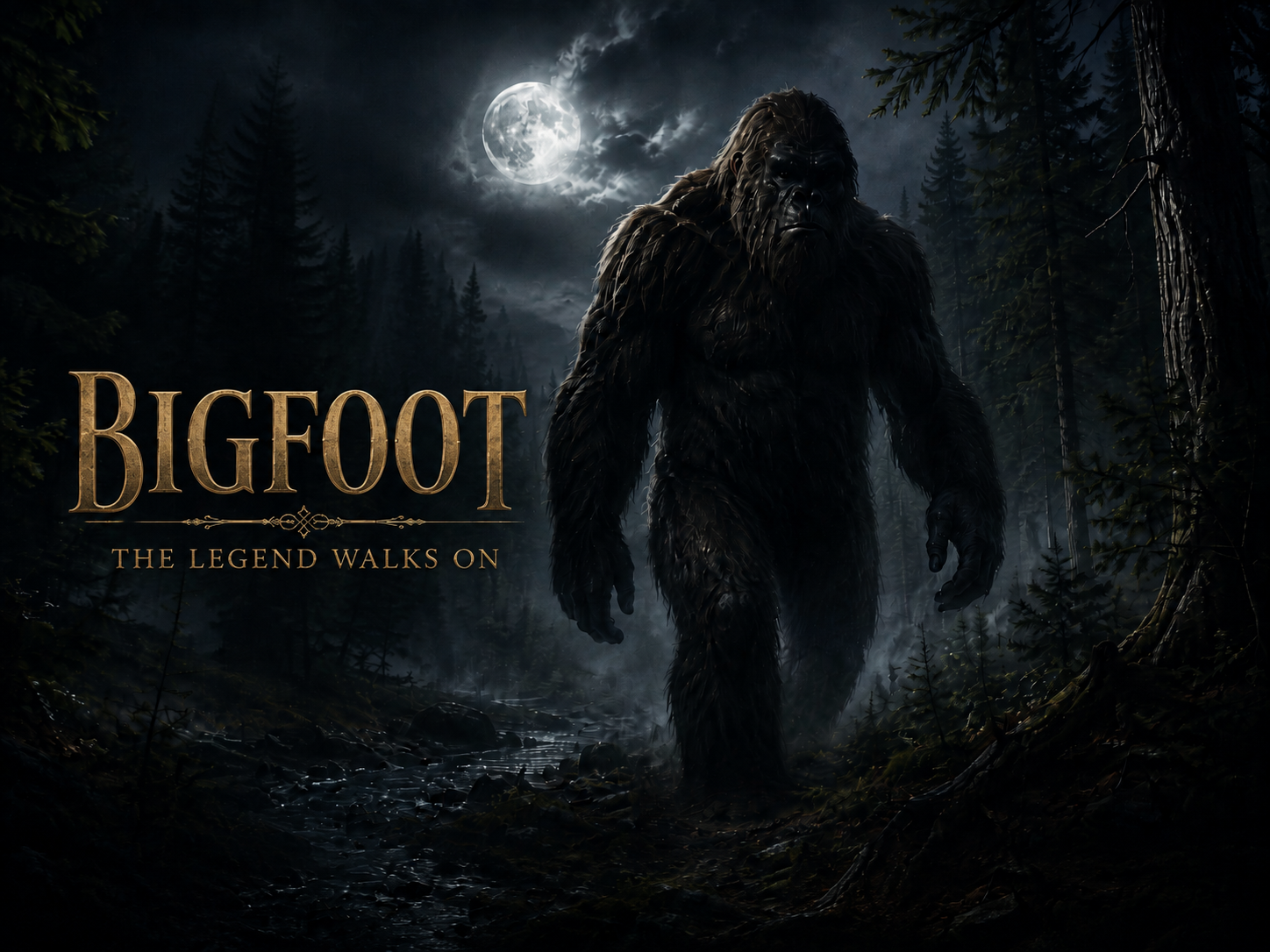
It was early autumn 2017 and I was running on fumes.
I had just finished a commercial cleaning contract that should have been a short, high-dollar job: oversee and correct the work of seven different cleaning companies across 2,500 units on two of the largest college campuses in Louisville, Kentucky. More than a hundred hours crammed into eight days. I hired and trained fifteen people on the fly, paid them out of pocket, and still expected a solid $25,000 to $30,000 after expenses. Instead I got a masterclass in how life can gut you when you least expect it.
The first knife came from a man I had brought on as supervisor because he was sick, going through expensive treatments, out of work, and needed the money. I thought I was helping a friend. What I didn’t know was that he had bugged my phone. He listened. He watched. He waited. Then he pounced—stole half my equipment and tried to take the paycheck out from under me.
The second knife came from the contractor himself. The same man who had begged me—literally had his father call me crying and pleading—to take the job and fix the mess they were in. I took it. I fixed it. Then they paid me ten percent of what was owed. Not enough to cover labor. Not enough to cover costs. I walked away with nothing and a lawsuit for my trouble.
Unfair doesn’t even begin to cover it. That’s just life sometimes. I know that better than most.
When the dust finally settled I needed distance. Real distance. Trees. Silence. Somewhere the only thing that could steal from me was the wind. So I pointed the van north into the Hoosier National Forest and disappeared into the hills for a week.
I had no idea the forest was about to show me something that would make every double-cross and empty paycheck feel small by comparison.
I needed the woods the way a drowning man needs air.
The money from that Louisville contract was supposed to buy me a full year of breathing room in southeastern Europe. One clean move. One clean start. Instead I was left with empty accounts, burned credit, and the kind of quiet rage that sits behind the eyes and won’t shut up. So I did what I had done for years: opened Google Earth, pulled up the national and state park maps, and hunted for the places the roads forgot. Off-trail. Away from the picnic tables and the smiling strangers. I wanted an old horse path that no one used, a corner of forest where I could disappear long enough to let the noise in my head burn itself out.
I found it deep in the Hoosier National Forest.
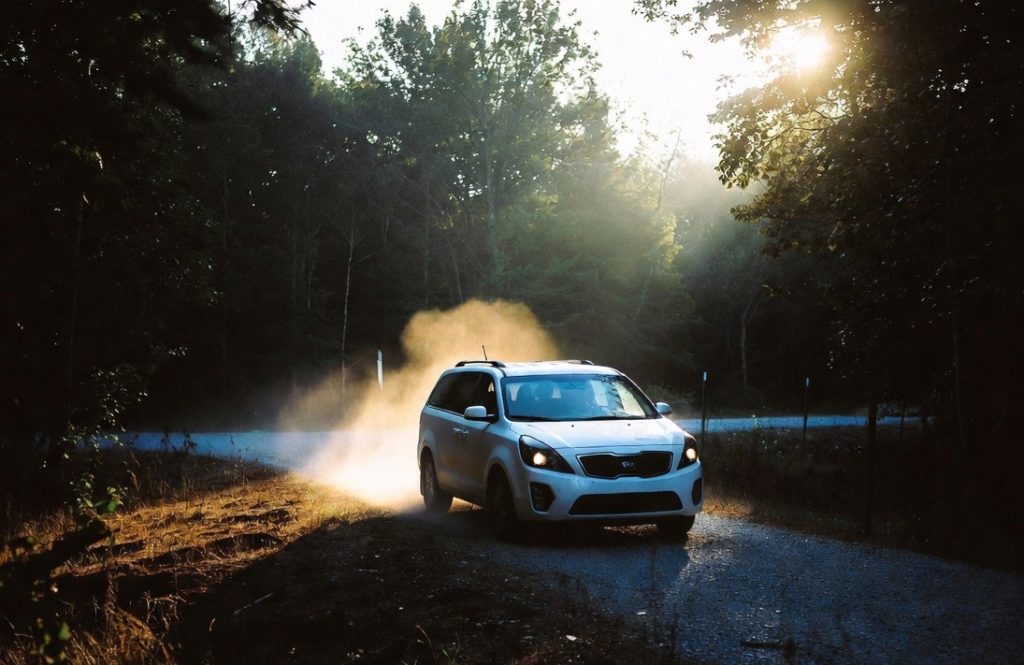
When I rolled in that weekend the campground felt almost abandoned. One or two trailers sat quiet under the trees. A couple of families and a solo rider came and went on horseback, vanishing down the main trail and returning hours later.
I parked as far from them as the loop would allow and watched the opposite trail—the one that didn’t seem to lead anywhere people actually wanted to go.
For two days I walked it. No other hikers. No wildlife close by either, which should have felt strange but didn’t register yet. My mind was still too loud.
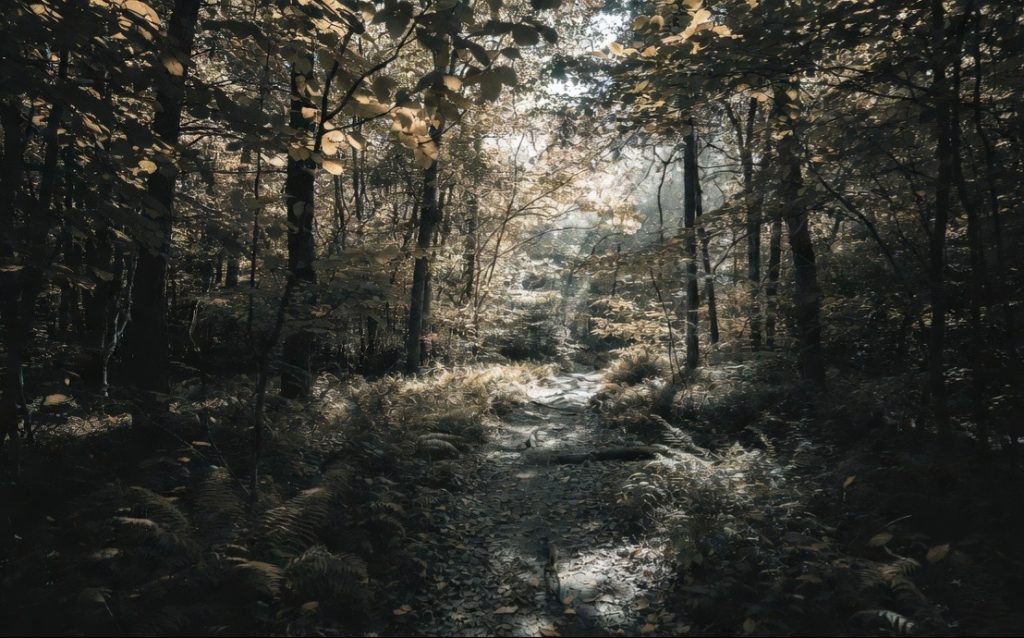
By Monday the place belonged to me. Or so I thought.
There was one other vehicle: a golden van with blacked-out windows and classic rock bleeding through the glass. The guy inside never hiked, never rode, just sat there behind dark sunglasses like he was waiting for something. I ignored him. I had enough ghosts of my own.
That afternoon I drove the long, winding road into the nearest town for supplies. Phone to my ear, talking to my wife, one eye on the GPS, the other on the empty road.
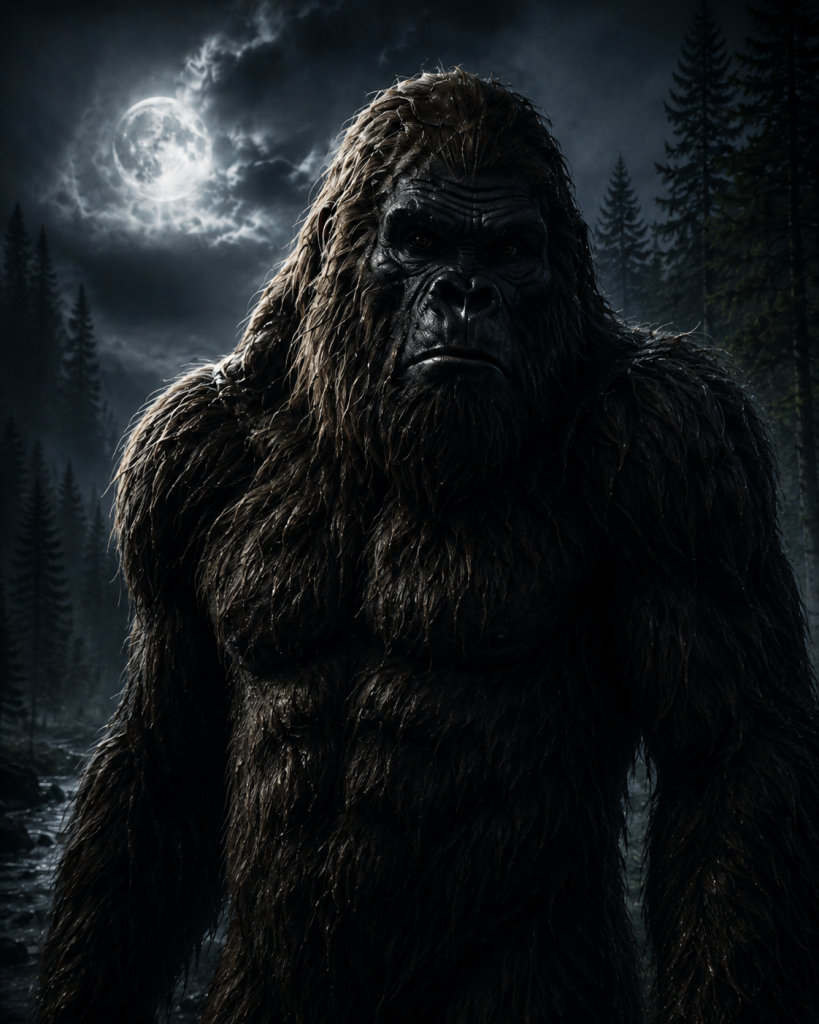
I came around a curve and something moved on the open hillside to my left. Fifty yards of grass, then the tree line. Standing right at the edge of those trees was a figure that didn’t belong in any world I understood.
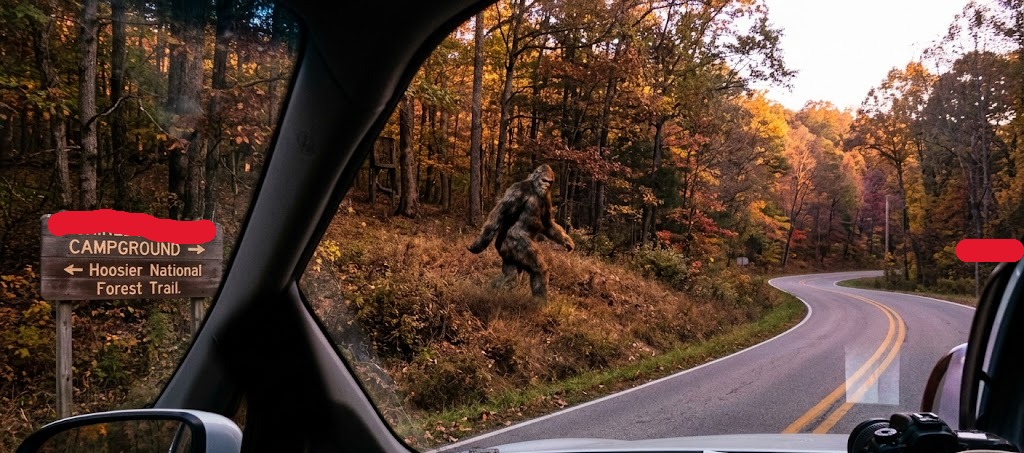
It was tall. Not bulky like a gorilla—tall the way a man is tall, only more so. Long dark hair covered every inch of it. Muscle packed the frame the way it packs a bodybuilder’s, dense and deliberate.
The wind moved through that hair. I saw it. My brain immediately offered the only acceptable explanation: some local had planted a life-sized Sasquatch statue on a random hillside in the middle of nowhere.
I even said the words out loud (I was talking to someone on the phone at the time). Then I glanced back over my shoulder and the statue was gone. Or it had stepped deeper into the trees. Either way, the hair had been moving. Statues don’t do that.
I finished the errand in a fog and drove back. That night the first objects hit the side of the van. Soft thumps. I told myself it was walnuts dropping from the big oak that stood between me and the fire pit.
Sometime the next day, after a long hike in the woods, the thumps came again—harder, more deliberate.
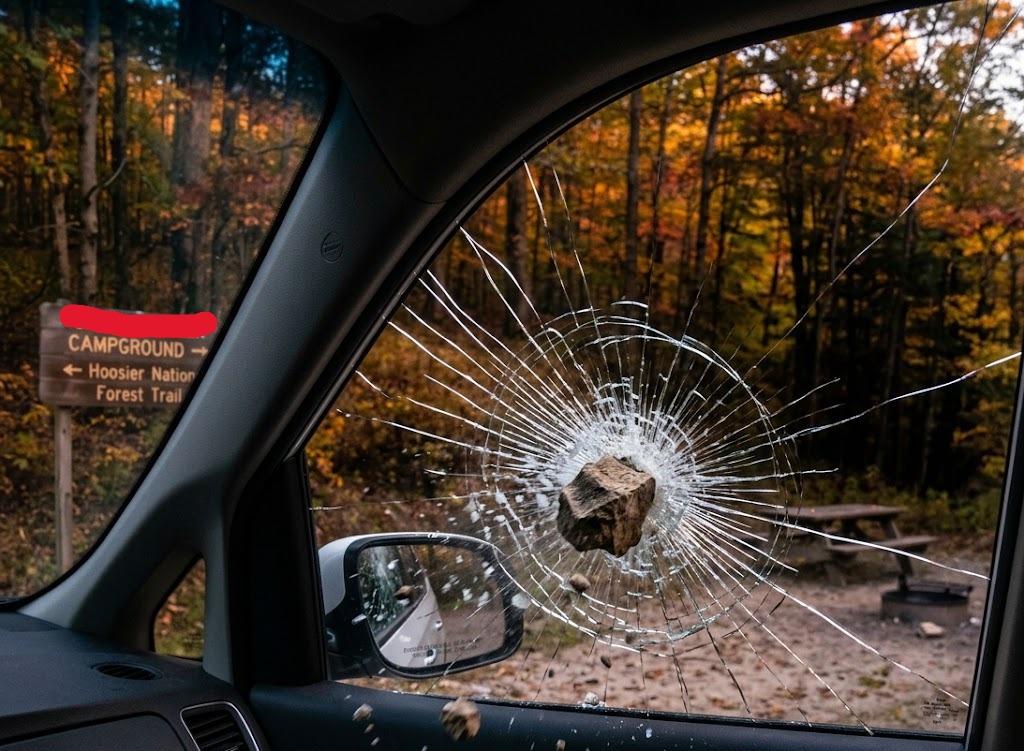
I was lying in the back of the van when it finally clicked: the impacts were coming sideways into the windows, not straight down from above. Nuts don’t travel sideways.
I sat up, heart slamming, and stepped out into the afternoon light. The second my boots hit the ground a crab apple exploded against the oak with a sound like a bat cracking a fastball. The fruit bounced twenty-five feet, then rolled another fifty before it stopped.
The force of it made the tree shudder. In that instant every soft thump from the night before rearranged itself in my mind. Those hadn’t been falling nuts. Those had been thrown. And the thrower had the arm of something that could have put a rock through my skull if it wanted to.
It didn’t want to.
That knowledge settled over me colder than the autumn air. Whatever had been out there in the trees—whatever had stood on that hillside watching me drive past—had waited until every last trailer and horseback rider was gone. It had waited until the golden van finally pulled out. Only then did it start testing the distance between us.
I spent the rest of the afternoon walking the edge of the woods with a five-foot staff that suddenly felt ridiculous. Nothing moved. Nothing answered. Night came quiet. I slept with the doors locked and one ear open, the full moon climbing high enough to turn the clearing silver.
The real conversation started at dawn.
I was standing by the fire pit with a cup of percolator coffee when I first heard the distant engine. A vehicle was coming up the long access road—still miles out, but closing. The sky was the color of wet ash. Then three sounds arrived almost on top of each other.
First the calls: three of them, half yell and half scream, something that lived in the space between human and animal and belonged to neither. They were loud enough to freeze the blood. They were angry. They were close.
Then the branches. High up in the canopy, thick limbs began snapping one after another, the sounds traveling in a steady line away from the campground and over the nearest ridge. Not low branches. Upper canopy. Whatever was moving through those trees was heavy, strong, and fast—covering ground that would have taken a man minutes in a matter of seconds. Multiple points of sound. Multiple bodies. All of them answering the same three calls and withdrawing in the same direction.
And underneath it all, steady and unmistakable, a drum. Low. Tribal. Even rhythm. Beating somewhere deeper in the forest until the approaching vehicle got close enough that every sound simply stopped. Branches. Calls. Drum. Silence.
I stood there with the coffee going cold in my hand and understood two things at once.
First: I had not been alone for days.
Second: they had chosen not to hurt me.
The face of the bigfoot I saw from the road is burned into my memory, forever.
I left the forest that morning with more questions than answers and a certainty that has never left me. There is far more moving through these woods—and through this life—than most people are willing to see. Sometimes the only way to catch a glimpse is to be broken open first.
A Final Word About My Bigfoot Encounter
If this story hit you the way it still hits me years later, you’ll want the full account — and the rest of the encounters that came before and after it.
Seeing Is Believing: Unbelievable Encounters of an Extraordinary Nature is available right now on Amazon. You can download the Kindle version for free (or free with Kindle Unlimited).
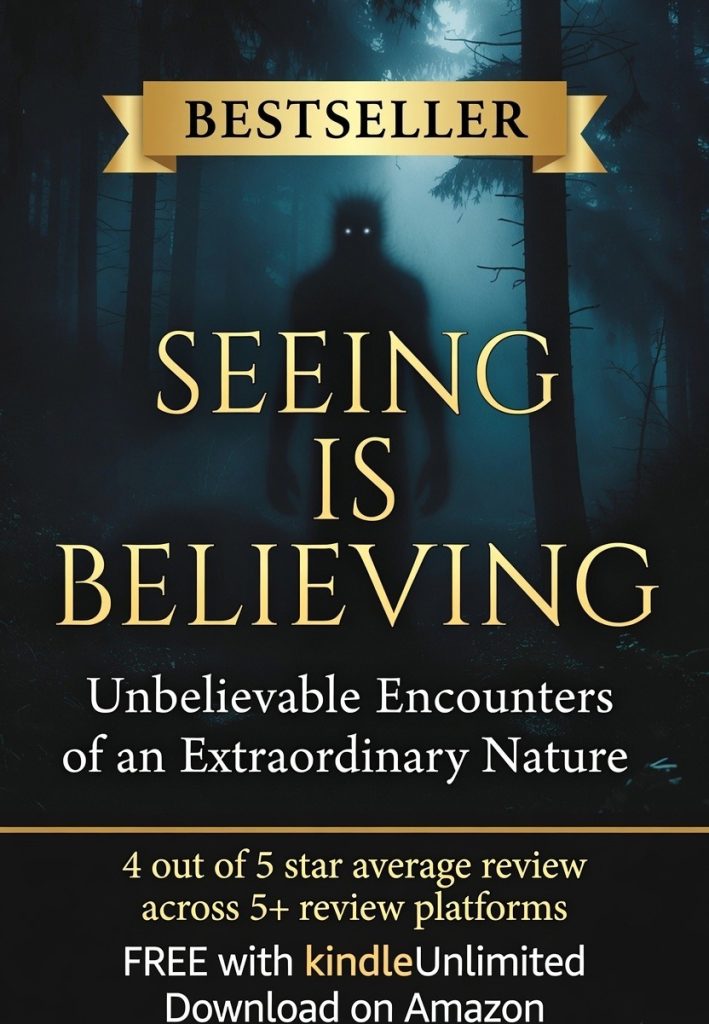
Grab a copy here: https://www.amazon.com/Seeing-Believing-Unbelievable-Encounters-Extraordinary-ebook/dp/B087R9VT9N
Read the whole thing. Then come back and tell me your own story. The more of us who speak, the harder it becomes for the world to keep pretending these woods are empty.
Keep searching. Keep believing. Keep attempting to see.