
Rosemary Recipes
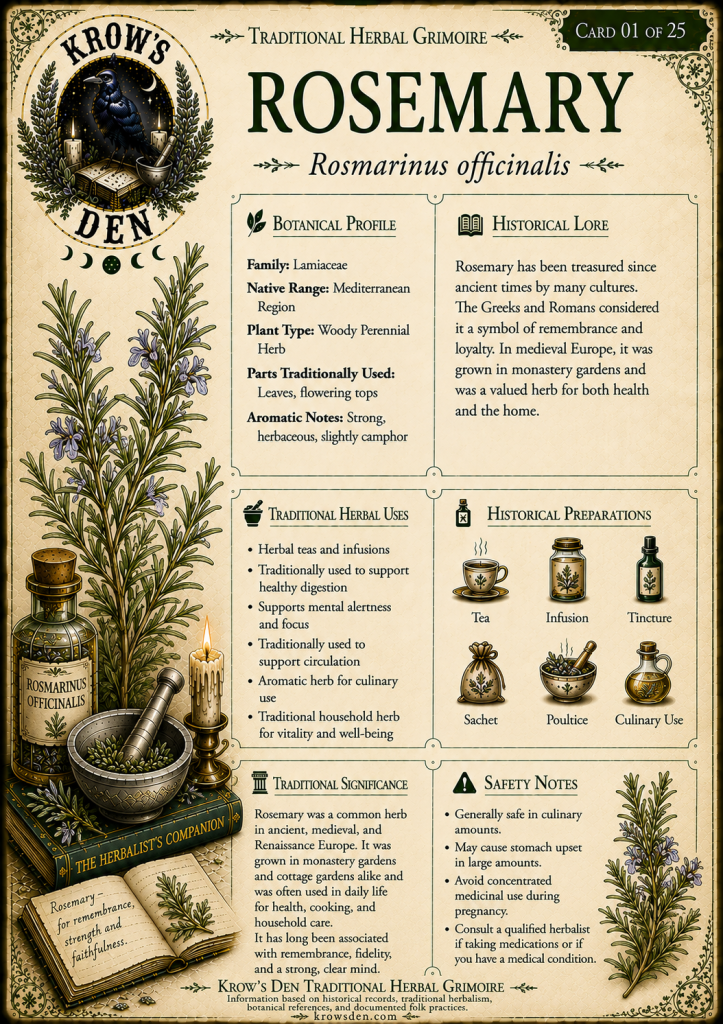
Salvia rosmarinus — also commonly known by its former botanical name, Rosmarinus officinalis
Rosemary is a strongly aromatic evergreen herb with a long history in cooking, traditional herbalism, household preparations, and European plant lore.
Its narrow leaves have been used in teas, baths, rinses, infused oils, and savoury recipes.
Botanical Profile
- Common name: Rosemary
- Botanical name: Salvia rosmarinus
- Plant family: Lamiaceae
- Native range: Mediterranean region
- Plant type: Woody evergreen shrub
- Parts traditionally used: Leaves and flowering aerial parts
Traditional Properties and Uses
Rosemary has traditionally been valued as both a culinary herb and a household herbal preparation.
Its leaves were commonly brewed into aromatic teas, added to bathing water, used in hair rinses, and incorporated into foods and preserving mixtures.
Traditional uses have included:
- Supporting digestion after meals
- Flavouring savoury foods
- Aromatic herbal teas
- Herbal baths and washes
- Hair and scalp rinses
- Household fragrance
- Infused oils and vinegars
Active Plant Constituents
Rosemary contains naturally occurring compounds including rosmarinic acid, carnosic acid, carnosol, camphor, 1,8-cineole, alpha-pinene, flavonoids, and other aromatic plant compounds.
The strength and composition of rosemary preparations vary depending on the plant, growing conditions, plant part, and preparation method.
Dried rosemary leaves, extracts, and rosemary essential oil are not interchangeable.
Harvesting Rosemary
Rosemary may be harvested throughout the year, although fresh spring and summer growth is often preferred for culinary use.
Choose healthy sprigs from a correctly identified plant that has not been treated with unsuitable garden chemicals.
Snip the softer upper growth without cutting deeply into old woody stems.
To dry rosemary, hang small bundles in a warm, dark, well-ventilated place.
Once completely dry, remove the leaves from the stems and store them in a labelled airtight jar away from heat, sunlight, and moisture.
How to Make Rosemary Tea
Rosemary produces a strongly aromatic tea with a resinous, slightly bitter flavour.
Ingredients:
- 1 teaspoon lightly crushed dried rosemary leaves
- 250 millilitres freshly boiled water
- Honey or lemon, optional
Method:
- Place the dried rosemary in a cup, teapot, or tea infuser.
- Pour the freshly boiled water over the leaves.
- Cover and allow the tea to steep for 5 to 10 minutes.
- Strain thoroughly.
- Add honey or lemon if desired.
- Allow the tea to cool to a comfortable temperature before drinking.
Begin with the shorter steeping time, as rosemary can become bitter when brewed too strongly.
Important: Do not substitute rosemary essential oil for dried rosemary leaves. Essential oil is highly concentrated and is not suitable for ordinary homemade tea.
Other Traditional Rosemary Preparations
Rosemary has also traditionally been prepared as:
- A rosemary and lemon culinary infusion
- A cooling hair and scalp rinse
- An aromatic herbal bath
- A rosemary-infused oil for external use
- A savoury herb salt or seasoning blend
- A rosemary-infused vinegar
Historical Lore
Rosemary was known in the ancient Mediterranean world as a culinary, aromatic, and household herb.
Greek and Roman traditions connected it with memory, fragrance, bathing, and everyday plant use.
During the Middle Ages, rosemary became common in household gardens, kitchens, herbal preparations, and early distillation practices.
Its enduring connection with remembrance later made it significant in European weddings, funerals, and commemorative customs.
Safety Notes
- Rosemary used in ordinary culinary quantities is different from concentrated extracts and essential oil.
- Do not swallow rosemary essential oil.
- Seek professional advice before using rosemary medicinally during pregnancy or breastfeeding.
- Medicinal preparations may not be suitable for young children.
- Consult a qualified professional if you have gallstones, bile-duct obstruction, gallbladder inflammation, liver disease, or another biliary condition.
- Rosemary can cause skin irritation or allergic reactions in some people.
- Check for possible interactions before combining concentrated herbal products with medicines.
Quick Reference
- Primary part used: Leaves
- Common preparations: Tea, rinse, bath, infused oil, seasoning, and culinary infusion
- Flavour: Strong, resinous, pine-like, and slightly bitter
- Traditional focus: Digestion, culinary use, bathing, fragrance, and cosmetic preparations
- Main caution: Rosemary leaves and concentrated rosemary essential oil are not interchangeable
Sage
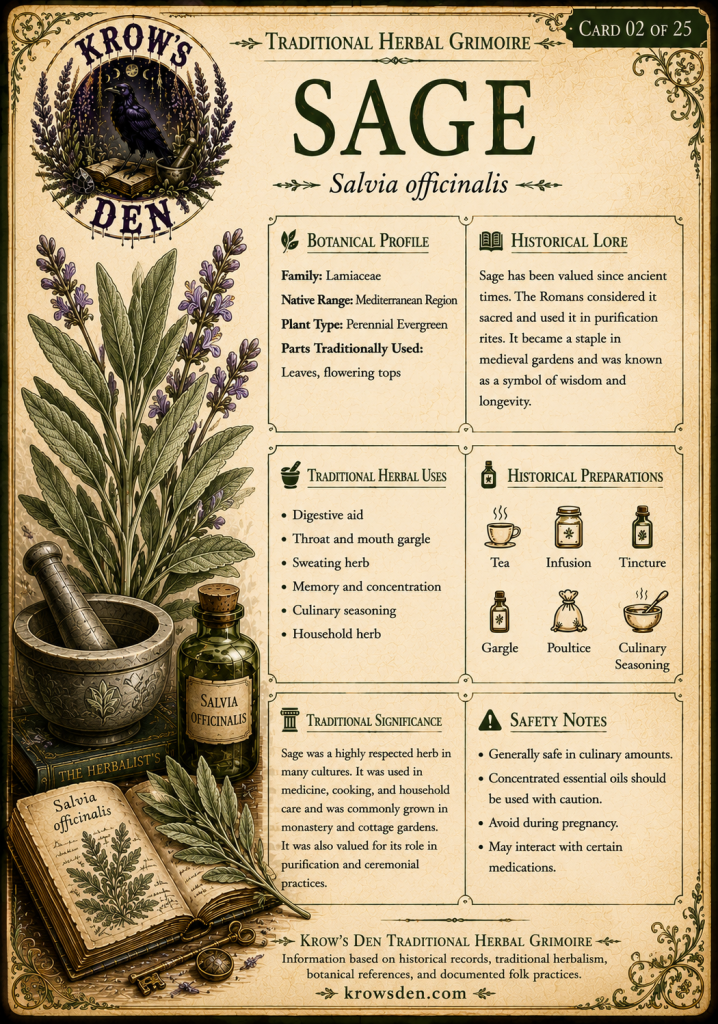
Salvia officinalis
Sage is an aromatic evergreen herb with a long history in cooking, household herbalism, traditional mouth rinses, teas, and European plant lore. Its soft grey-green leaves have a strong, earthy flavour and should generally be used in modest amounts.
Botanical Profile
Family: Lamiaceae
Native Range: Mediterranean Region
Plant Type: Evergreen Perennial Shrub
Parts Traditionally Used: Leaves, flowering tops
Medicinal Properties
Traditionally associated with:
- Antimicrobial properties
- Anti-inflammatory properties
- Antioxidant activity
- Digestive support
- Cognitive support
- Oral health support
Active Constituents
Sage contains numerous naturally occurring compounds, including:
- Thujone
- Rosmarinic Acid
- Camphor
- Cineole
- Flavonoids
- Tannins
These compounds contribute to the herb’s aroma and many of its traditional applications.
Harvesting Sage
Harvest sage during the morning after the dew has evaporated but before the day’s heat becomes intense.
For the strongest flavour and traditional use:
- Harvest before flowering
- Choose healthy mature leaves
- Avoid harvesting more than one-third of the plant at one time
- Dry leaves in a cool, dark, well-ventilated location
Store dried leaves in airtight containers away from direct sunlight.
Traditional Tea Preparation
Sage Tea
- 1–2 teaspoons dried sage leaves
- 250 ml hot water
Instructions:
- Place dried sage into a cup or teapot.
- Pour hot water over the leaves.
- Cover and steep for 5–10 minutes.
- Strain before drinking.
Other Traditional Sage Preparations
In addition to tea, sage has traditionally been prepared as:
- A capsule
- A cooled herbal gargle or mouth rinse
- A sage-infused vinegar
- An aromatic herbal bath
- A sage-infused oil for external use
- A savoury seasoning blend
- A fragrant household wash
Historical Lore
Sage has been valued for thousands of years and was highly regarded by the Romans. During the Middle Ages it became a staple of monastery gardens throughout Europe.
The herb gained a reputation as a symbol of wisdom, longevity, and household wellbeing. Its importance was reflected in old European sayings that suggested a person with sage growing in their garden would never lack for health or prosperity.
Traditional Herbal Uses
Historically used for:
- Herbal infusions
- Gargles
- Culinary seasoning
- Household herb preparations
- Food preservation
- Aromatic applications
Traditional Significance
Throughout European history, sage was considered one of the most important household herbs.
It appeared in:
- Monastery gardens
- Cottage gardens
- Traditional apothecaries
- Household medicine cabinets
- Culinary traditions
Its popularity endured because it served practical, medicinal, and culinary purposes.
Safety Notes
- Avoid excessive consumption.
- Concentrated sage essential oil should be used cautiously.
- Large amounts may be unsuitable during pregnancy.
- Individuals with certain medical conditions should seek professional advice before medicinal use.
Quick Reference
Best Known For:
Wisdom, longevity, culinary use, and traditional herbal applications.
Common Preparations:
Tea • Gargle • Tincture • Culinary Herb • Vinegar Infusion
Traditional Actions:
Antimicrobial • Anti-inflammatory • Antioxidant • Digestive Support
Mugwort
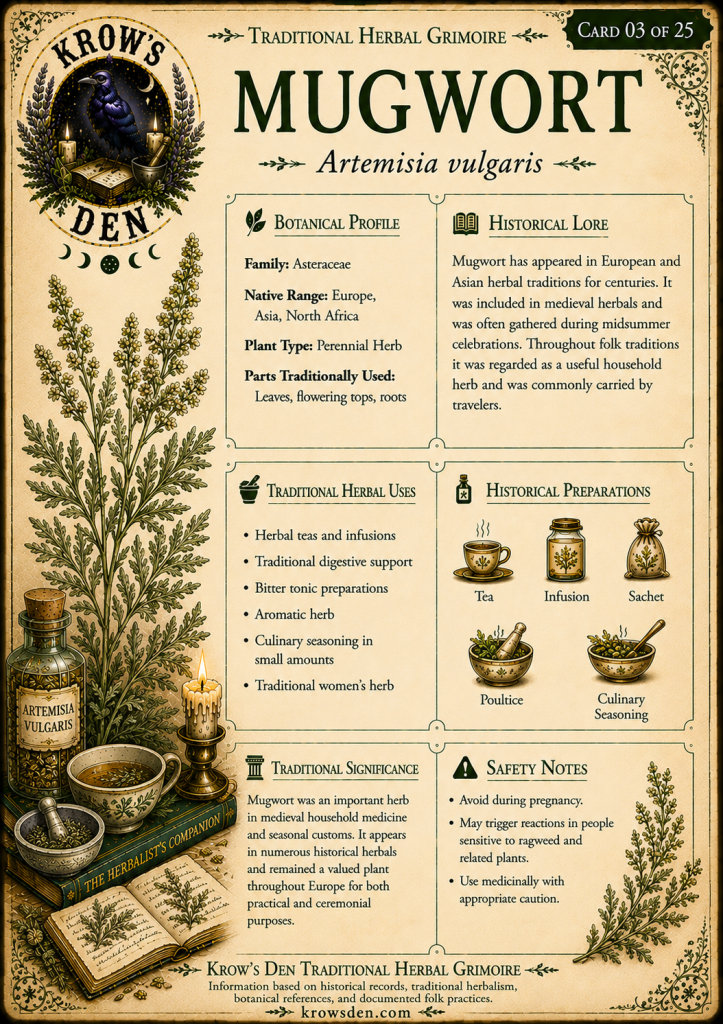
Artemisia vulgaris
Mugwort is an aromatic perennial herb with a long history in European, Asian, and traditional household herbalism.
Its leaves have been prepared as teas, washes, baths, culinary flavourings, and external herbal preparations. Because mugwort can be confused with other plants in the Artemisia genus, correct botanical identification is especially important.
Botanical Profile
Family: Asteraceae
Native Range: Europe, Asia, and North Africa
Plant Type: Perennial Herb
Parts Traditionally Used: Leaves, flowering tops, roots
Medicinal Properties
Traditionally associated with:
● Digestive support
● Bitter tonic properties
● Mild nervous system actions
● Menstrual support in traditional herbalism
● Appetite stimulation
● General wellness tonics
Active Constituents
Mugwort contains naturally occurring compounds including:
● Thujone
● Cineole
● Camphor
● Flavonoids
● Tannins
● Sesquiterpene lactones
These compounds contribute to the herb’s aroma, bitterness, and traditional applications.
Harvesting Mugwort
Mugwort is traditionally harvested just before or during flowering when its aromatic oils are strongest.
For best results:
● Harvest on a dry morning after dew has evaporated
● Select healthy stems and leaves
● Bundle and hang upside down in a cool, dry location
● Store dried material in airtight containers
Traditional Tea Preparation
Mugwort Tea
Ingredients:
● 1 teaspoon dried mugwort
● 250 ml hot water
Instructions:
1. Place mugwort in a teapot or cup.
2. Pour hot water over the herb.
3. Cover and steep for 5–10 minutes.
4. Strain before drinking.
Traditionally consumed in moderation due to its bitterness and potency.
Mugwort has also traditionally been prepared as:
- Capsules- Dried mugwort leaves may be ground into powder and placed into vegetable capsules.
- An aromatic herbal bath or foot soak
- A cooled external herbal wash
- A mugwort-infused oil for external use
- A culinary flavouring in some regional traditions
- Moxa within traditional East Asian practices when used by a trained practitioner
Full instructions for selected preparations will be added to a dedicated Mugwort Recipes page as the Krow’s Den herbal collection continues to grow.
Historical Lore
Mugwort has appeared in European and Asian herbal traditions for centuries.
It was listed in medieval herbals and was considered one of the important herbs of traditional folk medicine.
The plant was commonly carried by travellers and was often gathered during midsummer celebrations.
Throughout history it earned a reputation as a useful household herb and was valued for both practical and ceremonial purposes.
Historically used for:
● Herbal infusions
● Digestive tonics
● Aromatic preparations
● Household herb bundles
● Traditional women’s herbal preparations
● Seasonal celebrations and customs
Traditional Significance
Mugwort held an important place in medieval herbalism and European folk traditions.
It appeared in:
● Cottage gardens
● Traditional apothecaries
● Folk medicine practices
● Seasonal celebrations
● Household herb collections
Its long history has made it one of the most recognized herbs in traditional herbal literature.
Safety Notes
● Avoid use during pregnancy.
● Individuals sensitive to ragweed and related plants may experience allergic reactions.
● Not recommended for prolonged medicinal use without professional guidance.
● Use concentrated extracts with caution.
Quick Reference
Best Known For: Digestive support, traditional herbalism and historical folk traditions.
Common Preparations: Tea • Infusion • Tincture • Sachet • Herbal Pillow
Traditional Actions: Bitter Tonic • Digestive Support • Aromatic Herb • Traditional Women’s Herb
Lavender
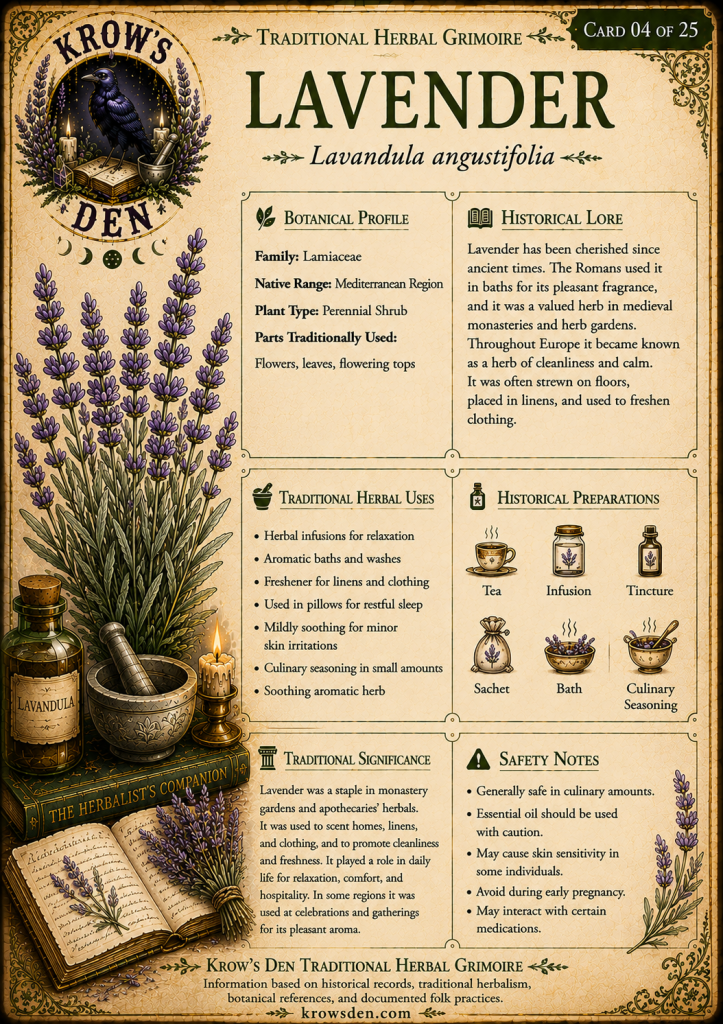
Lavender is an aromatic evergreen shrub with a long history in bathing, perfumery, household herbalism, and traditional preparations.
Its fragrant flowers have been used in teas, sachets, baths, infused oils, pillows, and skin preparations.
Culinary preparations should always use lavender specifically sold as food-grade.
Lavandula angustifolia
Botanical Profile
Family: Lamiaceae
Native Range: Mediterranean Region
Plant Type: Evergreen Perennial Shrub
Parts Traditionally Used: Flowers and leaves
Medicinal Properties
Traditionally associated with:
● Relaxation and calming support
● Mild anti-inflammatory properties
● Antioxidant activity
● Sleep support
● Nervous system support
● Skin-soothing applications
Active Constituents
Lavender contains naturally occurring compounds including:
● Linalool
● Linalyl acetate
● Camphor
● Terpinen-4-ol
● Flavonoids
● Tannins
These compounds contribute to lavender’s distinctive fragrance and many of its traditional uses.
Harvesting Lavender
Lavender is traditionally harvested when the flower buds are beginning to open but before they are fully mature.
For best results:
● Harvest during a dry morning
● Cut flower stems just above the leaves
● Gather into small bundles
● Hang upside down in a cool, dry, well-ventilated area
Store dried flowers in airtight containers away from sunlight.
Traditional Tea Preparation
Lavender Tea
Ingredients:
● 1–2 teaspoons dried lavender flowers
● 250 ml hot water
Instructions:
1. Place dried flowers into a teapot or cup.
2. Pour hot water over the flowers.
3. Cover and steep for 5–10 minutes.
4. Strain before drinking.
Traditionally consumed in moderation, often during the evening.
Traditional Capsule Preparation
Dried lavender flowers may be finely powdered and placed into vegetable capsules.
Traditional herbal references generally recommend following commercial product directions when using encapsulated lavender preparations.
Historically prepared as:
- Commercially prepared capsules
- Herbal tea
- Infusion
- Sachets
- Bath preparations
- Aromatic pillows
- Potpourri
- Infused oils
Historical Lore
Lavender has been cultivated for thousands of years and was highly valued by the Ancient Egyptians, Greeks, and Romans.
The Romans famously used lavender in bathing, perfumery, and household cleansing. Throughout medieval Europe it became a common feature in monastery gardens and household herb collections.
Its pleasant fragrance made it one of the most widely used herbs for scenting clothing, linens, and living spaces.
Historically used for:
- Herbal infusions
- Bathing preparations
- Aromatic sachets
- Household fragrance
- Linen storage
- Traditional skin preparations
Traditional Significance
Lavender became one of Europe’s most popular household herbs because it combined practical usefulness with a pleasant aroma.
It appeared in:
- Monastery gardens
- Cottage gardens
- Apothecaries
- Household linen cupboards
- Traditional bath preparations
- Its popularity continues today in herbal, culinary, and fragrance traditions.
Safety Notes
- Generally regarded as safe when used appropriately.
- Individuals sensitive to plants in the mint family may experience reactions.
- Essential oils should always be used with care and proper dilution.
- Seek professional advice before medicinal use during pregnancy.
Quick Reference
Best Known For: Relaxation, fragrance, bathing traditions, and household use.
Common Preparations: Tea • Sachet • Infused Oil • Bath Preparation • Potpourri
Traditional Actions: Calming • Aromatic • Mild Anti-Inflammatory • Nerve Support
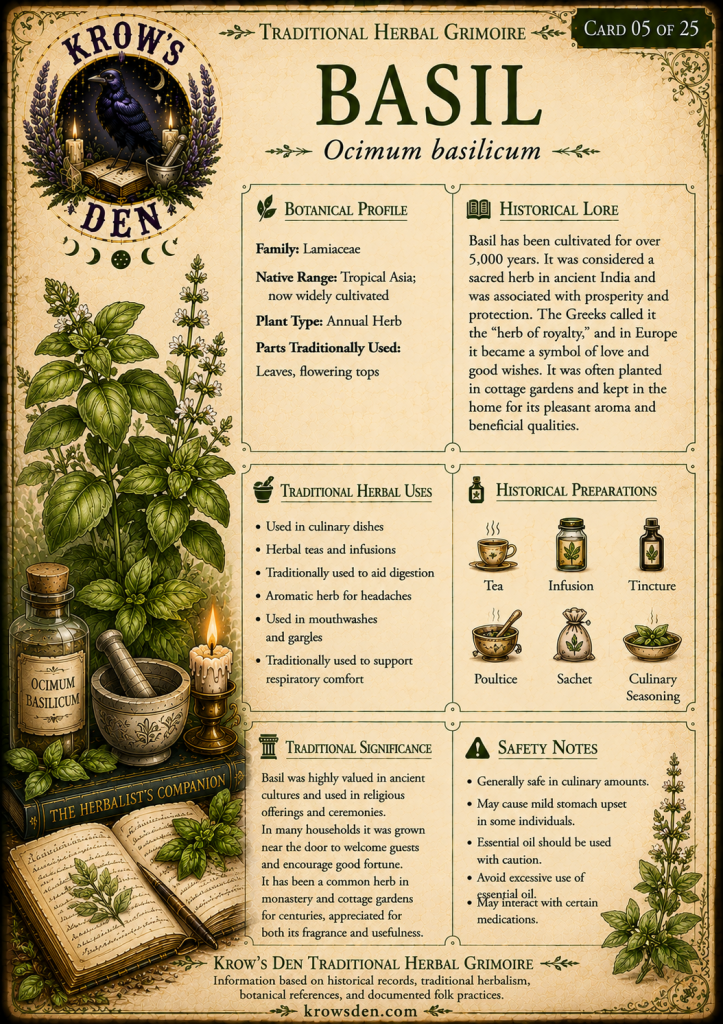
Basil
Ocimum basilicum
Basil is an aromatic culinary herb with a long history in household cooking, traditional herbalism, and regional plant traditions.
Its fragrant leaves have been used fresh or dried in teas, foods, infused oils, vinegars, washes, and other preparations.
This section refers to common or sweet basil, Ocimum basilicum, rather than holy basil or tulsi, which is a different species with its own traditions.
Botanical Profile
Family: Lamiaceae
Native Range: Tropical regions of Asia and Africa
Plant Type: Annual Herb
Parts Traditionally Used: Leaves, flowering tops, seeds
Medicinal Properties
Traditionally associated with:
● Digestive support
● Mild anti-inflammatory properties
● Antioxidant activity
● Aromatic tonic properties
● General wellness support
● Digestive comfort
Active Constituents
Basil contains naturally occurring compounds including:
● Eugenol
● Linalool
● Methyl chavicol
● Rosmarinic acid
● Flavonoids
● Tannins
These compounds contribute to basil’s aroma and many of its traditional uses.
Harvesting Basil
Harvest basil before flowering whenever possible, as the leaves tend to contain the strongest flavour and aroma.
For best results:
● Harvest during the morning after dew has evaporated
● Pinch stems above leaf nodes
● Avoid removing more than one-third of the plant
● Dry leaves in a cool, shaded location
Store dried leaves in airtight containers.
Traditional Tea Preparation
Basil Tea
Ingredients:
● 1–2 teaspoons dried basil leaves
● 250 ml hot water
Instructions:
1. Place basil into a cup or teapot.
2. Pour hot water over the herb.
3. Cover and steep for 5–10 minutes.
4. Strain before drinking.
Traditionally consumed once or twice daily.
Other Traditional Preparations
Historically prepared as:
- Commercially prepared basil capsules
- Powdered herbal products
- Herbal tea
- Infusion
- Culinary seasoning
- Herbal vinegar
- Infused oils
- Fresh herb preparations
Basil has been cultivated for thousands of years and has appeared in numerous cultures throughout Asia, Africa, and Europe.
The herb became highly valued for both culinary and medicinal purposes. In many regions it was grown close to homes and gardens because of its usefulness and fragrance.
Different varieties of basil developed throughout the world, leading to its widespread use in cooking, traditional medicine, and agriculture.
Historically used for:
- Digestive support
- Herbal infusions
- Culinary preparations
- Aromatic applications
- Household herb gardens
- Traditional wellness practices
Traditional Significance
Basil became one of the world’s most widely cultivated herbs due to its versatility.
It appeared in:
- Kitchen gardens
- Monastery gardens
- Traditional apothecaries
- Household herb collections
- Culinary traditions worldwide
Its combination of flavour, fragrance, and traditional usefulness ensured its popularity across many cultures.
Safety Notes
- Generally regarded as safe when used in culinary amounts.
- Individuals with allergies to plants in the mint family should exercise caution.
- Seek professional advice before medicinal use during pregnancy.
- Use concentrated essential oils carefully and according to manufacturer instructions.
Quick Reference
Best Known For: Culinary use, digestive support, aromatic qualities, and traditional herbal preparations.
Common Preparations: Tea • Infusion • Culinary Herb • Vinegar • Infused Oil
Traditional Actions: Digestive Support • Aromatic Tonic • Antioxidant • Mild Anti-Inflammatory
Chamomile
Matricaria chamomilla
Chamomile is a fragrant flowering herb with a long history in traditional teas, bathing preparations, household herbalism, and gentle external applications.
Its small daisy-like flowers have been prepared as infusions, washes, compresses, baths, and aromatic blends.
This section focuses on German chamomile, Matricaria chamomilla, rather than Roman chamomile, which is a separate species.
Botanical Profile
- Family: Asteraceae
- Native Range: Europe and Western Asia
- Plant Type: Annual Herb
- Parts Traditionally Used: Flowers
Medicinal Properties
Chamomile has traditionally been associated with:
- Calming and relaxing effects
- Digestive support
- Mild anti-inflammatory properties
- Sleep support
- Soothing irritated tissues
- Nervous system support
Active Constituents
Chamomile contains naturally occurring compounds including:
- Apigenin
- Bisabolol
- Chamazulene
- Flavonoids
- Coumarins
Harvesting Chamomile
Harvest chamomile flowers when they are fully open but still fresh and vibrant.
- Harvest during dry weather
- Pick flowers in the morning after dew has evaporated
- Use flowers immediately or dry them in a cool, shaded location
- Store dried flowers in airtight containers
Traditional Tea Preparation
Chamomile Tea
- 1–2 teaspoons dried chamomile flowers
- 250 ml hot water
- Place flowers into a cup or teapot.
- Pour hot water over the flowers.
- Cover and steep for 5–10 minutes.
- Strain before drinking.
Traditionally consumed once to three times daily.
Other Traditional Preparations
- Commercially prepared capsules
- Commercial powdered products
- Herbal tea
- Infusion
- Bath preparations
- Compresses
- Steam inhalations
- Tinctures
Historical Lore
Chamomile has been valued since ancient times and was used by the Egyptians, Greeks, and Romans.
The Egyptians associated the plant with the sun and used it extensively in traditional remedies.
Throughout medieval Europe, chamomile became a common cottage garden herb and was frequently included in monastery gardens due to its usefulness and pleasant fragrance.
Traditional Herbal Uses
- Digestive support
- Relaxation and calming preparations
- Bathing herbs
- Traditional skin preparations
- Herbal infusions
- Household remedies
Traditional Significance
Chamomile became one of Europe’s most beloved household herbs because it was easy to grow, pleasant to use, and highly versatile.
It appeared in:
- Monastery gardens
- Cottage gardens
- Traditional apothecaries
- Household medicine cabinets
- Herbal remedy collections
Safety Notes
- Generally regarded as safe when used appropriately.
- Individuals allergic to plants in the daisy family may experience reactions.
- Use caution if taking blood-thinning medications.
- Consult a healthcare professional before medicinal use during pregnancy.
Quick Reference
Best Known For: Relaxation, digestive support, calming teas, and traditional household remedies.
Common Preparations:
Tea • Infusion • Compress • Bath Preparation • Tincture
Traditional actions: Calming, soothing, carminative, mildly antispasmodic, and traditionally associated with easing minor digestive discomfort
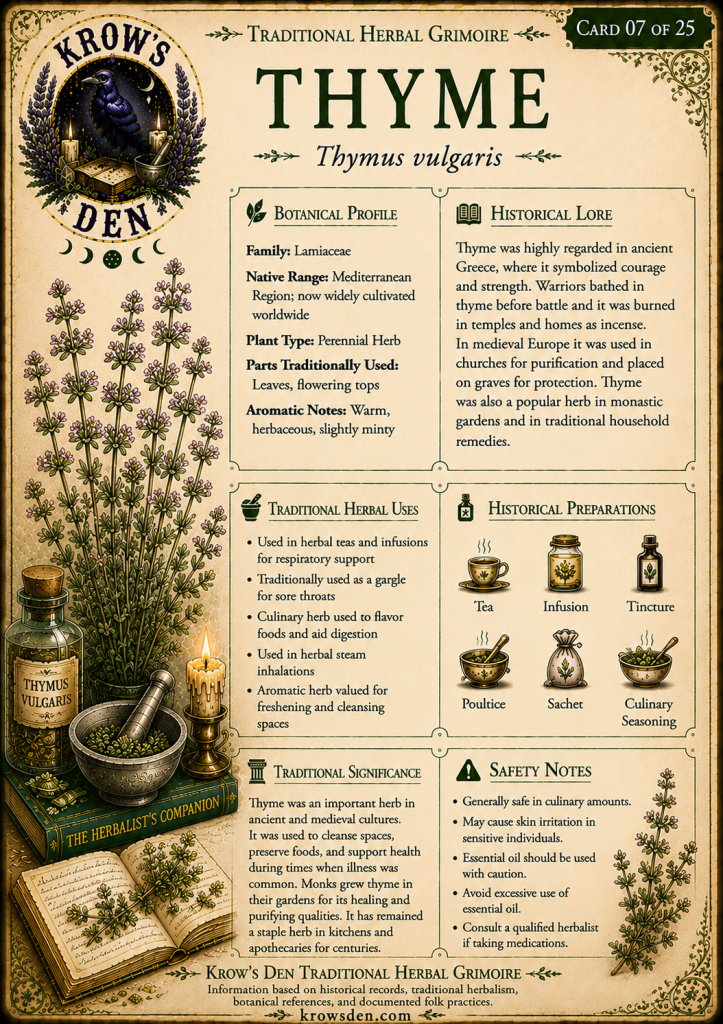
Peppermint
Mentha × piperita
Botanical Profile
- Family: Lamiaceae
- Native Range: Europe and the Middle East
- Plant Type: Perennial Herb
- Parts Traditionally Used: Leaves and flowering tops
Medicinal Properties
Peppermint has traditionally been associated with:
- Digestive support
- Carminative properties
- Respiratory support
- Cooling sensations
- Mild anti-inflammatory properties
- General wellness support
Active Constituents
Peppermint contains naturally occurring compounds including:
- Menthol
- Menthone
- Limonene
- Rosmarinic Acid
- Flavonoids
Harvesting Peppermint
Peppermint is traditionally harvested shortly before flowering when the aromatic oils are at their highest concentration.
- Harvest during dry weather
- Cut stems above the lower leaf growth
- Gather into small bundles
- Dry in a cool, shaded, well-ventilated location
- Store dried leaves in airtight containers
Traditional Tea Preparation
Peppermint Tea
- 1–2 teaspoons dried peppermint leaves
- 250 ml hot water
- Place peppermint into a cup or teapot.
- Pour hot water over the leaves.
- Cover and steep for 5–10 minutes.
- Strain before drinking.
Traditionally consumed once to three times daily.
Traditional Capsule Preparation
Dried peppermint leaves may be ground into a fine powder and placed into vegetable capsules.
Traditional herbal preparations commonly range from 500 mg–2 g daily depending on use and preparation.
Other Traditional Preparations
- Herbal tea
- Infusion
- Steam inhalation
- Tincture
- Herbal syrups
- Culinary flavouring
Historical Lore
Peppermint has been valued since ancient times and was known to both the Greeks and Romans. The herb was commonly used to scent rooms, freshen breath, and flavour food and beverages.
Throughout Europe it became a popular household herb, prized for its refreshing aroma and versatility in traditional herbal preparations.
Traditional Herbal Uses
- Digestive support preparations
- Herbal infusions
- Respiratory support preparations
- Household remedies
- Aromatic uses
- Culinary flavouring
Traditional Significance
Peppermint became one of the most widely cultivated herbs due to its pleasant flavour, refreshing scent, and traditional usefulness.
It appeared in:
- Kitchen gardens
- Monastery gardens
- Traditional apothecaries
- Household herb collections
- Culinary traditions throughout Europe
Safety Notes
- Generally regarded as safe when used appropriately.
- Individuals with gastroesophageal reflux may find peppermint aggravates symptoms.
- Use concentrated essential oils with caution.
- Consult a healthcare professional before medicinal use during pregnancy.
Quick Reference
Best Known For:
Digestive support, refreshing flavour, cooling properties, and traditional herbal use.
Common Preparations:
Tea • Infusion • Steam Inhalation • Tincture • Culinary Herb
Traditional Actions:
Carminative • Digestive Support • Respiratory Support • Mild Anti-Inflammatory
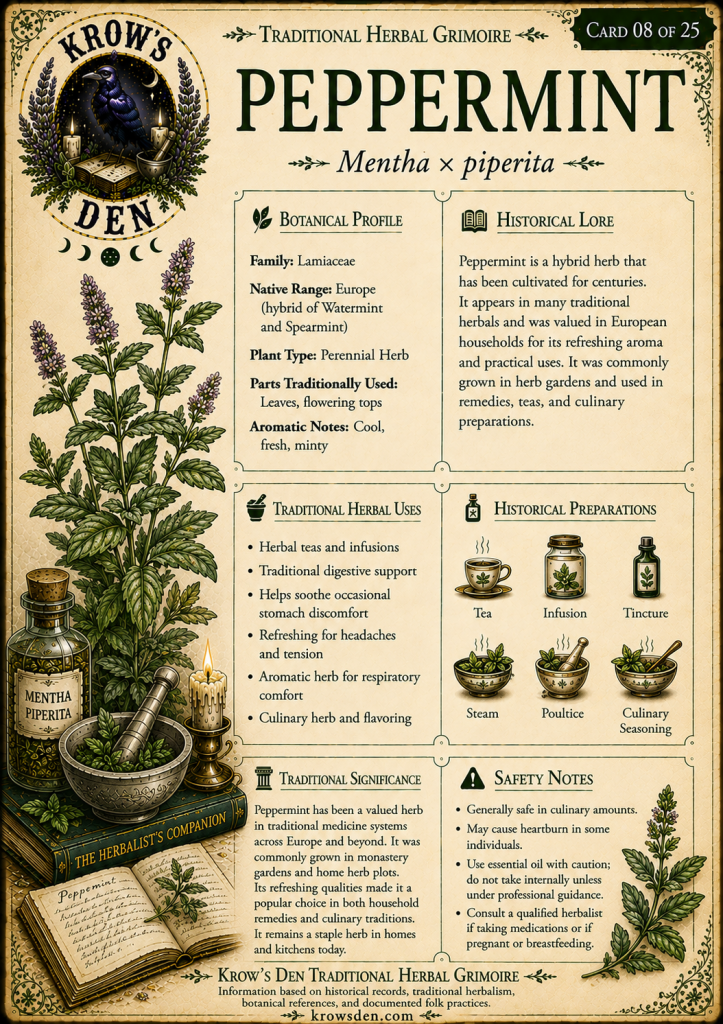
Lemon Balm
Melissa officinalis
Botanical Profile
- Family: Lamiaceae
- Native Range: Southern Europe, North Africa, and Western Asia
- Plant Type: Perennial Herb
- Parts Traditionally Used: Leaves and flowering tops
Medicinal Properties
Lemon Balm has traditionally been associated with:
- Calming and relaxing properties
- Nervous system support
- Digestive support
- Antioxidant activity
- Mild antiviral properties
- General wellness support
Active Constituents
Lemon Balm contains naturally occurring compounds including:
- Rosmarinic Acid
- Citral
- Citronellal
- Geraniol
- Flavonoids
- Tannins
Harvesting Lemon Balm
Harvest lemon balm before flowering when the leaves contain the highest concentration of aromatic oils.
- Harvest during dry weather
- Pick healthy leaves and tender stems
- Avoid harvesting more than one-third of the plant at a time
- Dry in a cool, shaded location with good airflow
- Store dried leaves in airtight containers
Traditional Tea Preparation
Lemon Balm Tea
- 1–2 teaspoons dried lemon balm leaves
- 250 ml hot water
- Place lemon balm into a cup or teapot.
- Pour hot water over the leaves.
- Cover and steep for 5–10 minutes.
- Strain before drinking.
Traditionally consumed once to three times daily.
Traditional Capsule Preparation
Dried lemon balm leaves may be finely ground and placed into vegetable capsules.
Traditional herbal preparations commonly range from 500 mg–2 g daily depending on preparation and use.
Other Traditional Preparations
- Herbal tea
- Infusion
- Tincture
- Herbal syrup
- Fresh herb preparations
- Infused oils
Historical Lore
Lemon Balm has been cultivated for more than two thousand years and was highly valued by the Ancient Greeks and Romans. The herb later became a staple of monastery gardens throughout medieval Europe.
Its pleasant citrus fragrance and gentle nature earned it a reputation as a cherished household herb. Historical herbalists often described lemon balm as a plant that helped “gladden the heart” and lift the spirits.
Traditional Herbal Uses
- Herbal infusions
- Digestive support preparations
- Relaxation blends
- Household remedies
- Aromatic herb preparations
- Traditional wellness tonics
Traditional Significance
Lemon Balm became a common feature of monastery gardens and traditional apothecaries due to its versatility and pleasant aroma.
It appeared in:
- Monastery gardens
- Cottage gardens
- Traditional apothecaries
- Household herb collections
- European herbal traditions
Safety Notes
- Generally regarded as safe when used appropriately.
- Individuals with thyroid conditions should consult a healthcare professional before medicinal use.
- May cause drowsiness in some individuals.
- Consult a healthcare professional before medicinal use during pregnancy.
Quick Reference
Best Known For:
Calming support, pleasant citrus aroma, digestive support, and traditional herbal use.
Common Preparations:
Tea • Infusion • Tincture • Syrup • Fresh Herb
Traditional Actions:
Nervine • Digestive Support • Antioxidant • Calming Herb
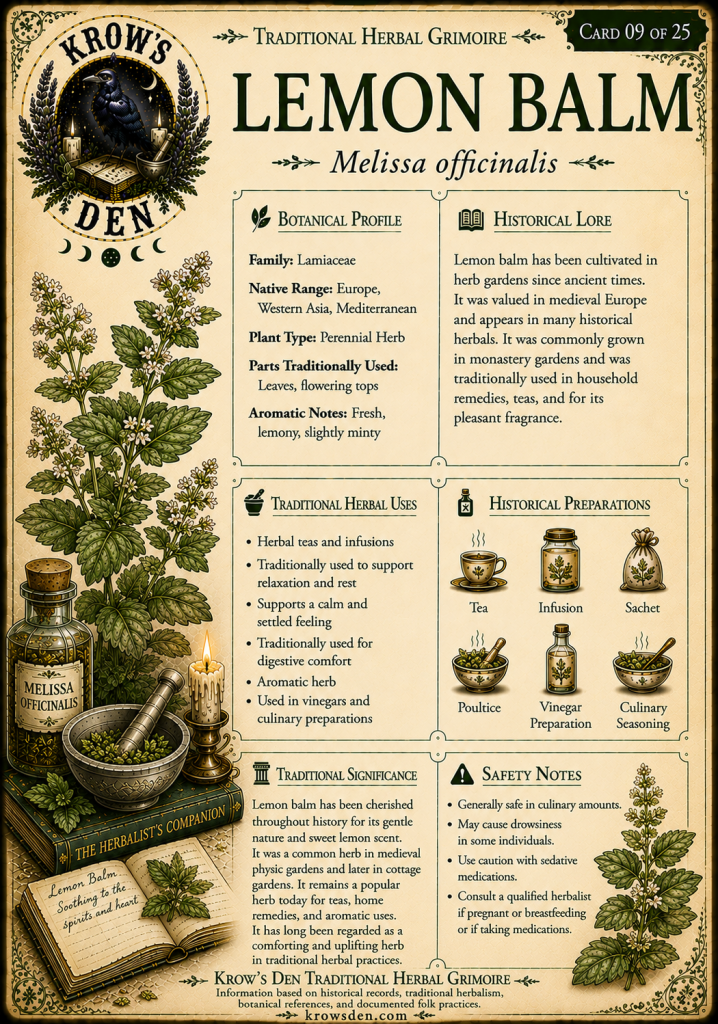
Yarrow
Achillea millefolium
Botanical Profile
- Family: Asteraceae
- Native Range: Europe, Asia, and North America
- Plant Type: Perennial Herb
- Parts Traditionally Used: Flowers, leaves, and aerial parts
Medicinal Properties
Yarrow has traditionally been associated with:
- Wound support applications
- Mild anti-inflammatory properties
- Astringent actions
- Digestive support
- Diaphoretic properties
- General wellness support
Active Constituents
Yarrow contains naturally occurring compounds including:
- Achilleine
- Chamazulene
- Flavonoids
- Tannins
- Sesquiterpene Lactones
- Volatile Oils
Harvesting Yarrow
Harvest yarrow when the flower heads are fully open and healthy.
- Harvest during dry weather
- Cut flowering stems above the lower foliage
- Bundle stems for drying
- Dry in a cool, shaded, well-ventilated area
- Store dried material in airtight containers
Traditional Tea Preparation
Yarrow Tea
- 1–2 teaspoons dried yarrow flowers and leaves
- 250 ml hot water
- Place yarrow into a cup or teapot.
- Pour hot water over the herb.
- Cover and steep for 10 minutes.
- Strain before drinking.
Traditionally consumed in moderation.
Traditional Capsule Preparation
Dried yarrow may be ground into a fine powder and placed into vegetable capsules.
Traditional herbal preparations commonly range from 500 mg–2 g daily depending on preparation and use.
Other Traditional Preparations
- Herbal tea
- Infusion
- Poultice
- Compress
- Tincture
- Topical preparations
Historical Lore
Yarrow has one of the longest recorded histories of any herb in traditional European herbalism. According to Greek mythology, the warrior Achilles used yarrow to treat the wounds of his soldiers during the Trojan War, which inspired the botanical name Achillea.
Throughout history, yarrow became widely known as a battlefield herb and was valued for its role in traditional wound care and household medicine.
Traditional Herbal Uses
- Traditional wound-support preparations
- Digestive support
- Herbal infusions
- Topical herbal applications
- Traditional wellness preparations
- Household herbal remedies
Traditional Significance
Yarrow was one of the most important herbs in traditional European folk medicine and apothecary practice.
It appeared in:
- Monastery gardens
- Cottage gardens
- Traditional apothecaries
- Battlefield medicine kits
- Household herb collections
Its long history and widespread use made it a staple herb across many cultures.
Safety Notes
- Individuals allergic to plants in the daisy family may experience reactions.
- Avoid medicinal use during pregnancy unless advised by a qualified professional.
- Use with caution if taking medications affecting blood clotting.
- Consult a healthcare professional before medicinal use.
Quick Reference
Best Known For:
Traditional wound care, herbal infusions, and historical battlefield medicine.
Common Preparations:
Tea • Infusion • Poultice • Compress • Tincture
Traditional Actions:
Astringent • Anti-Inflammatory • Diaphoretic • Digestive Support