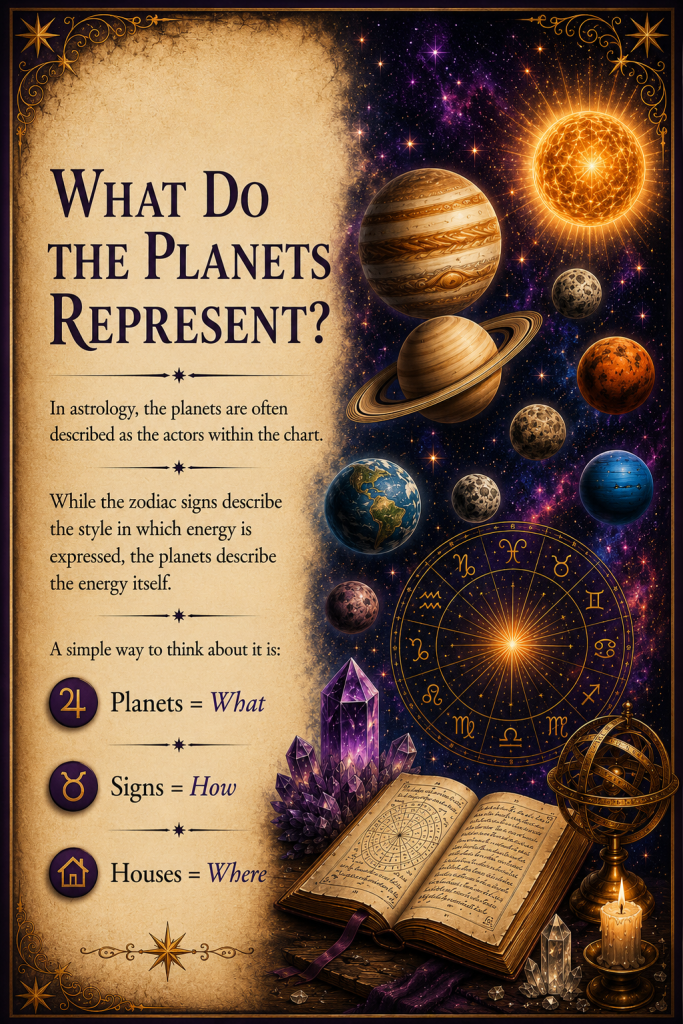
If the zodiac signs represent how energy is expressed, the planets represent what is being expressed.
In astrology, the planets are among the most important components of a birth chart. Each planet symbolizes different aspects of personality, experience, motivation, and life themes. By examining where the planets were positioned at the moment of birth, astrologers seek to better understand how various energies interact within an individual’s life.
Although astrology uses the word “planet” broadly, it includes the Sun and Moon alongside the traditional planets of our solar system. Each celestial body carries its own symbolism and contributes a unique influence to chart interpretation.
Understanding the planets is essential for anyone seeking to explore astrology beyond basic Sun signs.
What Do the Planets Represent?
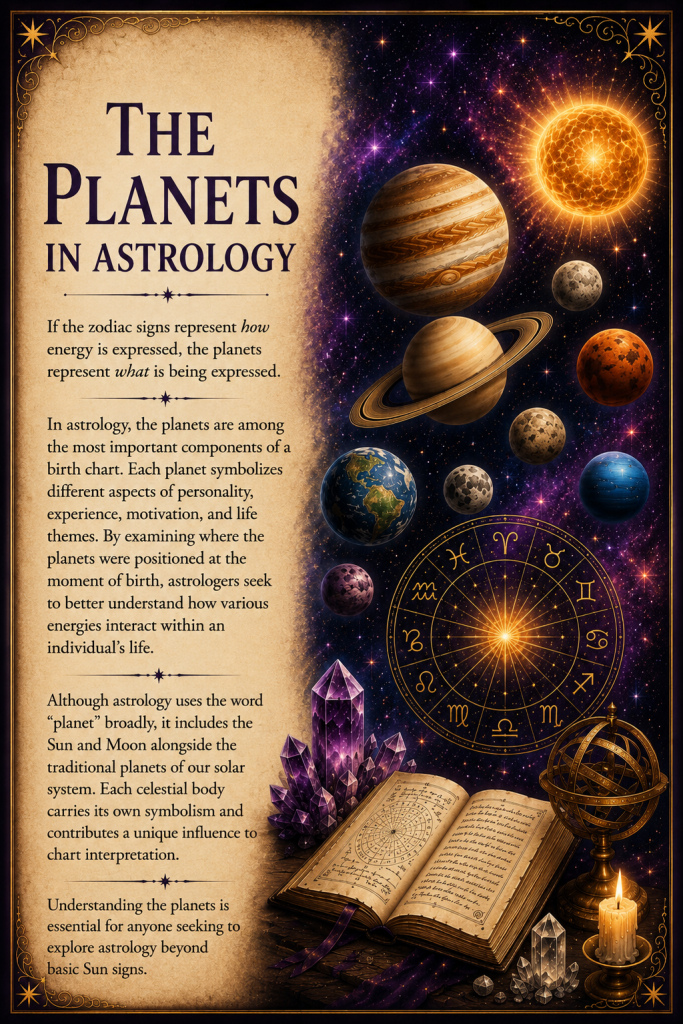
In astrology, the planets are often described as the actors within the chart.
While the zodiac signs describe the style in which energy is expressed, the planets describe the energy itself.
A simple way to think about it is:
- Planets = What
- Signs = How
- Houses = Where
Together, these components form the symbolic language of astrology.
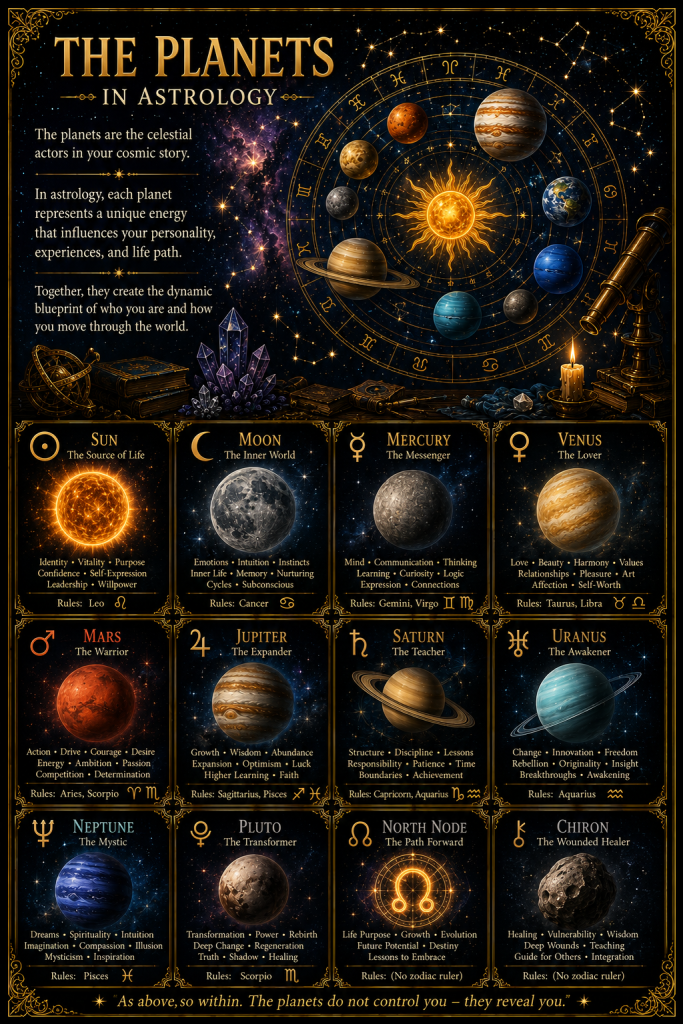
The Luminaries: The Sun and Moon
Although not technically planets in astronomy, the Sun and Moon are considered fundamental planetary bodies within astrology.
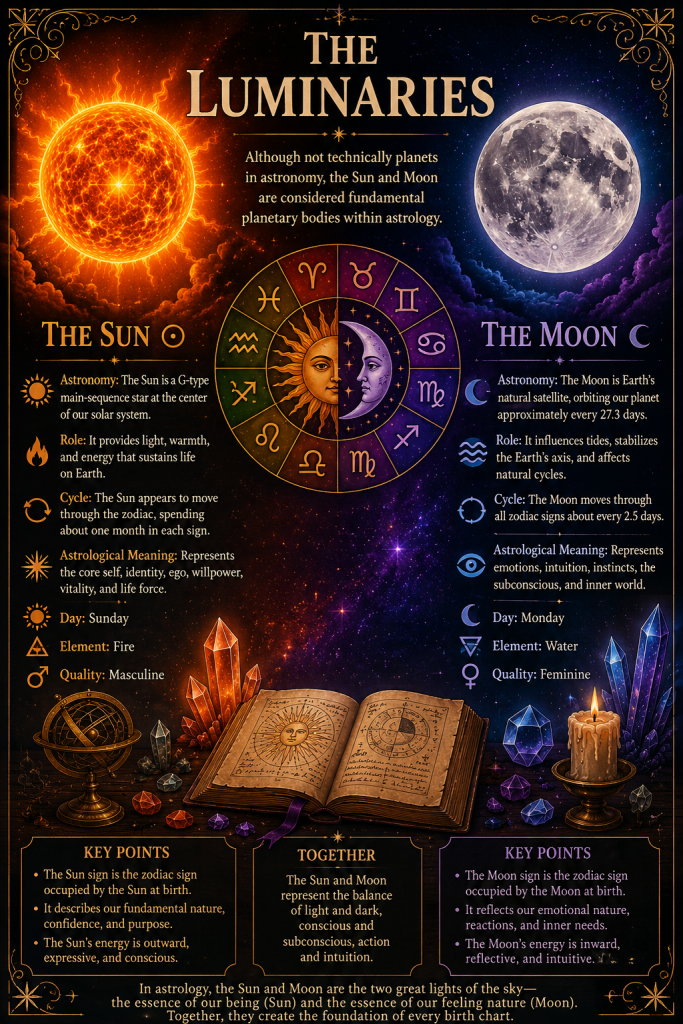
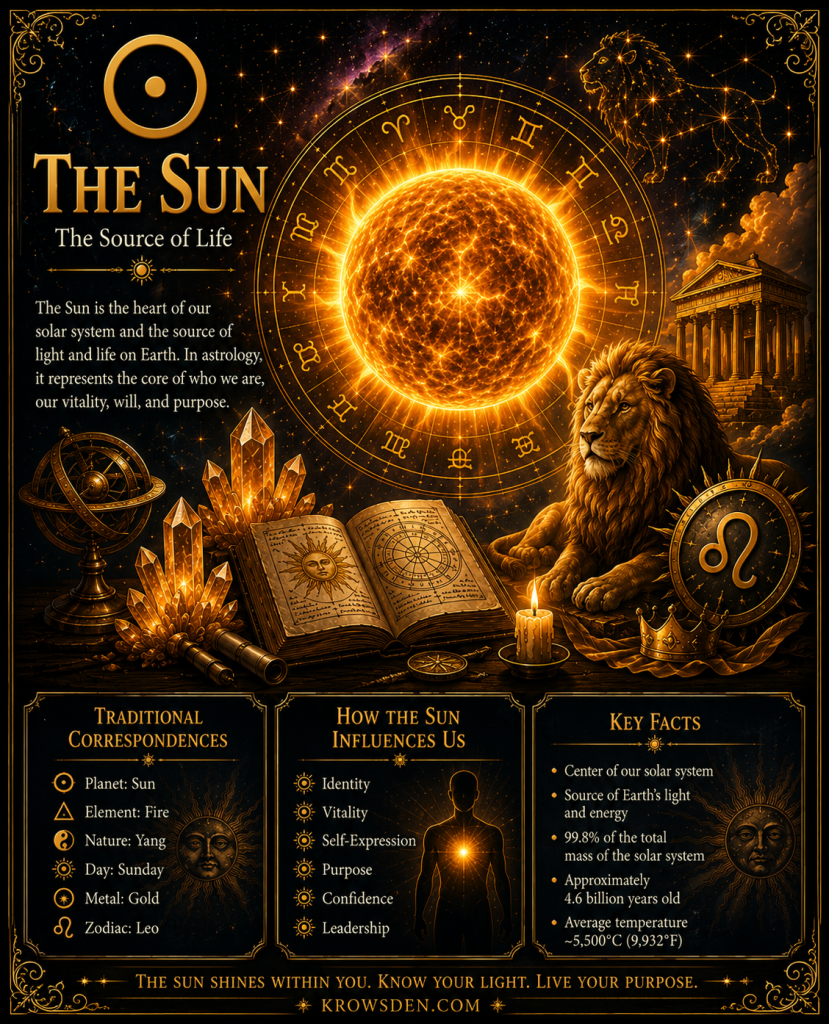
The Sun ☉
The Sun represents:
- Identity
- Vitality
- Self-expression
- Personal purpose
Your Sun sign is the zodiac sign occupied by the Sun at birth and is often the first astrological placement people learn.
Continue Reading: Sun Signs →
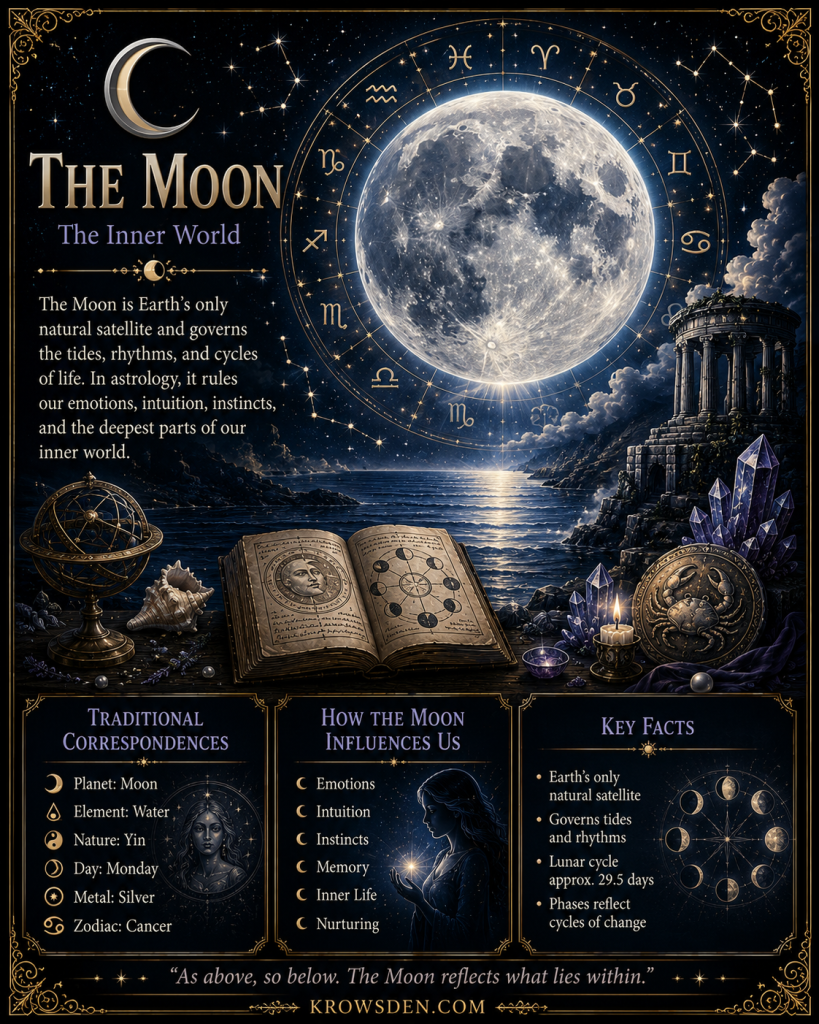
The Moon ☽
The Moon represents:
- Emotions
- Instincts
- Inner life
- Subconscious patterns
Many astrologers consider the Moon just as important as the Sun when interpreting personality.
Continue Reading: Moon Signs →
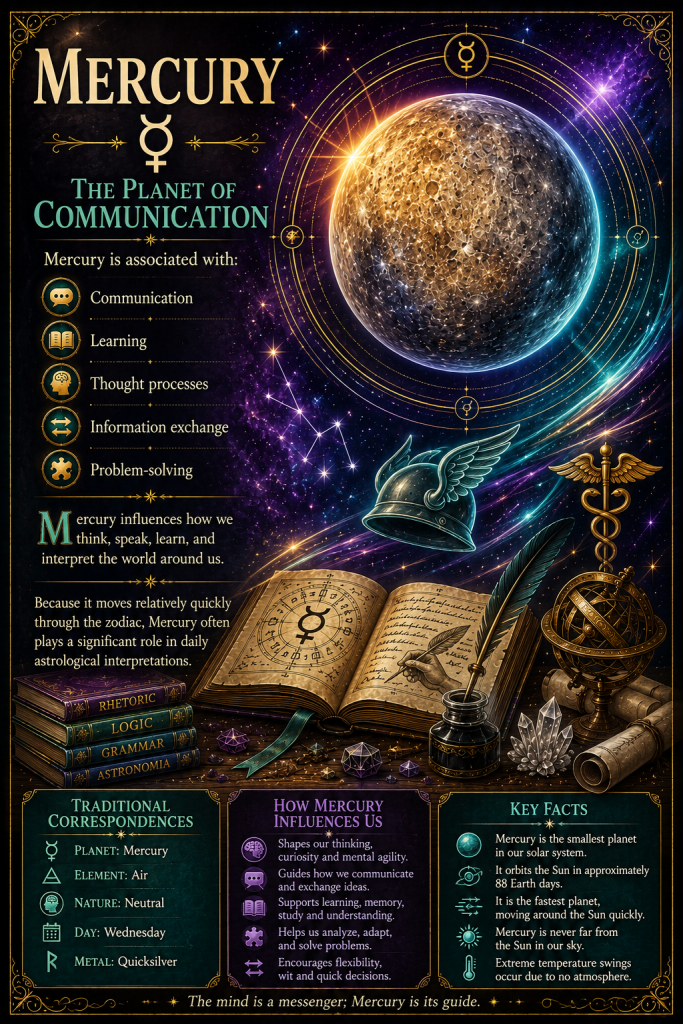
Mercury ☿
The Planet of Communication
Mercury is associated with:
- Communication
- Learning
- Thought processes
- Information exchange
- Problem-solving
It influences how we think, speak, learn, and interpret the world around us.
Hence it often plays a significant role in daily astrological interpretations because it moves directly through the zodiac.
Continue Reading: Mercury →
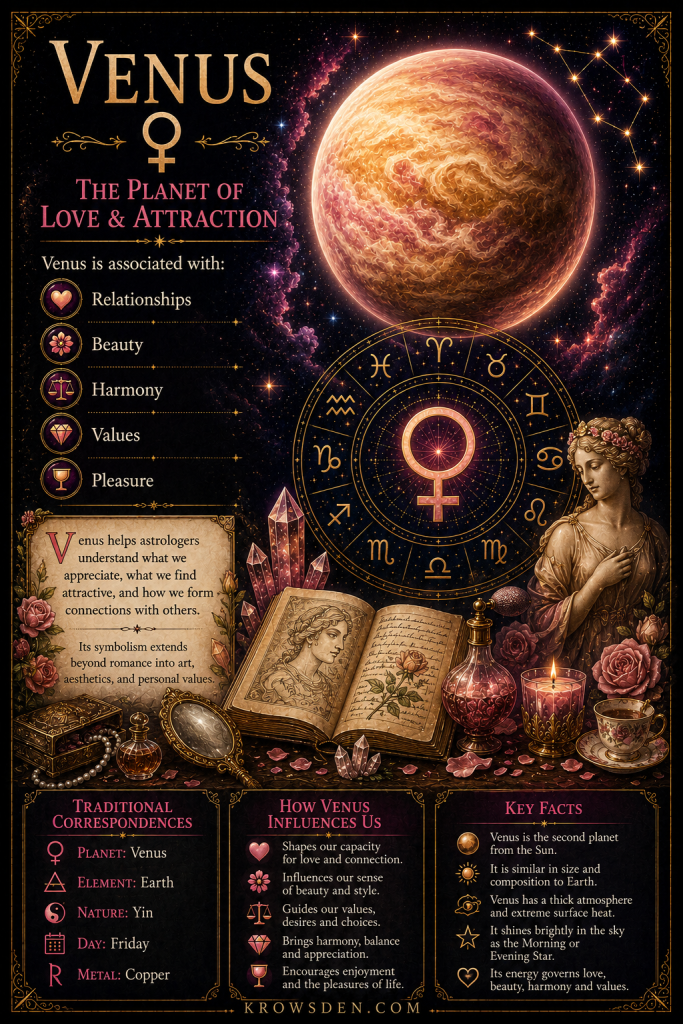
Venus ♀
The Planet of Love and Attraction
Venus is associated with:
- Relationships
- Beauty
- Harmony
- Values
- Pleasure
Venus helps astrologers understand what we appreciate, what we find attractive, and how we form connections with others.
Its symbolism extends beyond romance into art, aesthetics, and personal values.
Continue Reading: Venus →
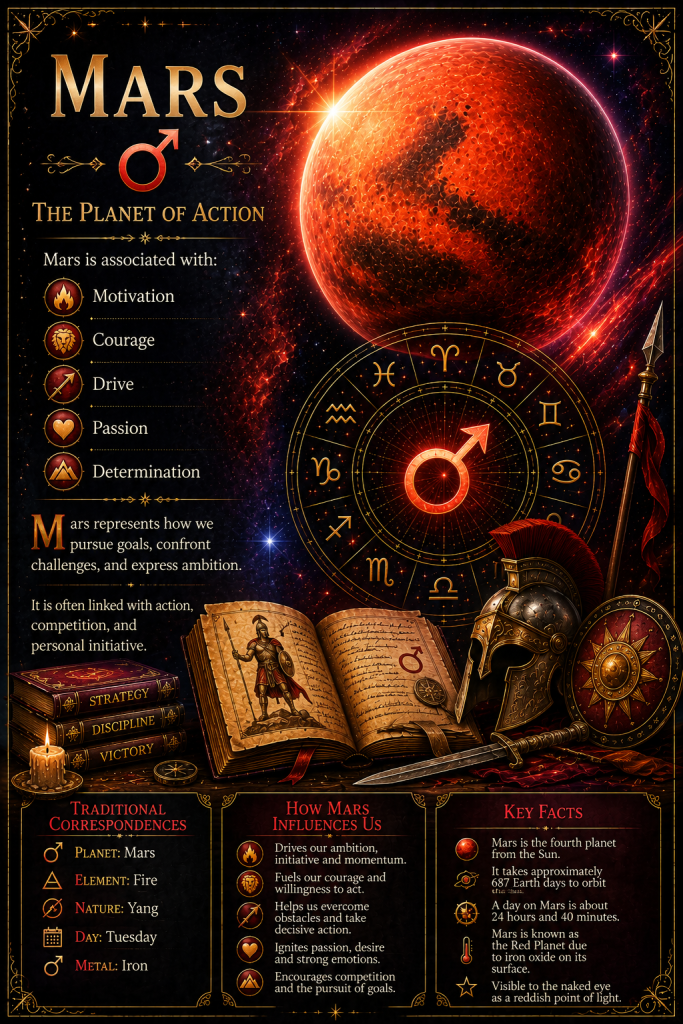
Mars ♂
The Planet of Action
Mars is associated with:
- Motivation
- Courage
- Drive
- Passion
- Determination
Mars represents how we pursue goals, confront challenges, and express ambition.
Moreover it is often linked with action, competition, and personal initiative.
Continue Reading: Mars →
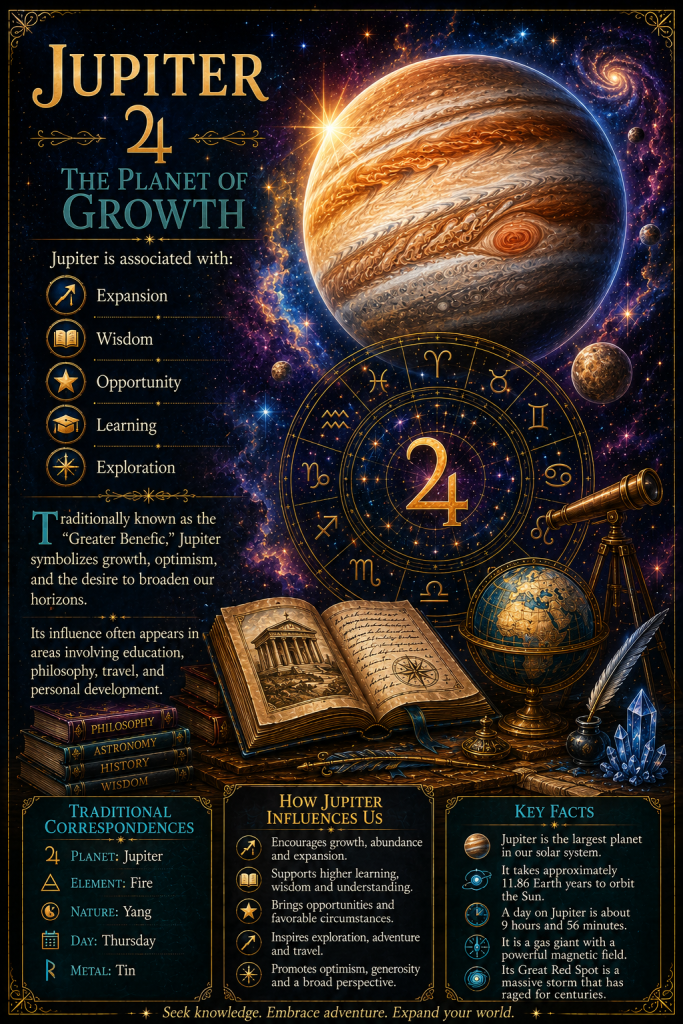
Jupiter ♃
The Planet of Growth
Jupiter is associated with:
- Expansion
- Wisdom
- Opportunity
- Learning
- Exploration
Traditionally known as the “Greater Benefic,” Jupiter symbolizes growth, optimism, and the desire to broaden our horizons.
Therefore it’s influence often appears in areas involving education, philosophy, travel, and personal development.
Continue Reading: Jupiter →
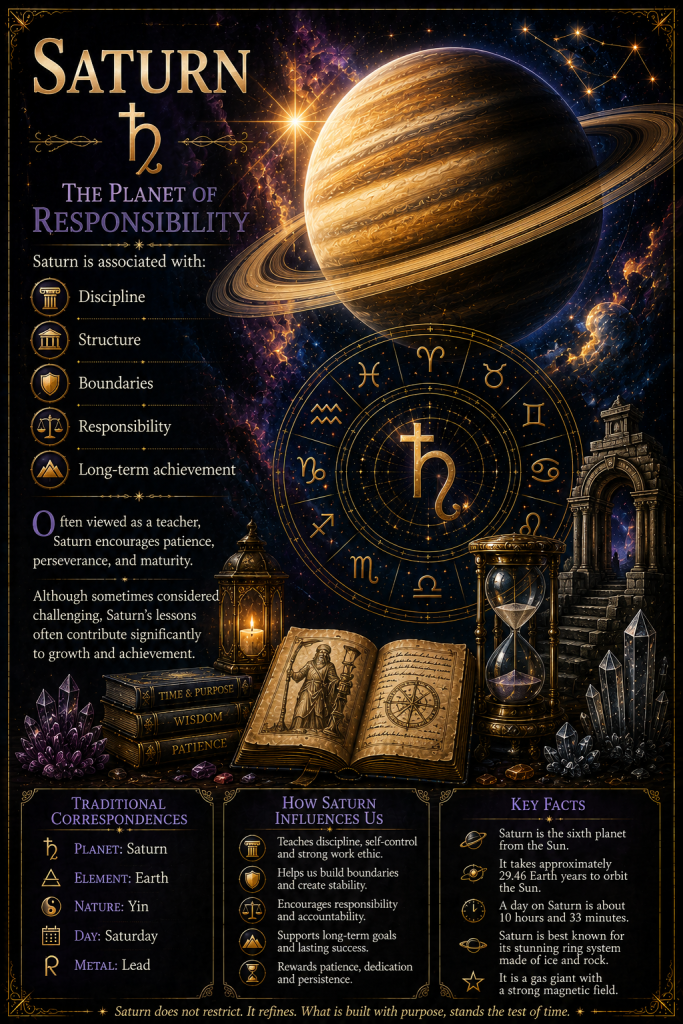
Saturn ♄
The Planet of Responsibility
Saturn is associated with:
- Discipline
- Structure
- Boundaries
- Responsibility
- Long-term achievement
Often viewed as a teacher, Saturn encourages patience, perseverance, and maturity.
Although sometimes considered challenging, Saturn’s lessons often contribute significantly to growth and achievement.
Continue Reading: Saturn →
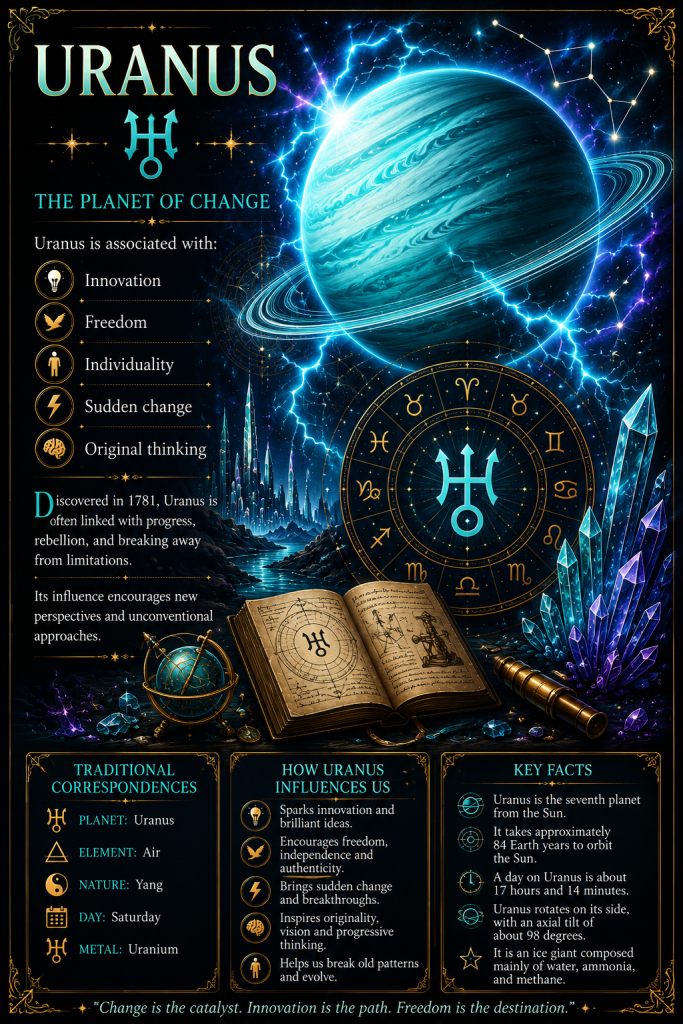
Uranus ♅
The Planet of Change
Uranus is associated with:
- Innovation
- Freedom
- Individuality
- Sudden change
- Original thinking
Discovered in 1781, Uranus is often linked with progress, rebellion, and breaking away from limitations.
Thus encourages new perspectives and unconventional approaches.
Continue Reading: Uranus →
Neptune ♆
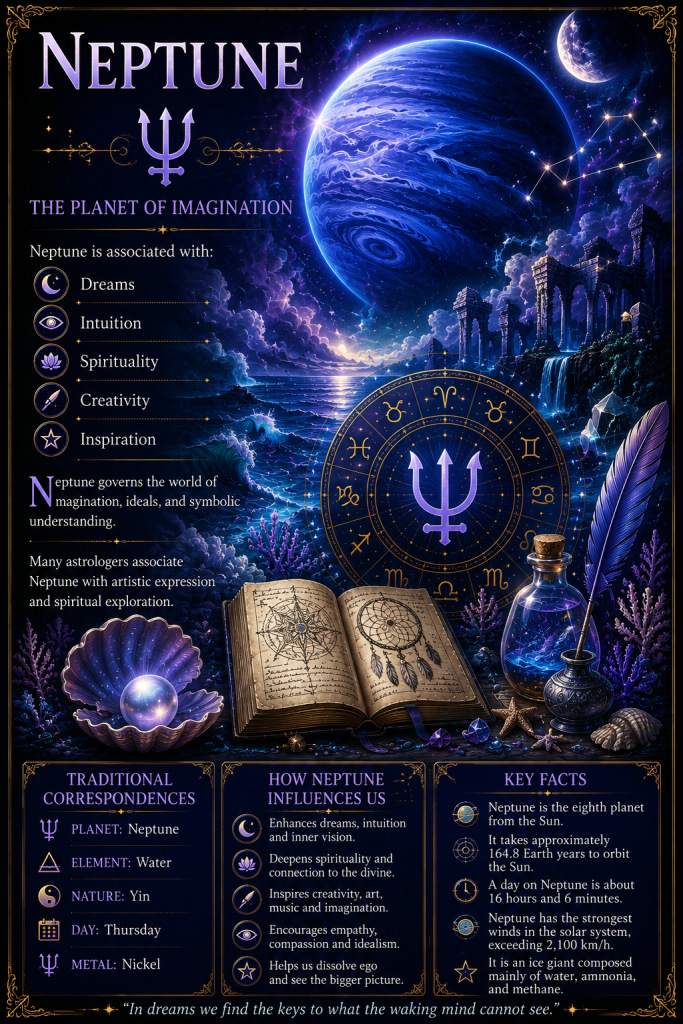
The Planet of Imagination
Neptune is associated with:
- Dreams
- Intuition
- Spirituality
- Creativity
- Inspiration
Neptune governs the world of imagination, ideals, and symbolic understanding.
Many astrologers associate Neptune with artistic expression and spiritual exploration.
Continue Reading: Neptune →
Pluto ♇
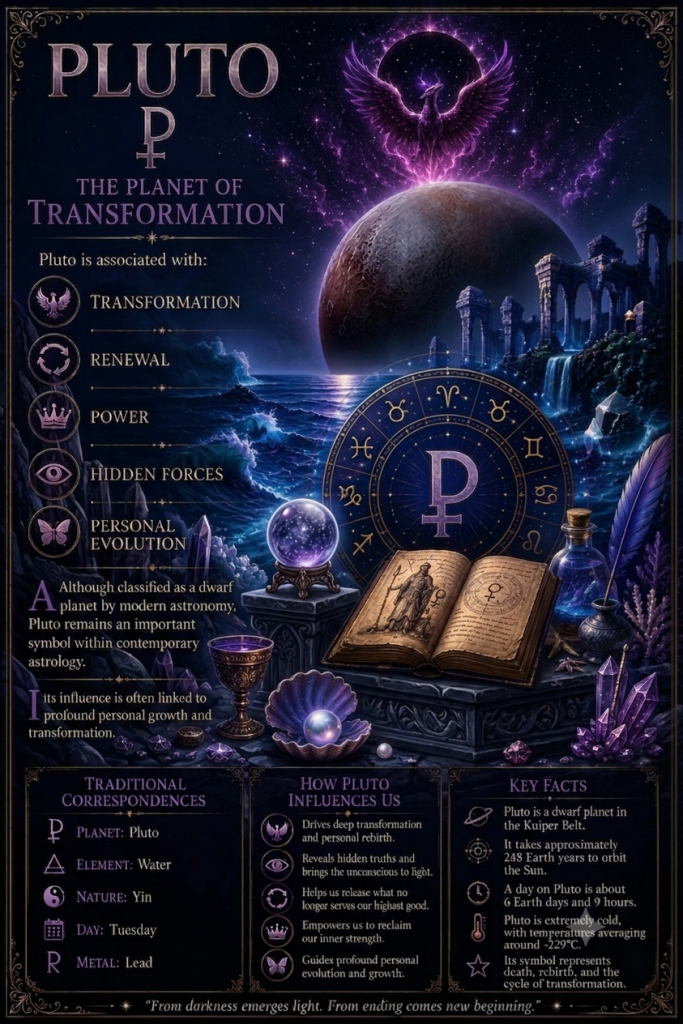
The Planet of Transformation
Pluto is associated with:
- Transformation
- Renewal
- Power
- Hidden forces
- Personal evolution
Although classified as a dwarf planet by modern astronomy, Pluto remains an important symbol within contemporary astrology.
It’s overall influence is often linked to profound personal growth and transformation.
Continue Reading: Pluto →
Traditional and Modern Planets
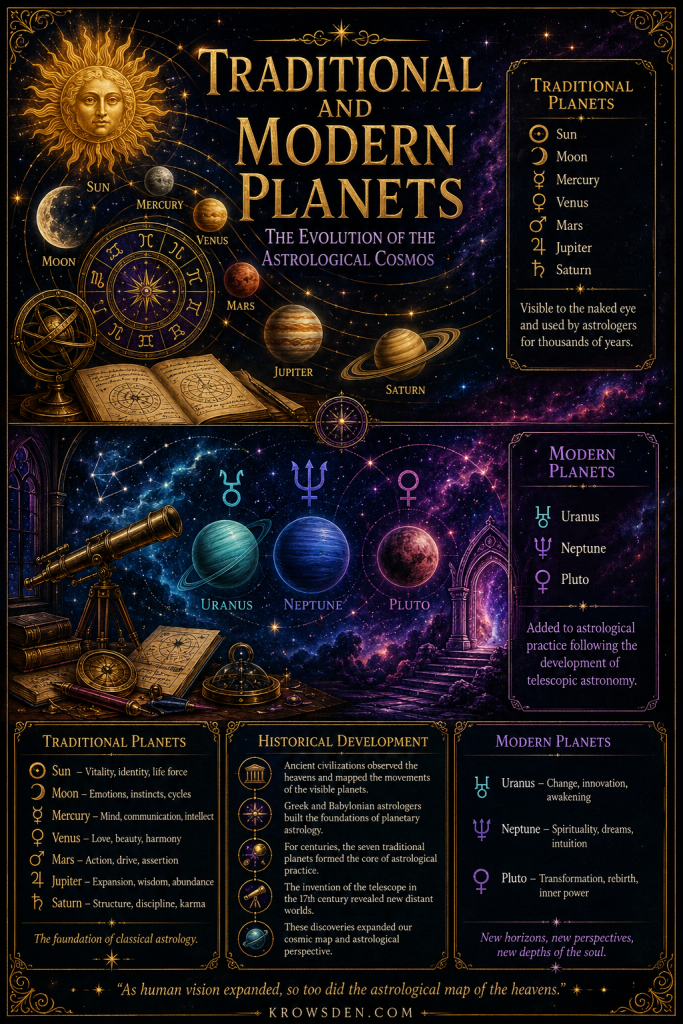
Historically, astrologers worked with the celestial bodies visible to the naked eye:
- Sun
- Moon
- Mercury
- Venus
- Mars
- Jupiter
- Saturn
These are often called the Traditional Planets.
Following the invention of the telescope, three additional planetary bodies entered astrological practice:
- Uranus
- Neptune
- Pluto
These are commonly referred to as the Modern Planets.
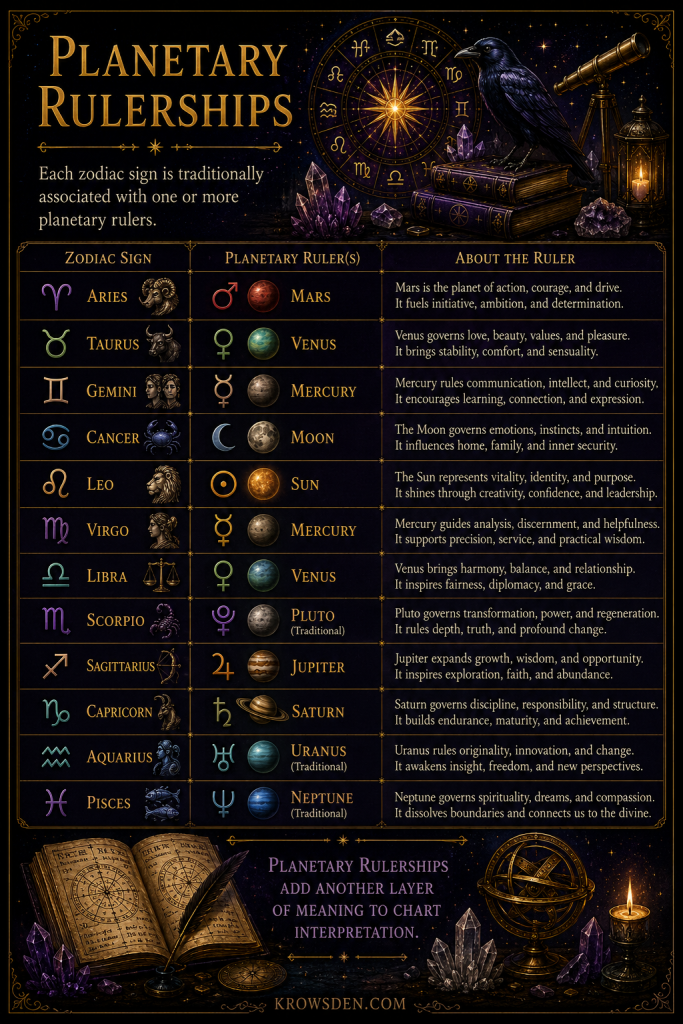
Planetary Rulerships
Each zodiac sign is traditionally associated with one or more planetary rulers.
For example:
- Aries → Mars
- Taurus → Venus
- Gemini → Mercury
- Cancer → Moon
- Leo → Sun
Planetary rulerships add another layer of meaning to chart interpretation.
Continue Reading: Zodiac Signs →
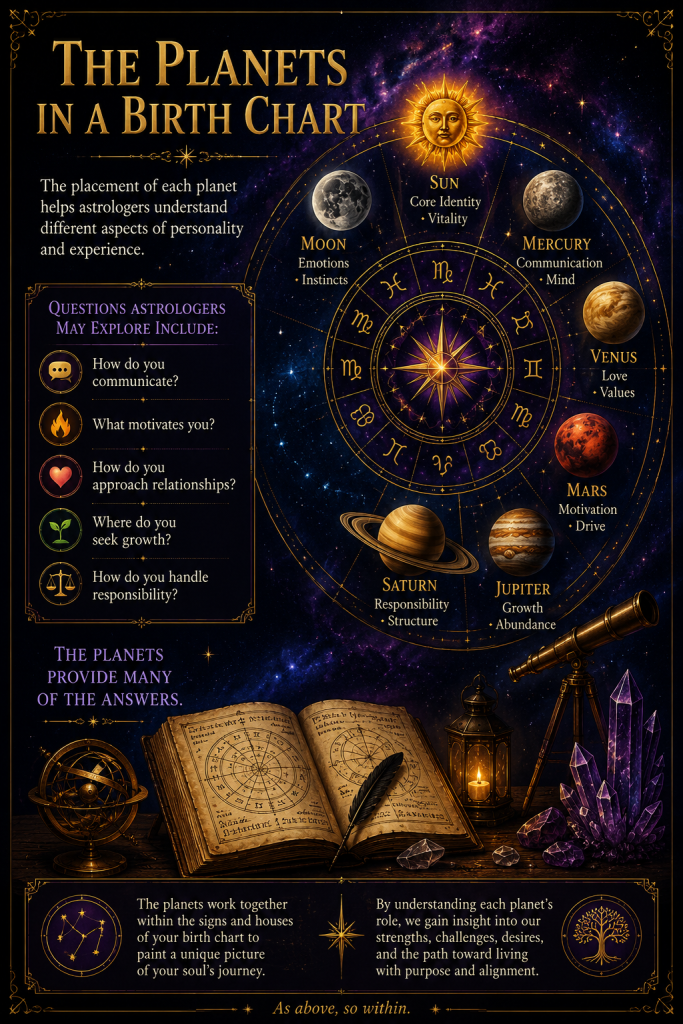
The Planets in a Birth Chart
The placement of each planet helps astrologers understand different aspects of personality and experience.
Questions astrologers may explore include:
- How do you communicate?
- What motivates you?
- How do you approach relationships?
- Where do you seek growth?
- How do you handle responsibility?
The planets provide many of the answers.
Continue Reading: Birth Charts →
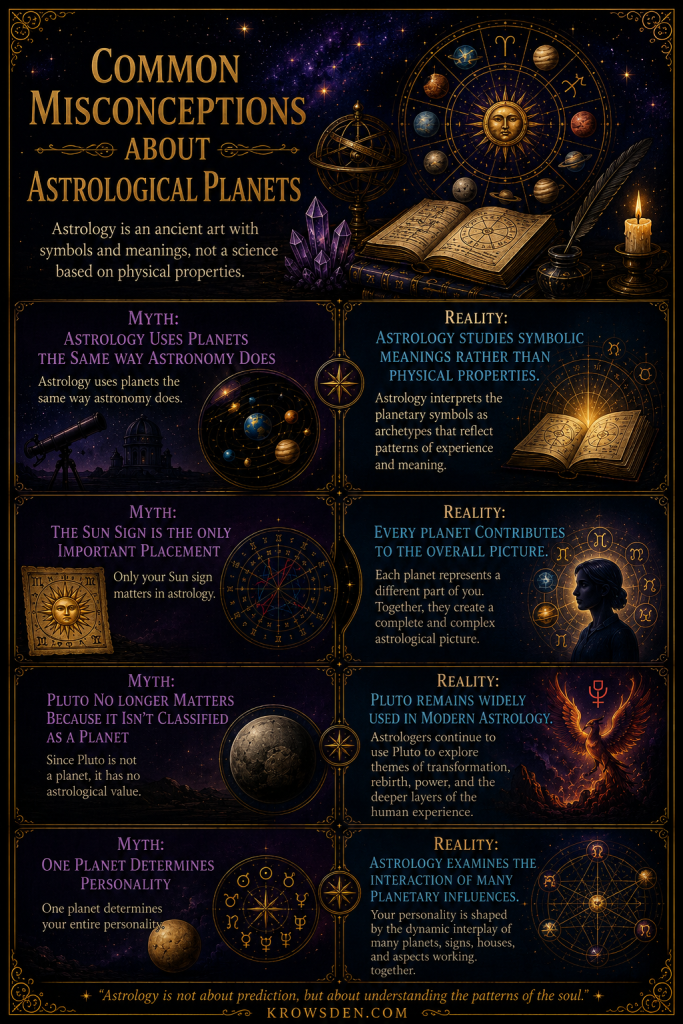
Common Misconceptions About Astrological Planets
Myth: Astrology Uses Planets the Same Way Astronomy Does
Astrology studies symbolic meanings rather than physical properties.
Myth: The Sun Sign Is the Only Important Placement
Every planet contributes to the overall picture.
Myth: Pluto No Longer Matters Because It Isn’t Classified as a Planet
Pluto remains widely used in modern astrology.
Myth: One Planet Determines Personality
Astrology examines the interaction of many planetary influences.
Why Study the Planets?
The planets form the heart of astrological interpretation.
They provide the symbolic energies that astrologers analyze within birth charts, helping to explain personality traits, motivations, strengths, challenges, and opportunities for growth.
Without the planets, astrology would have no language through which to describe human experience.
Understanding them opens the door to a much deeper appreciation of astrology as a whole.
Where to Go Next
Continue exploring the Astrology Learning Center:
- Zodiac Signs
- The Four Elements
- Modalities
- Birth Charts
- Sun Signs
- Moon Signs
- Mercury
- Venus
- Mars
- Jupiter
- Saturn
- Uranus
- Neptune
- Pluto
- Astrology and Magick
Recommended Resources
🌌 NASA Solar System Exploration
Learn about the celestial bodies that inspired astrological traditions.
Visit: https://solarsystem.nasa.gov
📚 Encyclopaedia Britannica – Planets
Visit: https://www.britannica.com/science/planet
🌍 World History Encyclopedia
Visit: https://www.worldhistory.org