
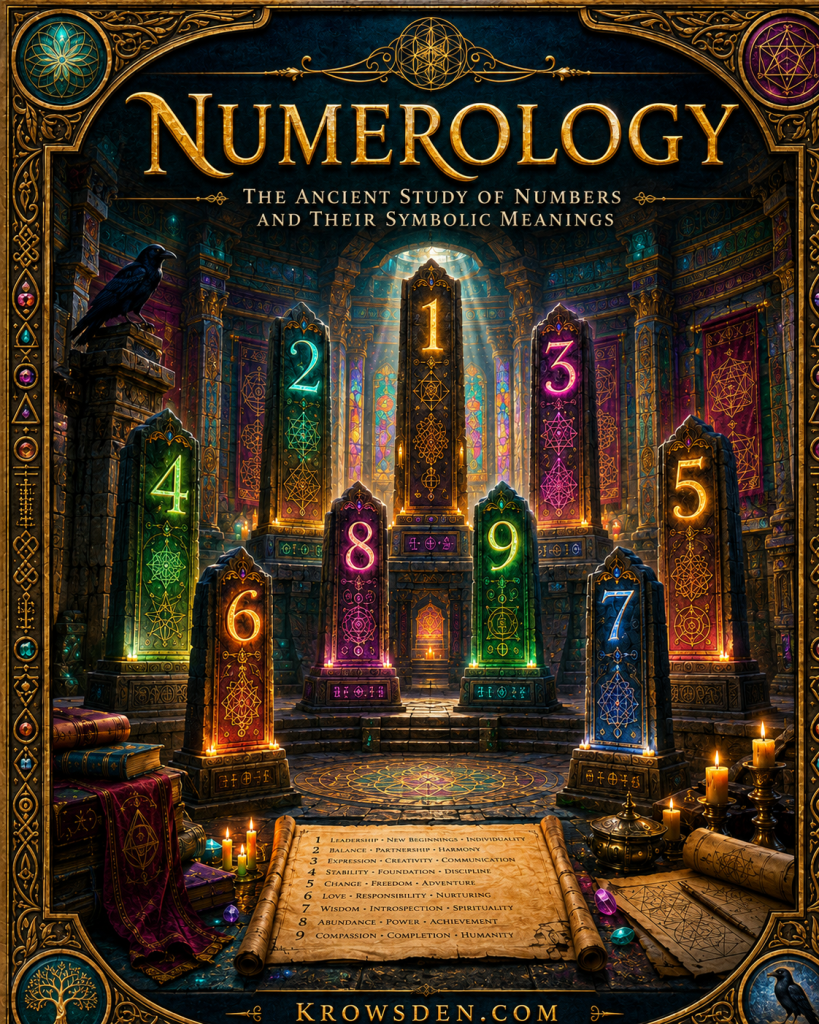
The Ancient Study of Numbers and Their Symbolic Meanings
Numbers are everywhere.
They measure time, track distances, organize calendars, and help us understand the physical world. Yet throughout history, many cultures have believed that numbers possess meanings beyond their practical uses.
This belief forms the foundation of Numerology—the study of symbolic meanings associated with numbers and their relationship to human experience.
For thousands of years, philosophers, mystics, mathematicians, and spiritual seekers have explored the possibility that numbers reflect patterns within nature, consciousness, and life itself. Today, numerology remains one of the most widely practiced systems of symbolic interpretation and self-reflection.
Whether approached as a spiritual discipline, a philosophical framework, or a tool for personal insight, numerology offers a fascinating perspective on the role numbers play in our lives.
What Is Numerology?
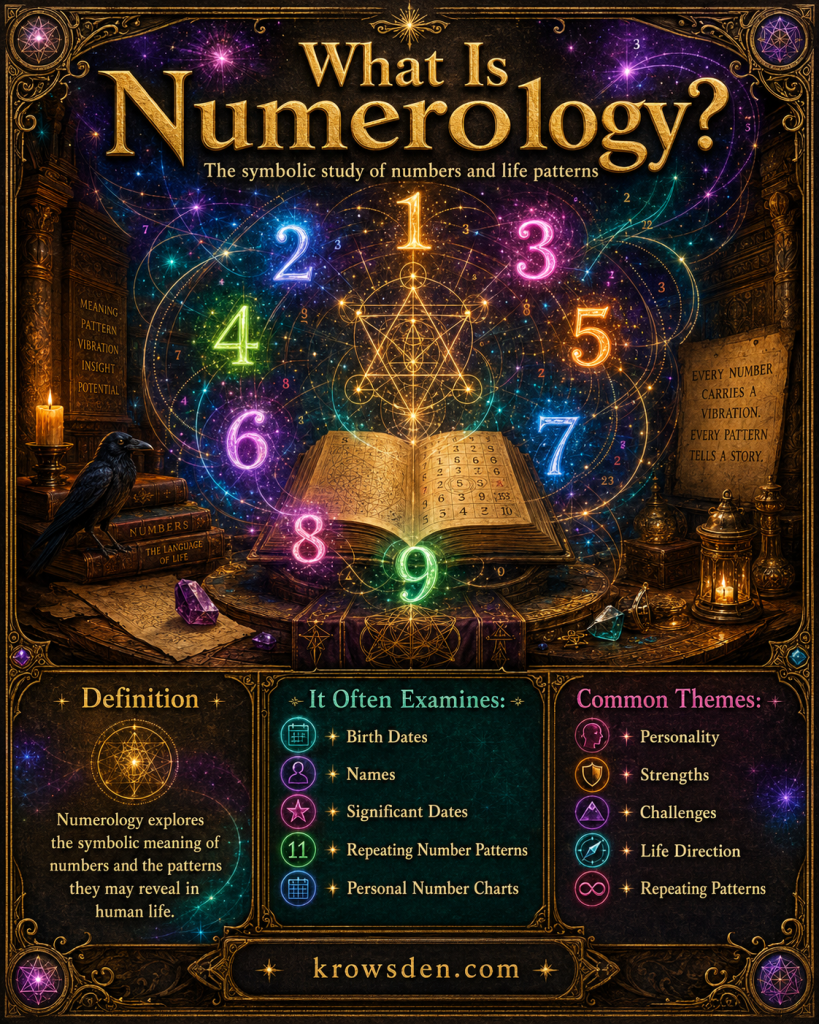
Numerology is the study of symbolic meanings assigned to numbers.
Practitioners often examine:
- Birth dates
- Names
- Significant dates
- Repeating number patterns
- Personal number charts
The goal is typically to explore personality traits, life themes, strengths, challenges, opportunities, and recurring patterns.
Unlike mathematics, which focuses on quantitative relationships, numerology focuses on symbolic and interpretive meanings.
The Origins of Numerology
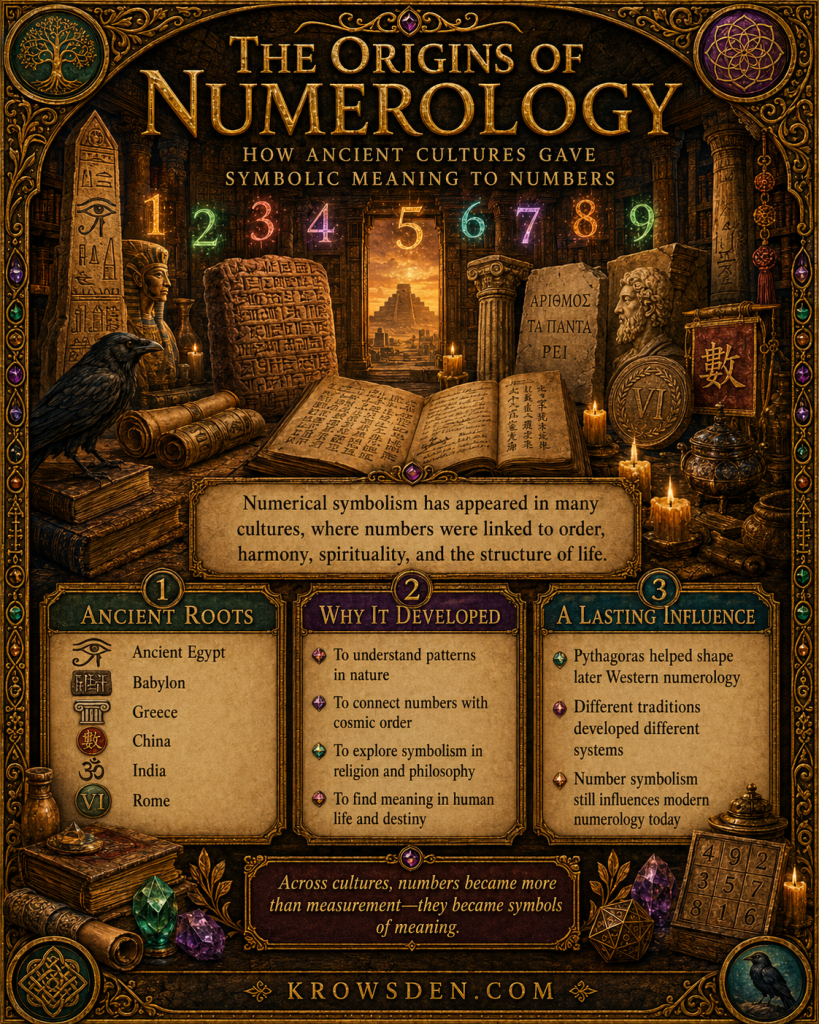
The roots of numerology stretch back thousands of years.
Numerical symbolism has appeared in many cultures, including:
- Ancient Egypt
- Babylon
- Greece
- China
- India
- Rome
Various traditions developed systems that connected numbers to philosophical, spiritual, and cosmic concepts.
One of the most influential figures associated with numerology is the Greek philosopher Pythagoras, whose ideas about numbers and harmony continue to influence modern numerological systems.
Pythagoras and Numerical Philosophy
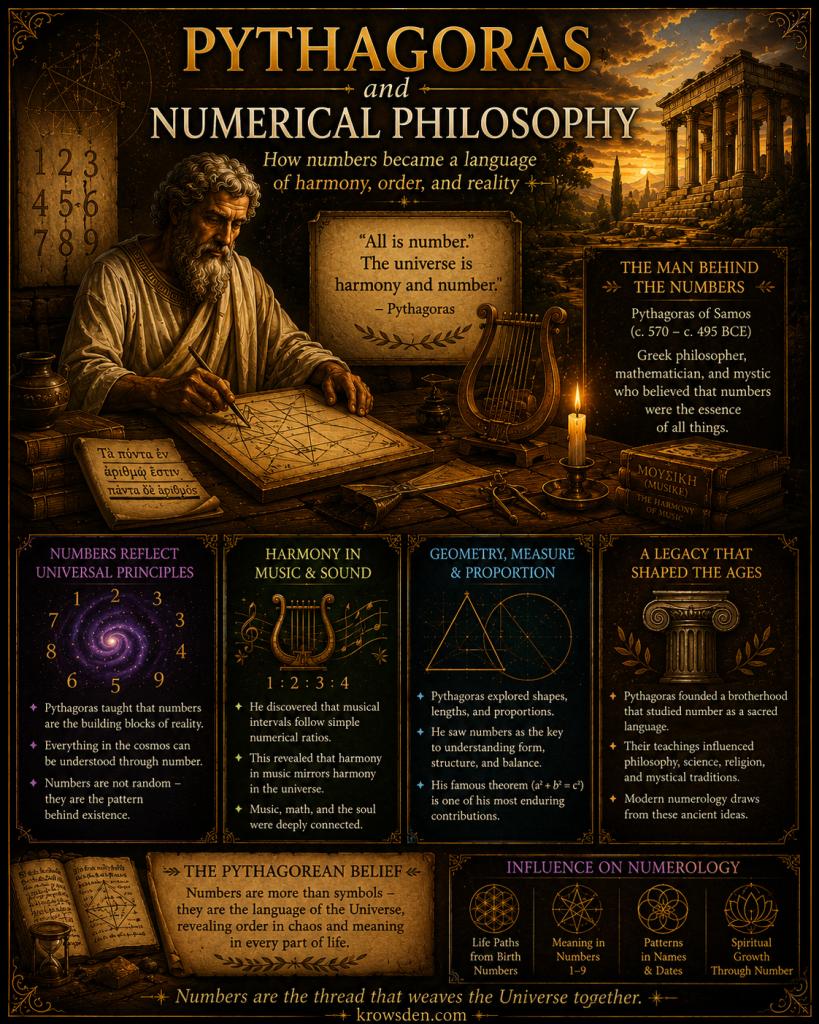
Pythagoras is often remembered as a mathematician, but his teachings extended far beyond geometry.
His followers believed that numbers formed the underlying structure of reality.
According to Pythagorean thought:
- Numbers reflected universal principles.
- Harmony could be expressed mathematically.
- Patterns revealed deeper truths about existence.
Many modern Western numerology systems trace part of their heritage to these ideas.
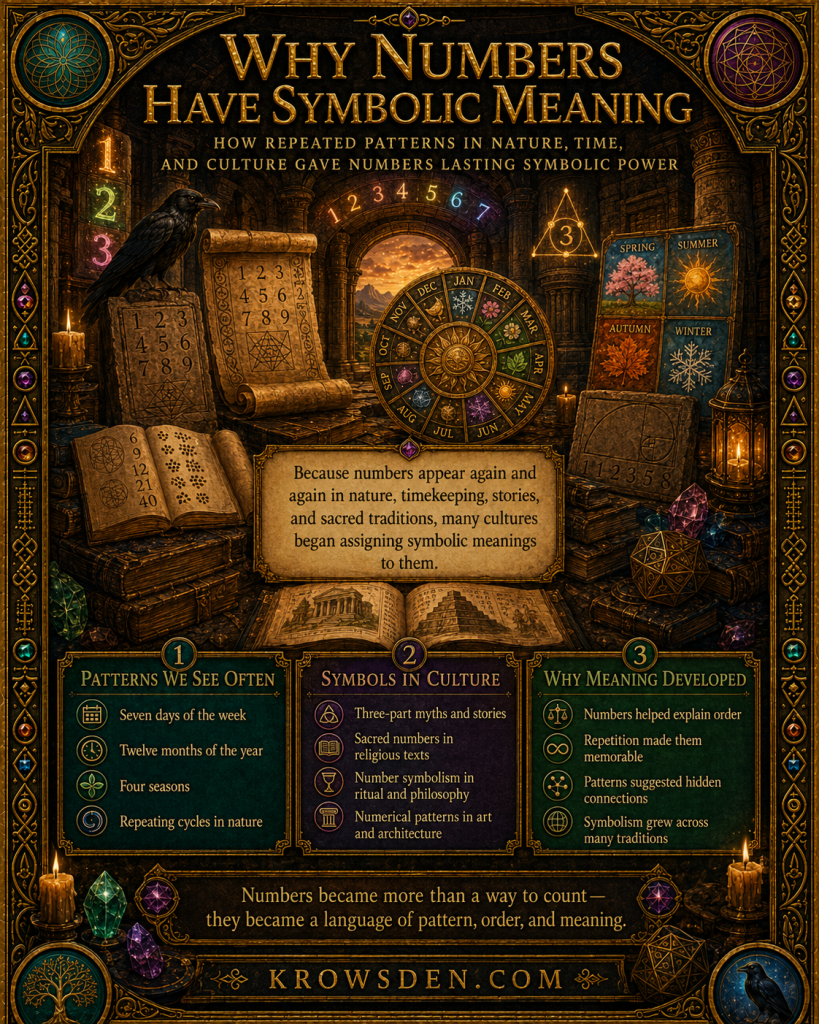
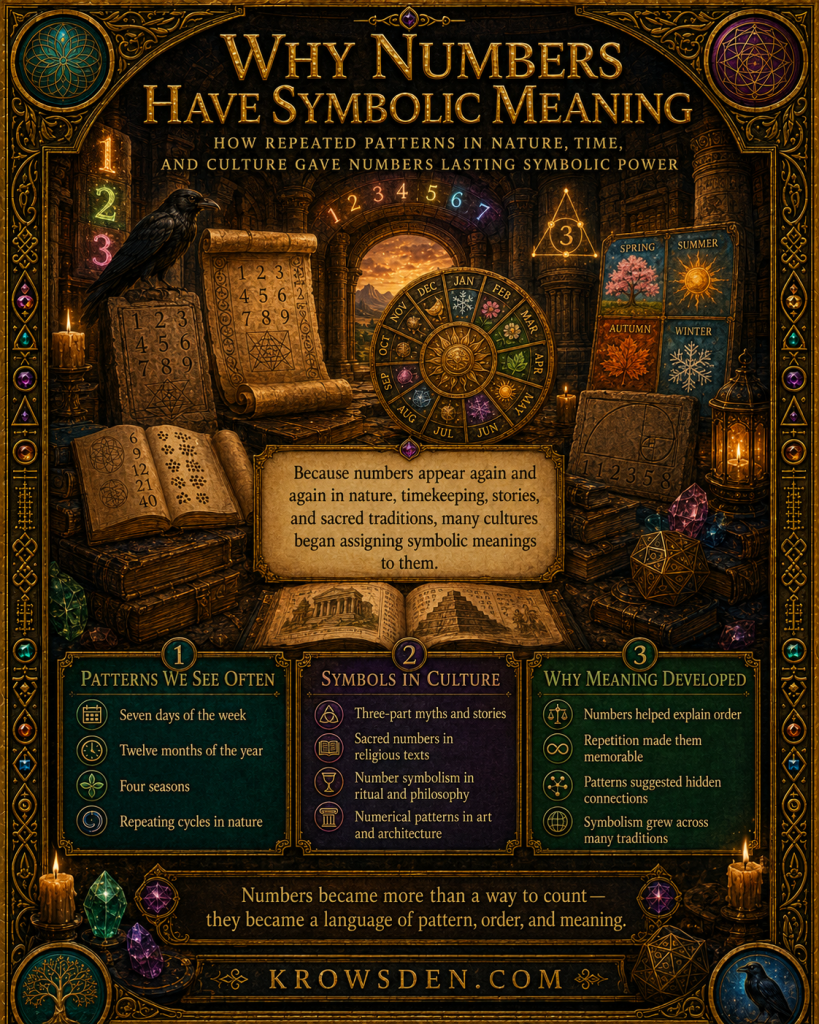
Why Numbers Have Symbolic Meaning
Throughout history, humans have assigned symbolic significance to numbers.
Examples include:
- Seven days of the week
- Twelve months of the year
- Four seasons
- Three-part myths and stories
- Sacred numerical patterns in religious texts
Because numbers appear repeatedly throughout nature and culture, many traditions developed symbolic interpretations associated with them.
Core Numbers in Numerology
Most numerology systems focus on the numbers 1 through 9.
Each number is believed to represent specific qualities and themes.
Number 1
Often associated with:
- Leadership
- Independence
- Initiative
- New beginnings
Number 2
Often associated with:
- Cooperation
- Balance
- Relationships
- Diplomacy
Number 3
Often associated with:
- Creativity
- Communication
- Expression
- Optimism
Number 4
Often associated with:
- Stability
- Structure
- Discipline
- Practicality
Number 5
Often associated with:
- Change
- Freedom
- Adventure
- Adaptability
Number 6
Often associated with:
- Responsibility
- Family
- Harmony
- Service
Number 7
Often associated with:
- Reflection
- Wisdom
- Spirituality
- Analysis
Number 8
Often associated with:
- Achievement
- Ambition
- Success
- Authority
Number 9
Often associated with:
- Compassion
- Completion
- Humanitarian ideals
- Transformation
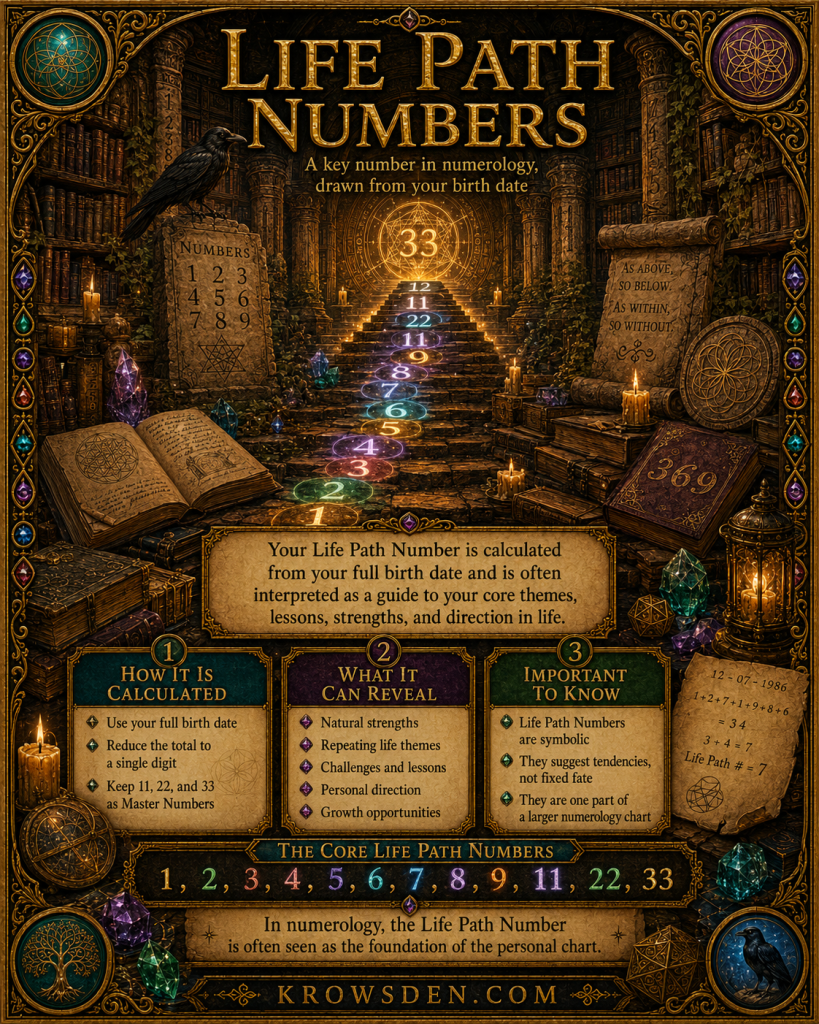
Life Path Numbers
One of the most popular concepts in modern numerology is the Life Path Number.
This number is typically derived from a person’s birth date and is often interpreted as representing major life themes and tendencies.
Many practitioners consider the Life Path Number the foundation of a personal numerology chart.
Continue Reading: Life Path Numbers →
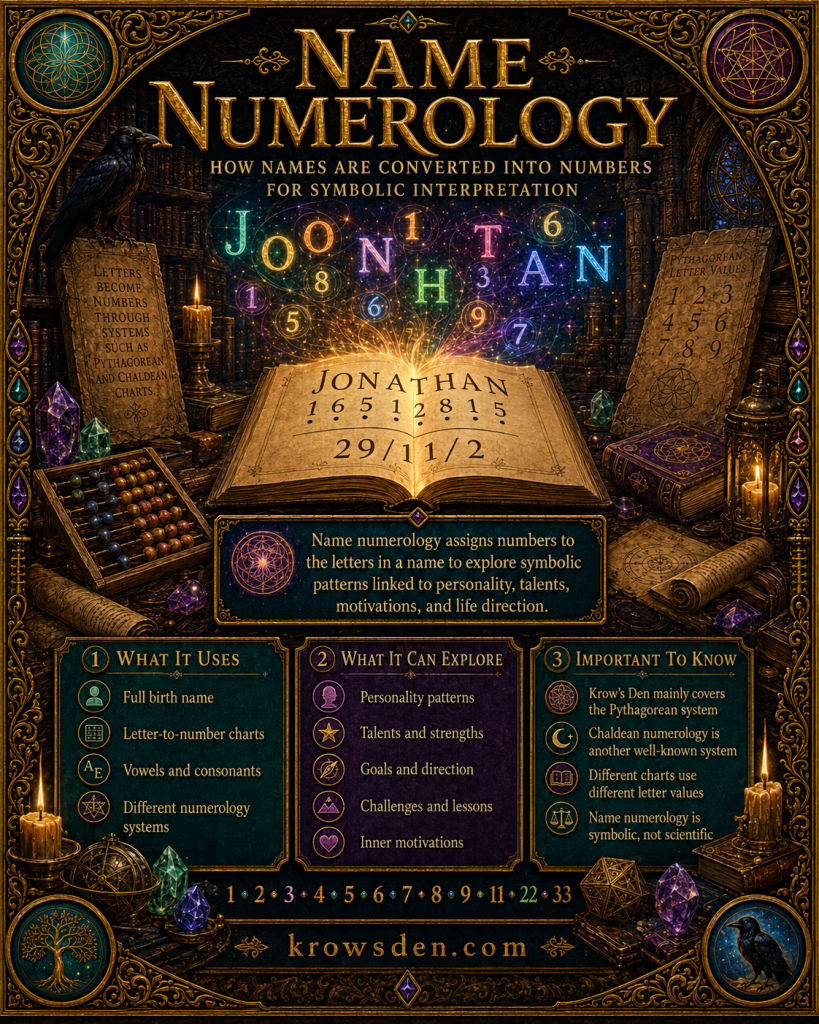
Name Numerology
Many systems assign numerical values to letters of the alphabet.
By converting names into numbers, practitioners seek to identify patterns and symbolic meanings associated with:
- Personality
- Talents
- Goals
- Challenges
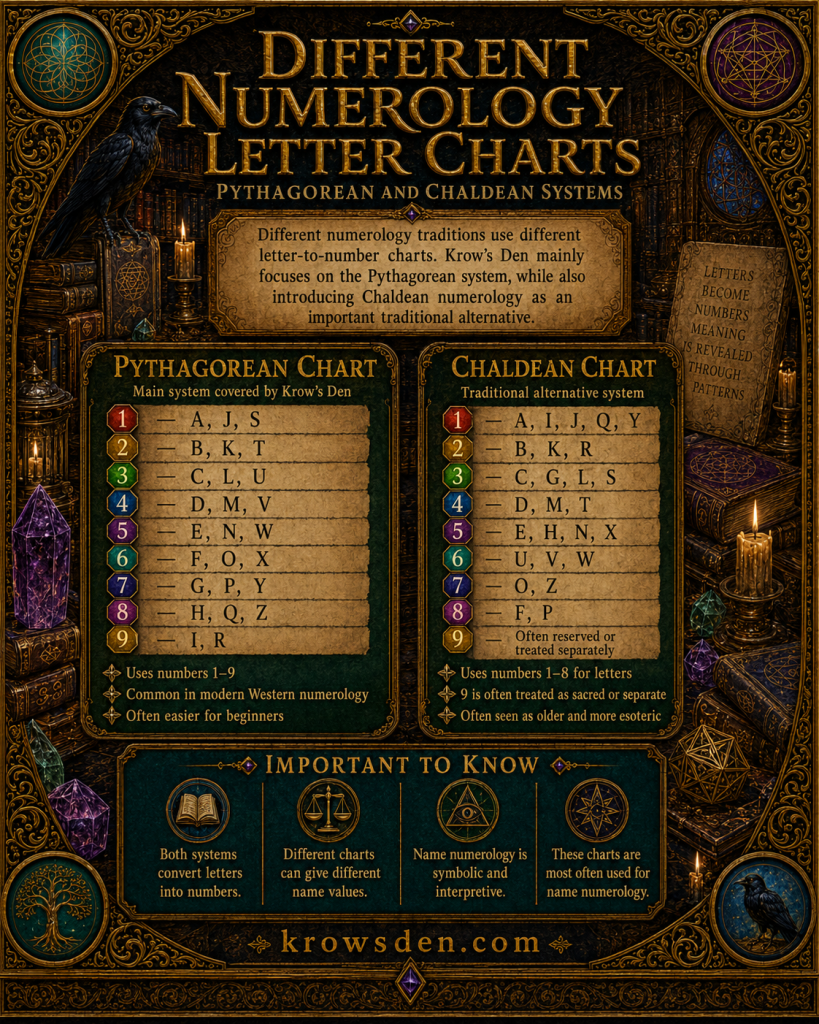
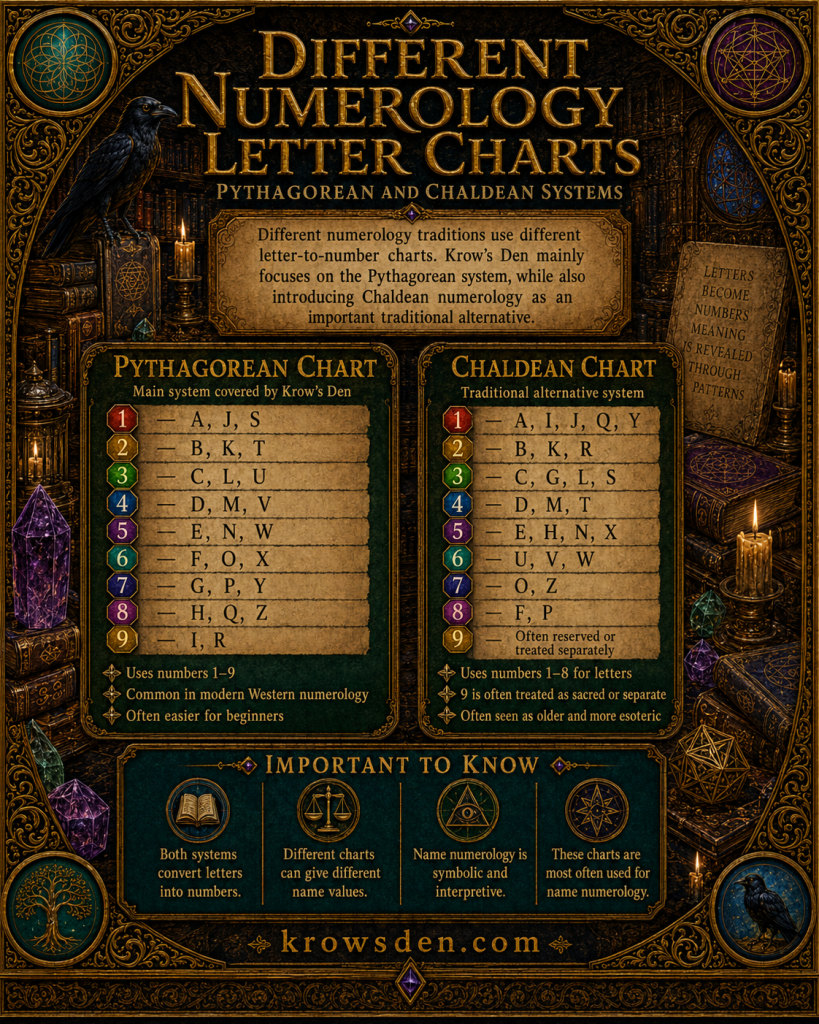
Different Numerology Letter Charts
Different numerology traditions use different letter-to-number charts. At Krow’s Den, we will mainly focus on the Pythagorean system, because it is one of the most commonly used modern Western numerology systems and is easier for beginners to follow.
However, it is helpful to know that other systems exist. One of the most well-known alternatives is Chaldean numerology, which uses a different letter-number pattern and often treats the number 9 as separate or sacred.
Pythagorean Numerology Chart
Main system covered by Krow’s Den
| Number | Letters |
|---|---|
| 1 | A, J, S |
| 2 | B, K, T |
| 3 | C, L, U |
| 4 | D, M, V |
| 5 | E, N, W |
| 6 | F, O, X |
| 7 | G, P, Y |
| 8 | H, Q, Z |
| 9 | I, R |
Chaldean Numerology Chart
A traditional alternative system
| Number | Letters |
|---|---|
| 1 | A, I, J, Q, Y |
| 2 | B, K, R |
| 3 | C, G, L, S |
| 4 | D, M, T |
| 5 | E, H, N, X |
| 6 | U, V, W |
| 7 | O, Z |
| 8 | F, P |
| 9 | Often reserved or treated separately |
These charts are used most often in Name Numerology, where a name is converted into numbers to explore symbolic patterns such as expression, personality, motivation, and life direction.
Continue Reading: Name Numerology →
Master Numbers
Certain numbers receive special attention within modern numerology.
The most commonly recognized Master Numbers are:
- 11
- 22
- 33
These numbers are often interpreted as carrying additional symbolic significance.
Not all numerological traditions use Master Numbers, but they remain popular within contemporary practice.
Continue Reading: Master Numbers →
Angel Numbers
In recent years, many people have become interested in repeating number sequences often referred to as Angel Numbers.
Examples include:
- 111
- 222
- 333
- 444
- 555
Different interpretations exist regarding these patterns, with many practitioners viewing them as meaningful reminders, symbols, or prompts for reflection.
Continue Reading: Angel Numbers →
Numerology and Self-Discovery
Many people use numerology as a tool for personal reflection.
Questions commonly explored include:
- What are my strengths?
- What challenges do I tend to encounter?
- What patterns appear in my life?
- What areas of growth deserve attention?
Whether viewed symbolically or spiritually, numerology can encourage thoughtful self-examination.
Numerology Across Cultures
Numerical symbolism appears throughout the world.
Examples include:
- Chinese lucky numbers
- Sacred numbers in religious traditions
- Greek philosophical systems
- Medieval numerology
- Indigenous symbolic traditions
Although interpretations vary, the idea that numbers possess meaning beyond simple calculation appears across many cultures and time periods.
Common Misconceptions About Numerology
Myth: Numerology Predicts the Future
Most practitioners use numerology to explore tendencies and patterns rather than fixed outcomes.
Myth: There Is Only One Numerology System
Numerous systems exist, each with its own methods and interpretations.
Myth: Numerology Is Mathematics
Numerology uses numbers symbolically rather than scientifically.
Myth: Everyone Interprets Numbers the Same Way
Different traditions assign different meanings and levels of importance to various numbers.
Why Numerology Remains Popular
Numerology continues to attract interest because it encourages people to look for patterns and meaning within their lives.
For many, it provides:
- A framework for self-reflection
- A symbolic language for understanding experiences
- A way to explore personal growth
- A connection to ancient traditions
Whether approached as philosophy, spirituality, symbolism, or personal exploration, numerology remains one of the world’s most enduring systems of symbolic interpretation.
Where to Go Next
Continue exploring the symbolic arts and divination systems:
- Life Path Numbers
- Master Numbers
- Angel Numbers
- Astrology
- Tarot
- Sacred Symbols
- Divination
- Ogham
- Runes
- Sacred Knowledge
- Ancient Civilizations
Each of these topics offers another lens through which to explore patterns, meaning, and the search for understanding.